Locksmith in Salem, OntarioLandlords in Salem,we speak your language
Turnovers, lost keys, a tenant who changed the lock without asking: rental property in Salem keeps a locksmith busy in predictable ways. We rekey between tenants, keep unit keys organised under one master, fit hardware that survives heavy use, and write up what was done for your records. We also come out to Alma, Creek Bank, Cumnock, Elora and Inverhaugh.
Turnovers, lost keys, a tenant who changed the lock without asking: rental property in Salem keeps a locksmith busy in predictable ways. We rekey between tenants, keep unit keys organised under one master, fit hardware that survives heavy use, and write up what was done for your records. We also come out to Alma, Creek Bank, Cumnock, Elora and Inverhaugh.
Rekey, repair, replace: whatever the door needs.
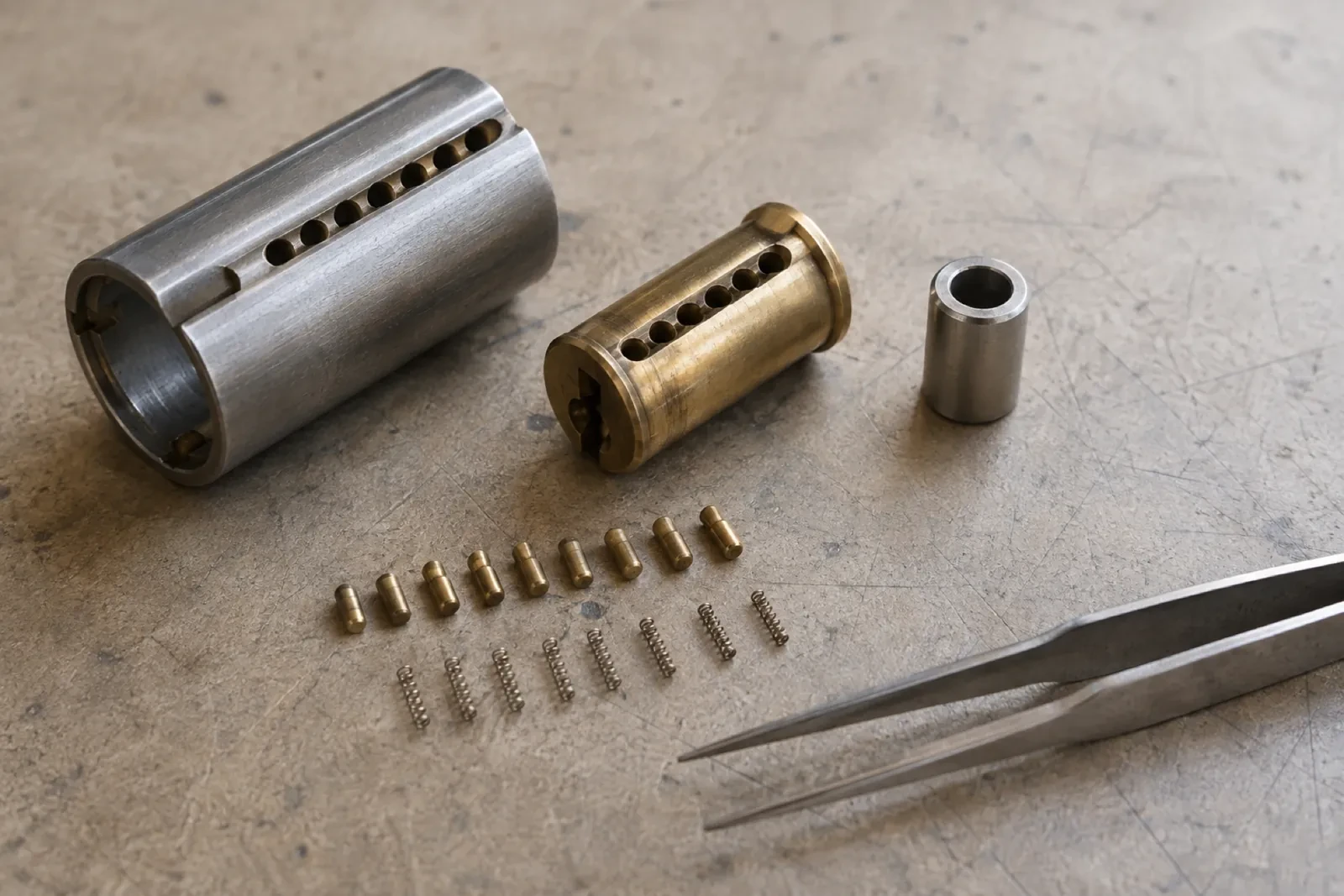
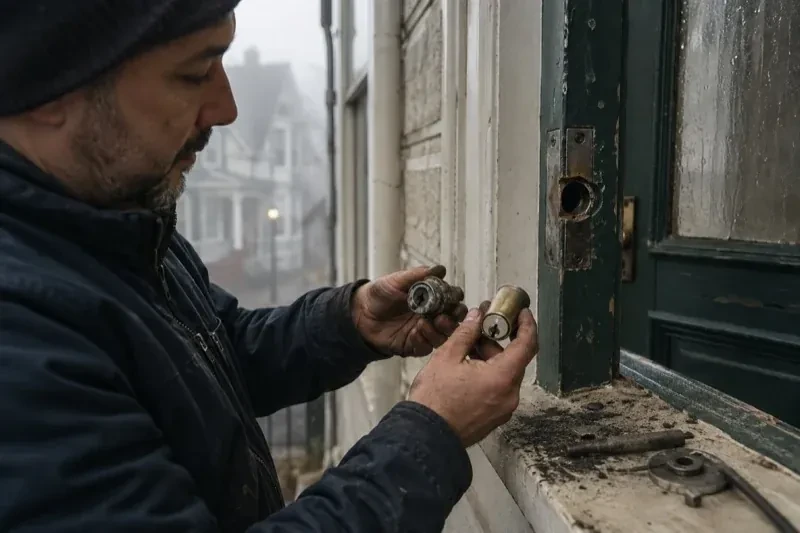
Our default for doors in Salem is to repair before replacing. A deadbolt that grinds usually needs its strike moved, not a new lock. A cylinder that fights the key often wants fresh pins and a clean. We say so, even when a replacement would be the easier sale, and when replacement really is right we explain why and show you the options in your hand.
For landlords and property managers with units in Salem, we offer organised turnover service: rekeying between tenants, labelled keys, master-key planning and a written record of what was changed. We work through doors in order, keep the paperwork straight and make sure the next tenant walks into a place where only their key works. One call covers a single unit or a whole building.
22years in business
24/7open every day
You set the pace. We explain, you decide, we work. If you would rather sleep on a bigger change, we do what is needed now and leave the rest for another visit.
The reasoning behind each suggestion. Every recommendation comes with the reason for it, in language that does not require you to know the trade. Ask why as often as you like.
Order restored. Tools packed, dust cleared, doors closed properly. We leave your home or business looking as it did, with the lock problem gone.
Locks on homes and businesses in Salem go through the same stages: they get installed, they wear, they need rekeying when people change, and eventually they are upgraded or replaced. The services here follow that life cycle so you can find the right one at whatever stage your door has reached.
About 41% of homes in Centre Wellington were built in 1980 or earlier, according to the 2021 Census.
In areas with homes from many decades, a locksmith gets to match the solution to the house rather than apply one answer everywhere. Period hardware stays on the houses that suit it; modern security goes where the door and the household want it.
Single-detached houses make up about 73% of homes in Centre Wellington (2021 Census).
Mostly houses
In areas of single houses, the door nobody watches is the side or back entry. It often has the weakest lock on the property. Fitting a proper deadbolt and a reinforced strike there is a modest job that closes the obvious gap.
Deadbolts differ in how far the bolt travels, how hard the bolt is, whether the cylinder guard spins free under a wrench and whether the housing shrugs off a hammer. High security deadbolts do well on all four, and we can show you the difference in hand.
The house is fifteen years old and every exterior door still wears the light hardware the builder fitted: a short bolt, a thin strike held by two small screws, and a knob lock that never suited a street entrance.
Every commercial door should do three things: open for the right people, stay shut for everyone else, and let people out in a hurry without a key. The services in this group serve those three, and we will say which door falls short on which one.
The pharmacy's drop safe has a keypad that finally lost power for good, and the little override key that was supposed to live behind the counter cannot be found anywhere.
A community group counts the weekend's raffle and bake-sale cash on a kitchen table, then carries it home in a tote bag until the bank opens Monday, because there has never been anywhere safer to leave it.
Which fix fits?
The moving truck has left, half the boxes are inside, and the single key the previous owner handed over turns the knob but not the deadbolt.
A software update reset the clinic's small safe overnight, and the receptionist's usual code now does nothing on a keypad that lights up but goes no further.
WhySafe opening favours the gentlest method that fits the particular safe and lock, with drilling kept as a later option rather than a first resort.
A homeowner inherited a heavy old dial safe from a parent's house, moved it into the new place, and has no idea whether the bolt-work still works, whether the lock is sound, or how it should be anchored.
WhyLocking hardware varies by opening: an electric strike, fitted into the existing frame, keeps the mechanical latch and releases it briefly for a valid credential; a magnetic lock clamps the door shut with an electromagnet and suits a frame or door that will not take a strike; and some openings use an electromechanical lock or a different controlled lockset entirely.
Head office wants every branch keyed alike under one system, and half the locations are still running whatever lockset the original contractor happened to install years ago.
WhyNot every transponder chip is built the same way.
The key still opens the seat and unlocks the fork, but at the ignition it needs a slow half-turn and a small lift before the switch engages, a habit that has crept in over years of daily starts.
WhySometimes the machine is not the problem; the key is.
Good days. Start with a turn.
1/9Home Lockout Service
The moving truck has left, half the boxes are inside, and the single key the previous owner handed over turns the knob but not the deadbolt. Someone locked it on the way out, and nobody has a key that fits it.
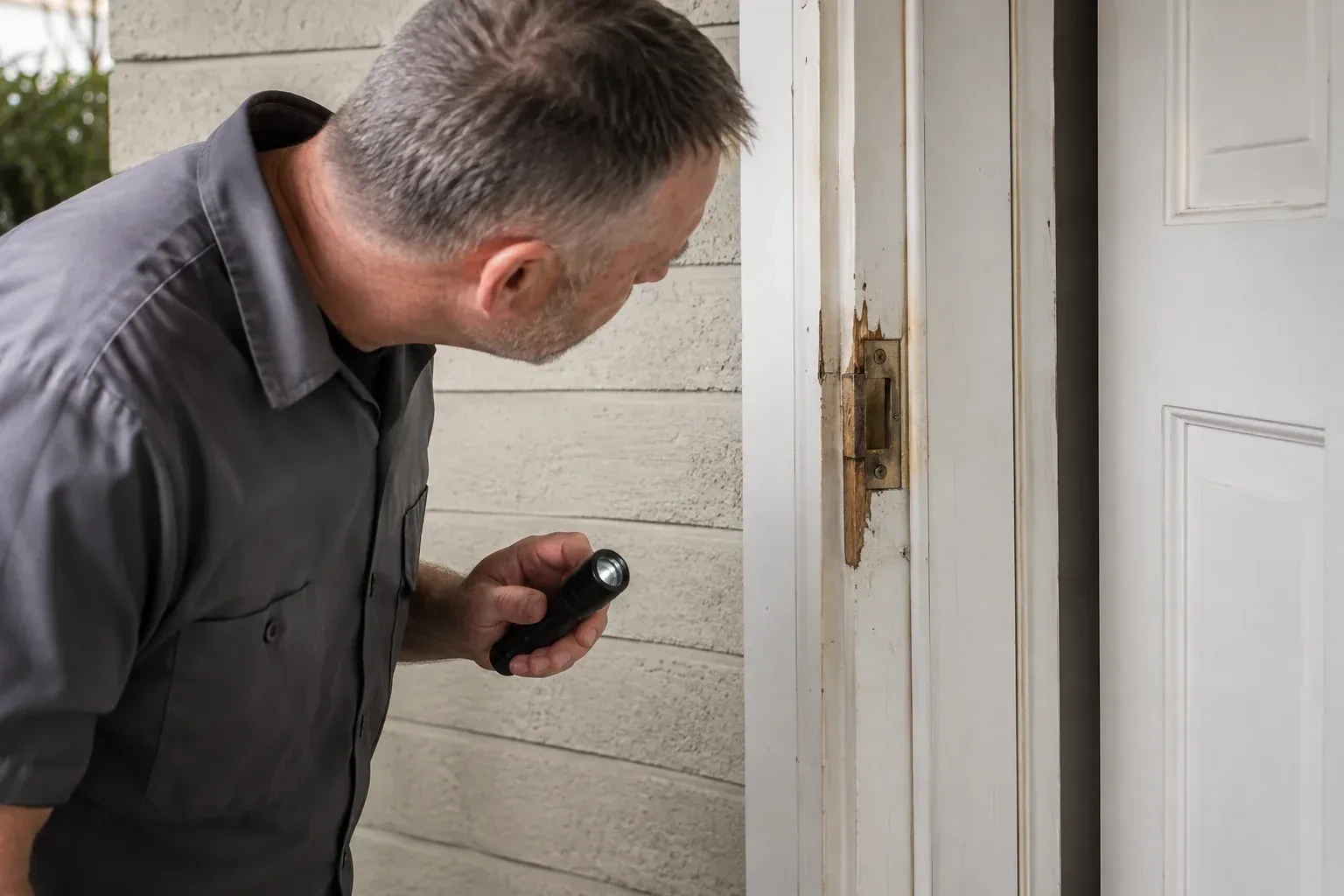
They did not get in. The attempt left a screwdriver gouge in the door edge, a strike plate bent outward and a deadbolt that now needs a shove to throw. The lock held, but the door is telling you it was tested.
Every time you pull the key out of the side door it comes away gritty. The lock has been sticky since the salt trucks started running, and today it has gone from sticky to solid, with the bolt still thrown.
A software update reset the clinic's small safe overnight, and the receptionist's usual code now does nothing on a keypad that lights up but goes no further.
A homeowner inherited a heavy old dial safe from a parent's house, moved it into the new place, and has no idea whether the bolt-work still works, whether the lock is sound, or how it should be anchored.
The team has grown past the point where one shared key still makes sense. New hires need a way in before a manager arrives, and the current setup cannot tell one person's entry from another's.
Head office wants every branch keyed alike under one system, and half the locations are still running whatever lockset the original contractor happened to install years ago.
A second driver has joined the household, and the one existing key gets handed back and forth between two schedules that rarely line up. Everyone agrees another key would settle the daily handoff, but nobody has looked into how a modern ignition actually learns a new one.
The key still opens the seat and unlocks the fork, but at the ignition it needs a slow half-turn and a small lift before the switch engages, a habit that has crept in over years of daily starts.
What happens if my identification is not convincing enough on the spot?
The work pauses rather than proceeds, and the locksmith helps you find another route: a neighbour or building manager who can confirm you live there, a document on your phone, a family member who can bring paperwork, or completing the check inside after entry when the documents are behind the door. Verification protects you as much as anyone, because the same standard applies to whoever might one day claim to live at your address.
Can the locksmith start before the police have finished?
The door is left as found until the police have seen it or said they will not attend. What can happen in the meantime is planning: the locksmith can look at the damage, photograph it, measure for hardware and prepare the temporary securing so that the moment the scene is released the work begins. Nothing is removed or moved before then, because the marks on the door are part of the report.
The lever on our shop door goes down but the latch does not pull back. Is that a lock problem?
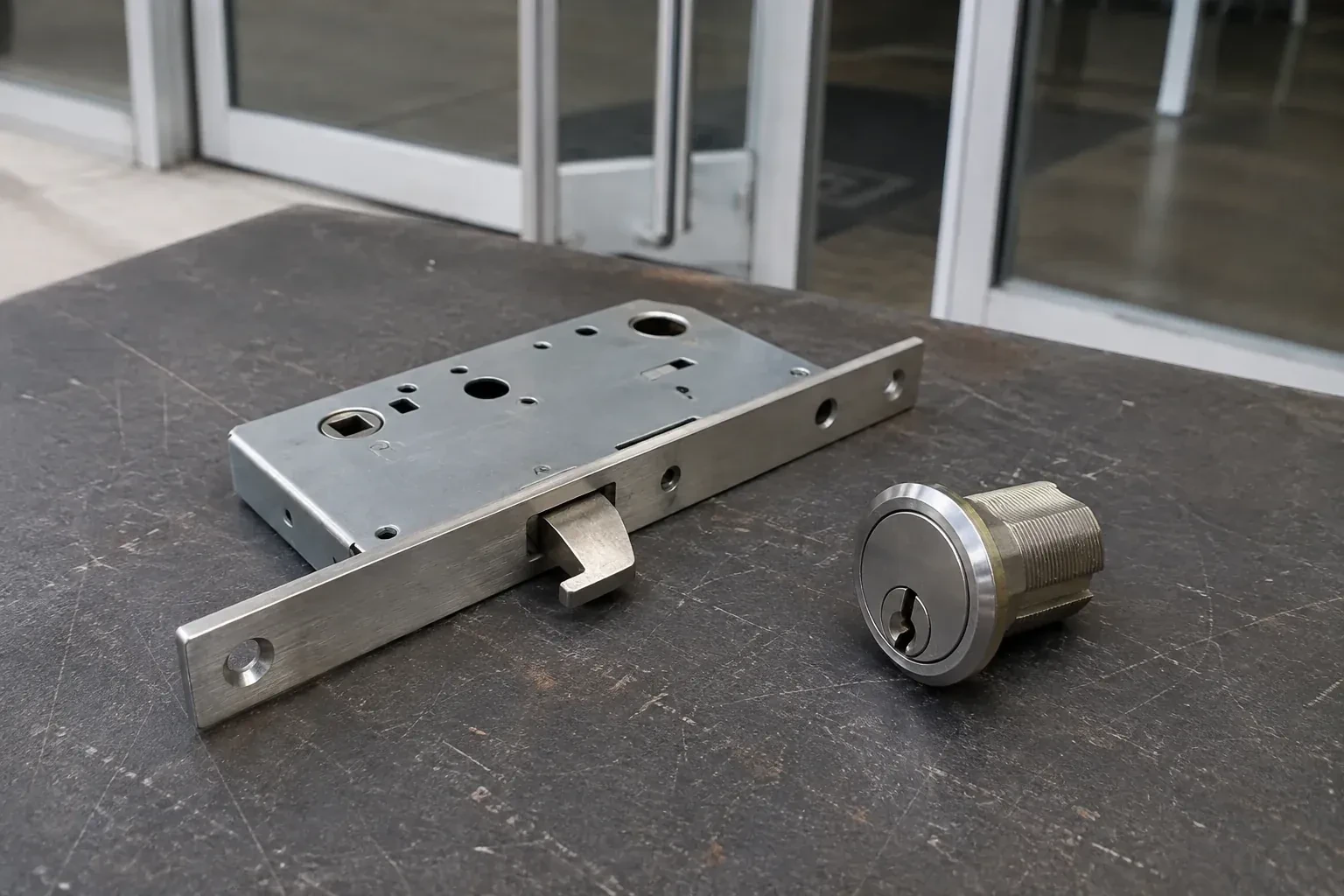
It usually points to the mortise case rather than the cylinder, and it is a common complaint on commercial doors. Inside the case a return spring, a worn hub, or another part of the latch's drive path can have failed, so the lever moves without driving the latch. The locksmith gets the door open, draws the case out of the door edge, replaces the worn part, cleans and greases the contact points and refits everything, then tests lever, key and thumb-turn together.
Can several employees each get their own code once the safe is open?
Many electronic locks support more than one user code, so a manager and one or more backup employees can each be set up separately during the same visit rather than sharing a single combination. A mechanical dial only holds one combination at a time, so multiple access there means agreeing who holds it and how that changes when staff do.
What is involved in servicing an older safe instead of replacing it?
Servicing works through the same checks as a new installation in reverse: the bolt-work is opened, cleaned, and lubricated, the lock is tested and adjusted if it binds, the anchoring underneath is confirmed or added if it was never done, and batteries are replaced if the lock is electronic. Many older safes have solid steel bodies that outlast the mechanism inside them, which makes servicing a practical route rather than starting over.
Can access control go on a fire exit or a required exit door?
Yes, with extra care taken specifically because it is an exit. A magnetic lock on an exit door is paired with a request-to-exit device and wired into the fire alarm system so it releases automatically the instant an alarm activates, and the door is confirmed to open with one motion from the inside at all times. An electric strike on an exit door generally needs no additional egress hardware.
Can you replace just the cylinder instead of the whole lock body?
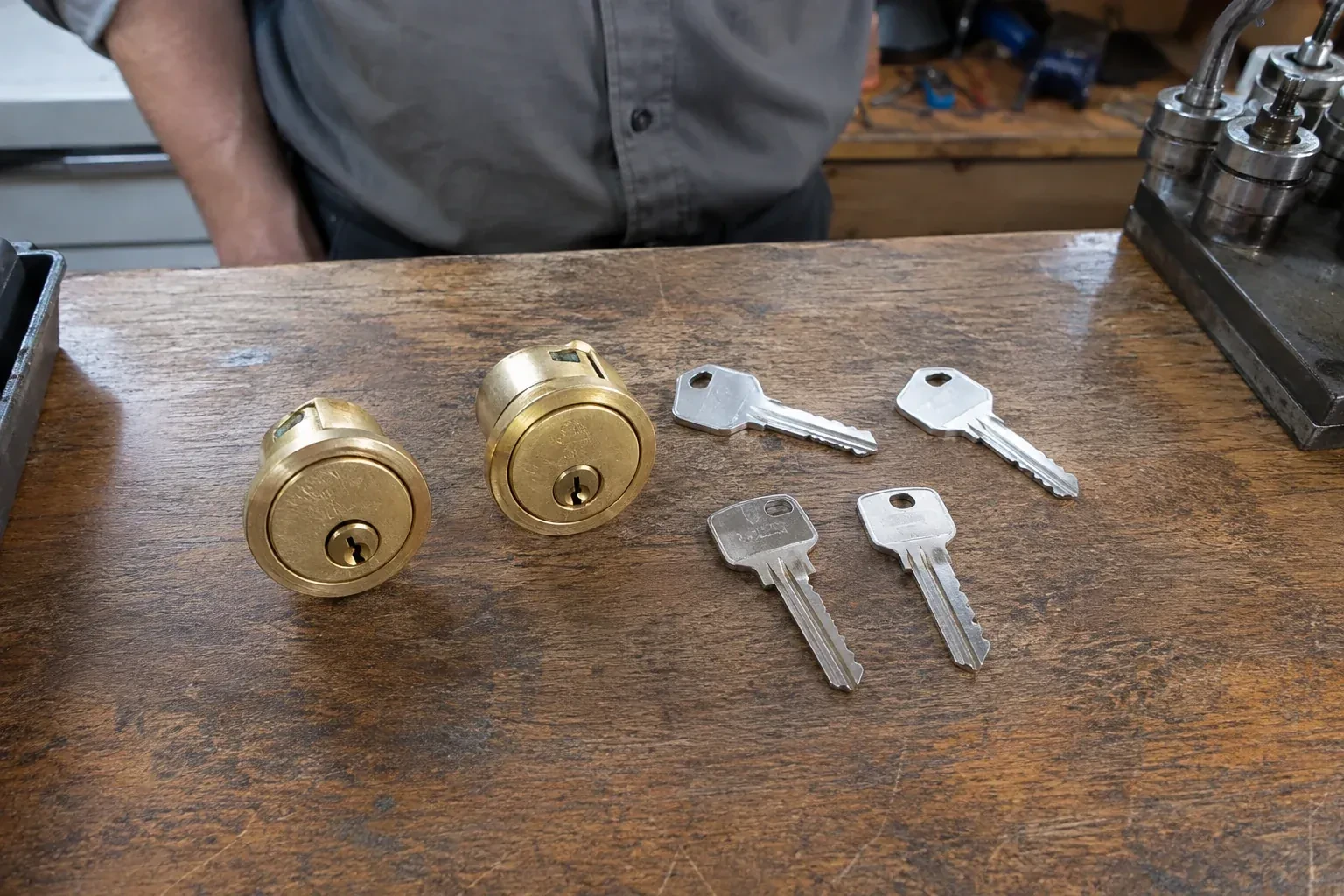
Often, yes, particularly with an interchangeable-core system where the core is designed to be swapped without removing the lock body from the door. Where the lock body itself is worn, damaged or of a grade that no longer suits the door's traffic, replacing the cylinder alone would leave the underlying problem in place, so the locksmith says which option actually fits the situation found.
What's the difference between cutting a key and programming it?
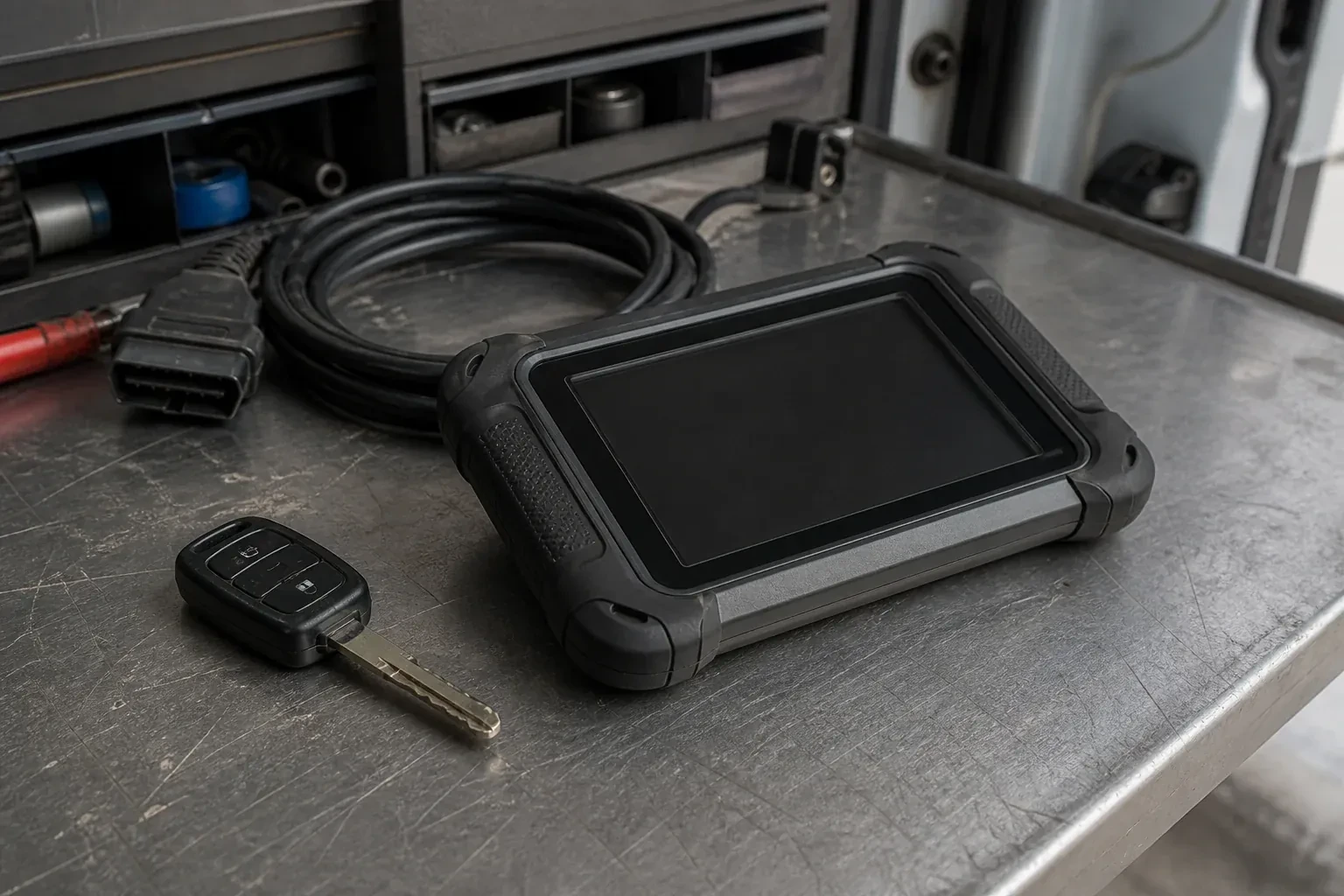
Cutting shapes a blank to match the lock, so it turns the mechanical cylinder in the door or ignition. Programming is a separate step where the chip inside the key head is taught to the vehicle's immobilizer, so the engine agrees to start. A key can be cut perfectly and still fail to start the car if that second step was skipped, which is the single most common source of confusion in this service.
What is the difference between decoding a lock and picking it?
Picking manipulates the wafers to open the lock without necessarily learning their depths, useful when the goal is just to turn the lock once. Decoding reads each wafer's actual depth, usually with a scope or a feeler-style tool, so that information can be turned into a cut key. For key service the lock is generally decoded rather than only picked, since the point is producing a working key, not just a single turn.
Request a visit
Our default for doors in Salem is to repair before replacing. A deadbolt that grinds usually needs its strike moved, not a new lock. A cylinder that fights the key often wants fresh pins and a clean. We say so, even when a replacement would be the easier sale, and when replacement really is right we explain why and show you the options in your hand.