Locksmith in Centre Wellington, OntarioLocked out?Let's sort it out.
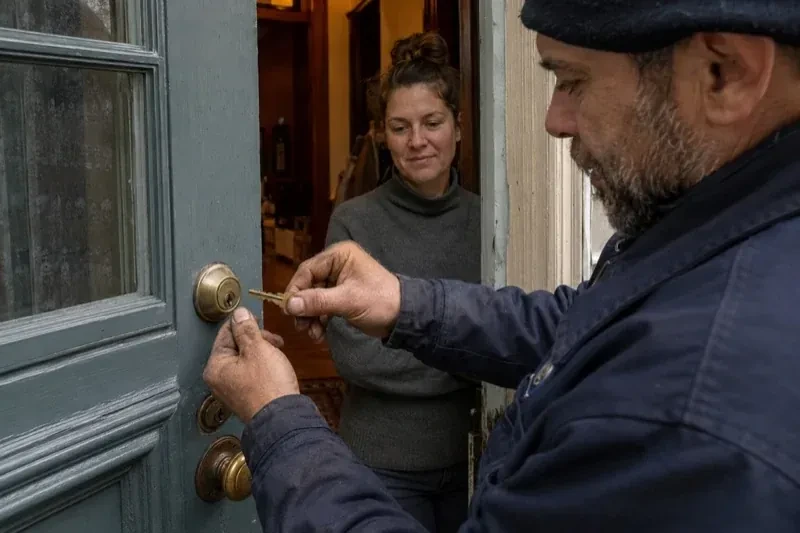
Standing outside your own door is a rotten feeling, and it happens to careful people all the time. We open homes and shops without drama, confirm the door is yours, and get you back inside with your evening intact.
Standing outside your own door is a rotten feeling, and it happens to careful people all the time. We open homes and shops without drama, confirm the door is yours, and get you back inside with your evening intact.
Rekey, repair, replace: whatever the door needs.
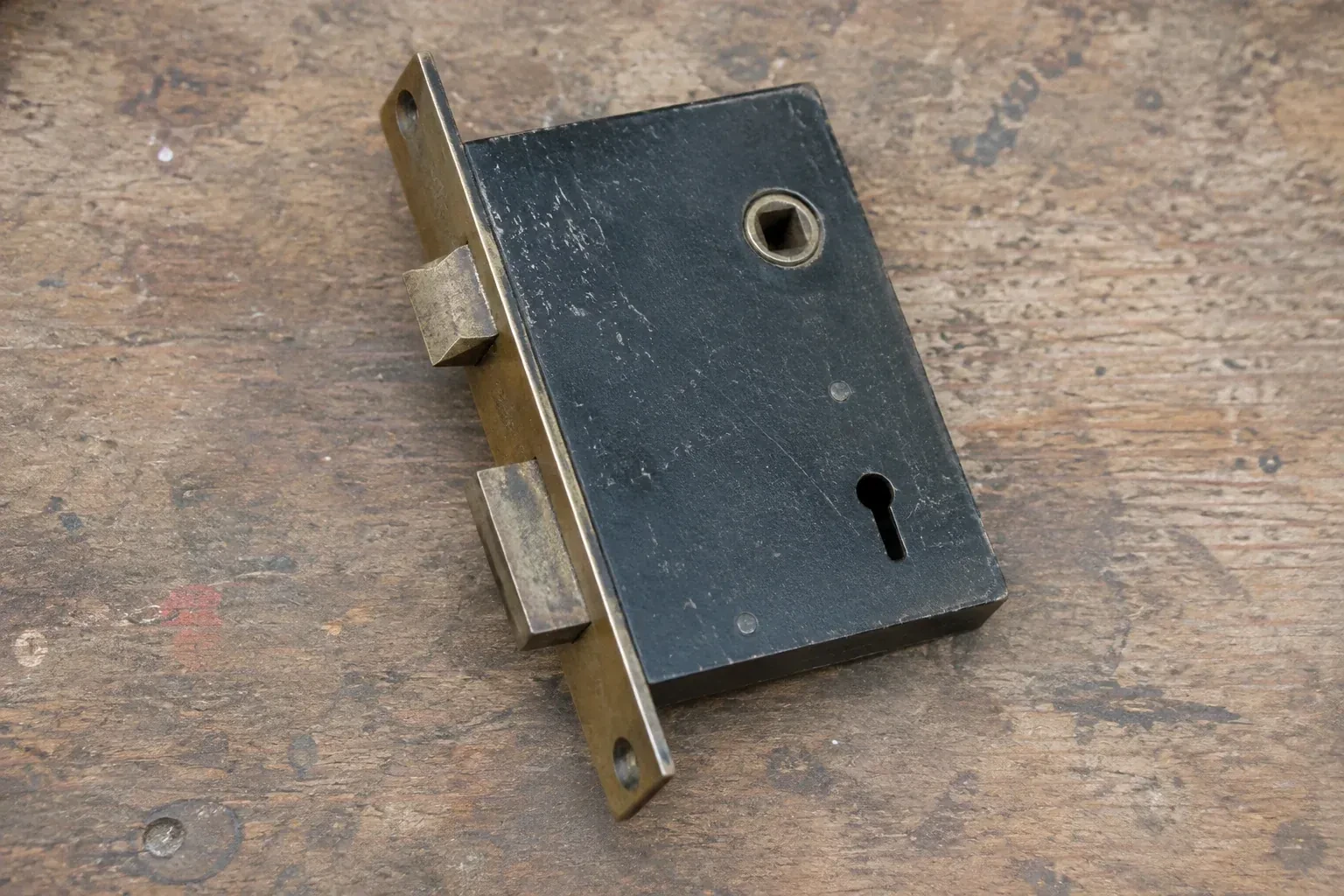
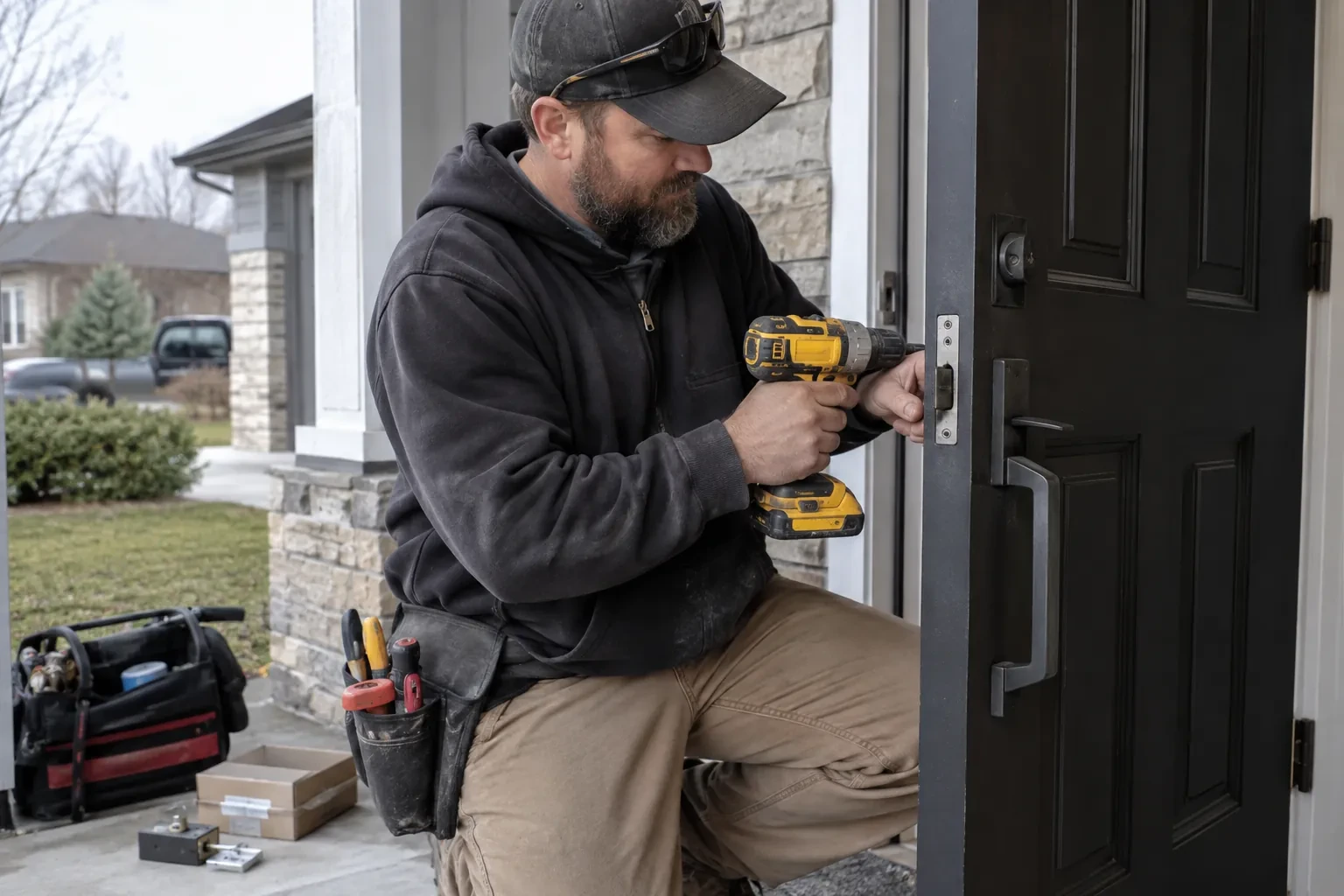
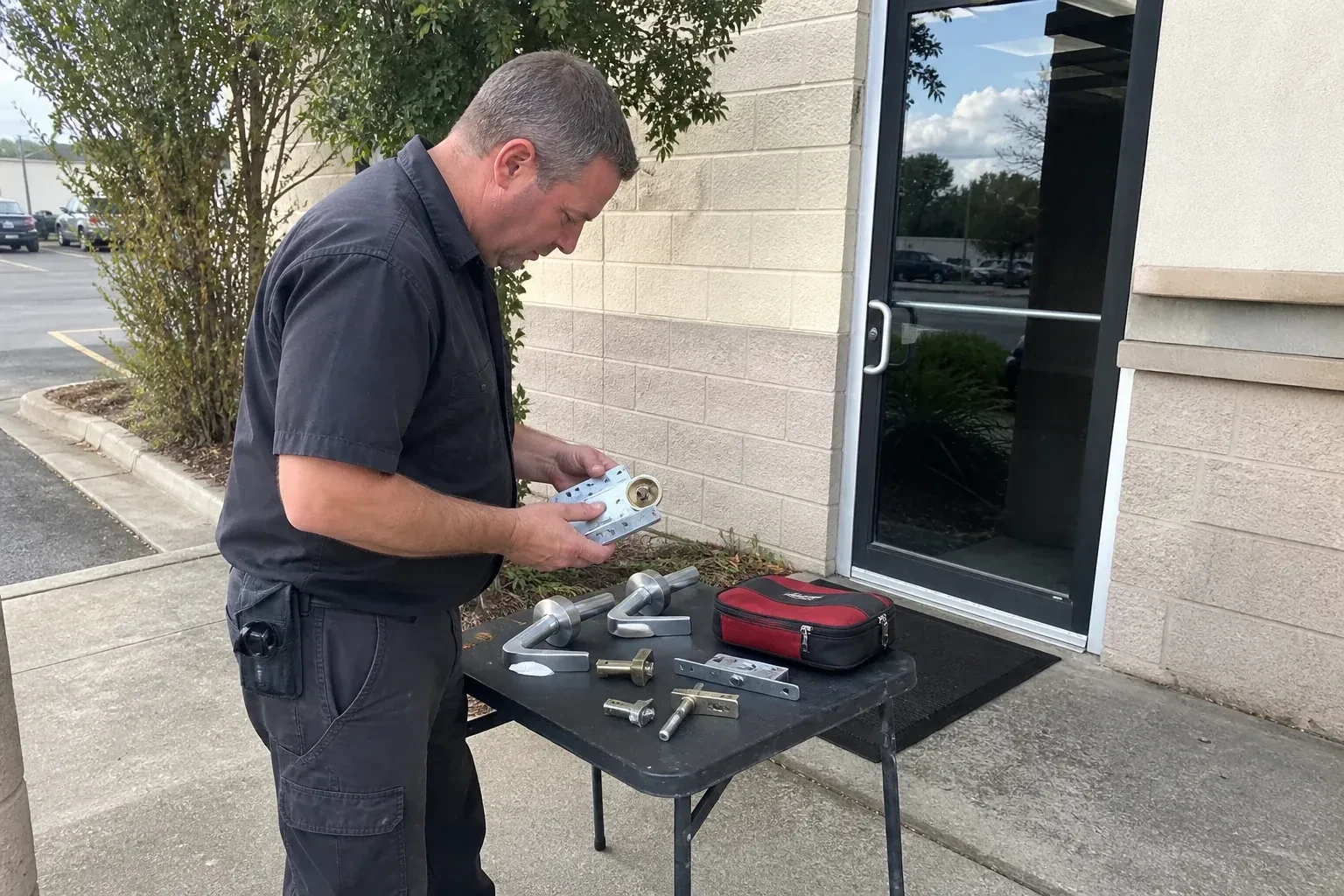
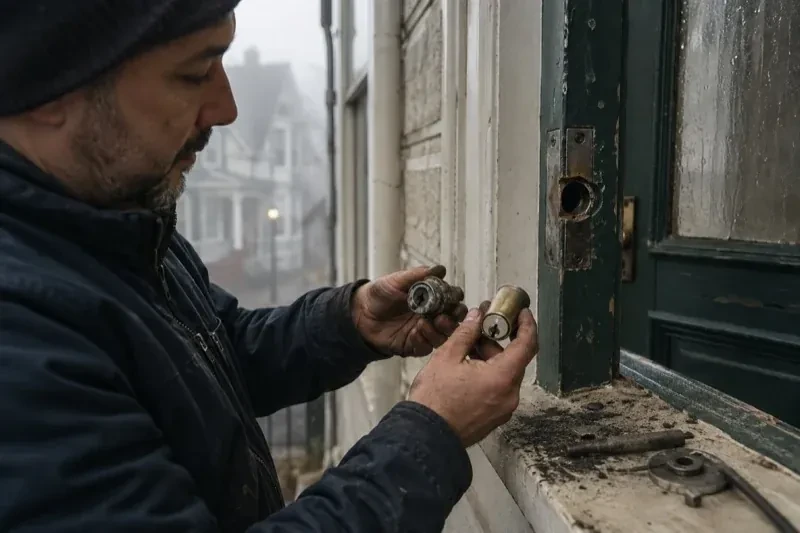
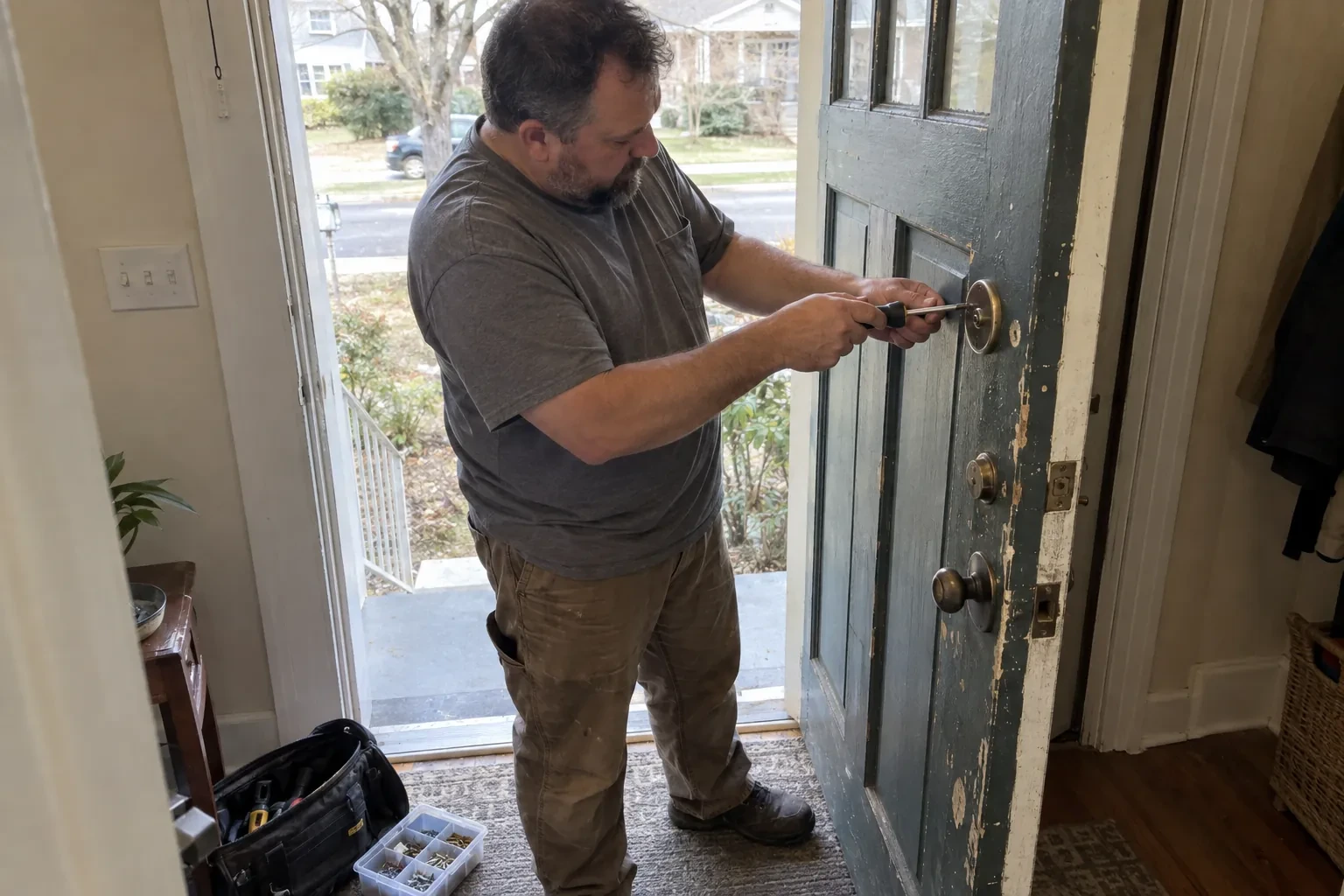
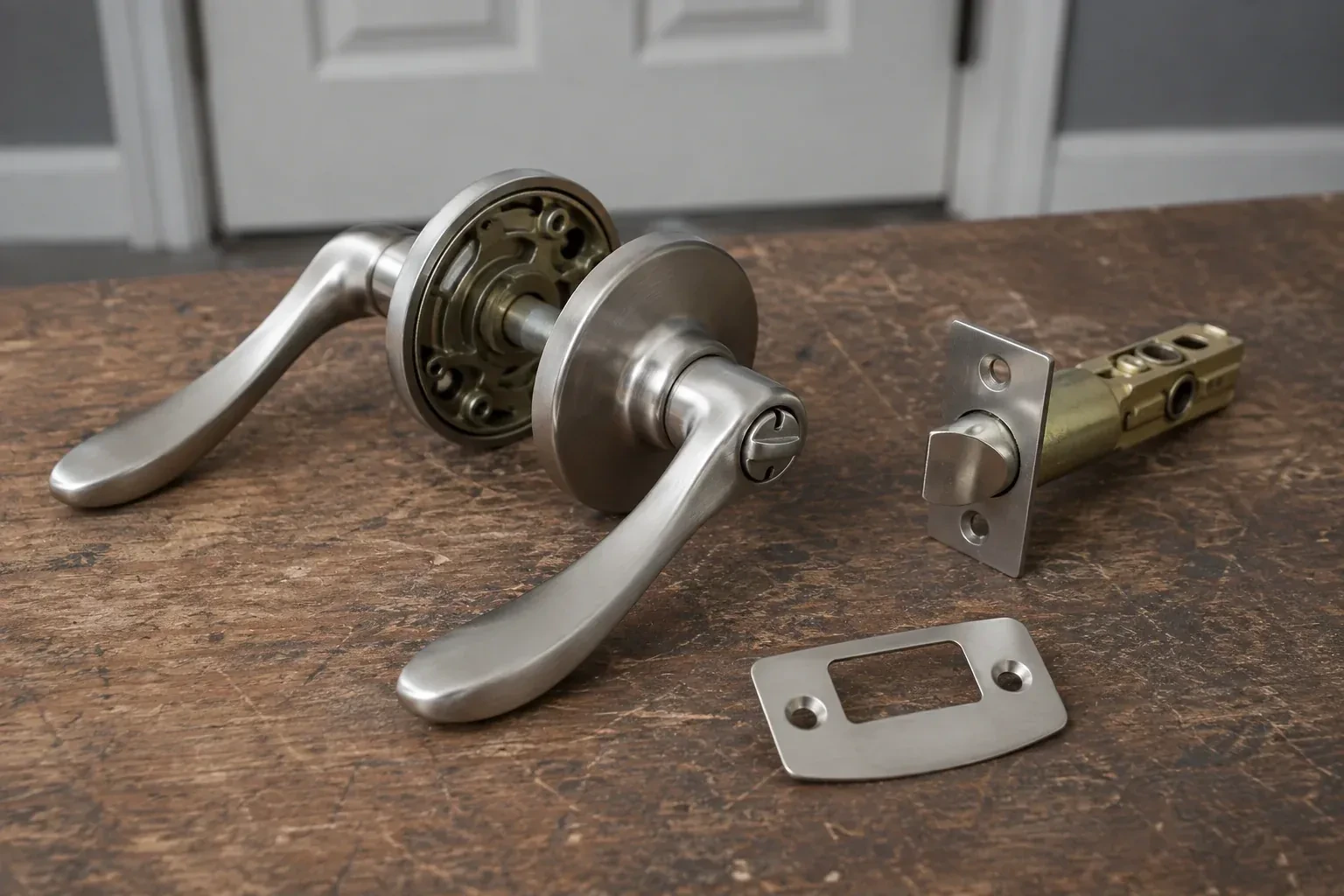
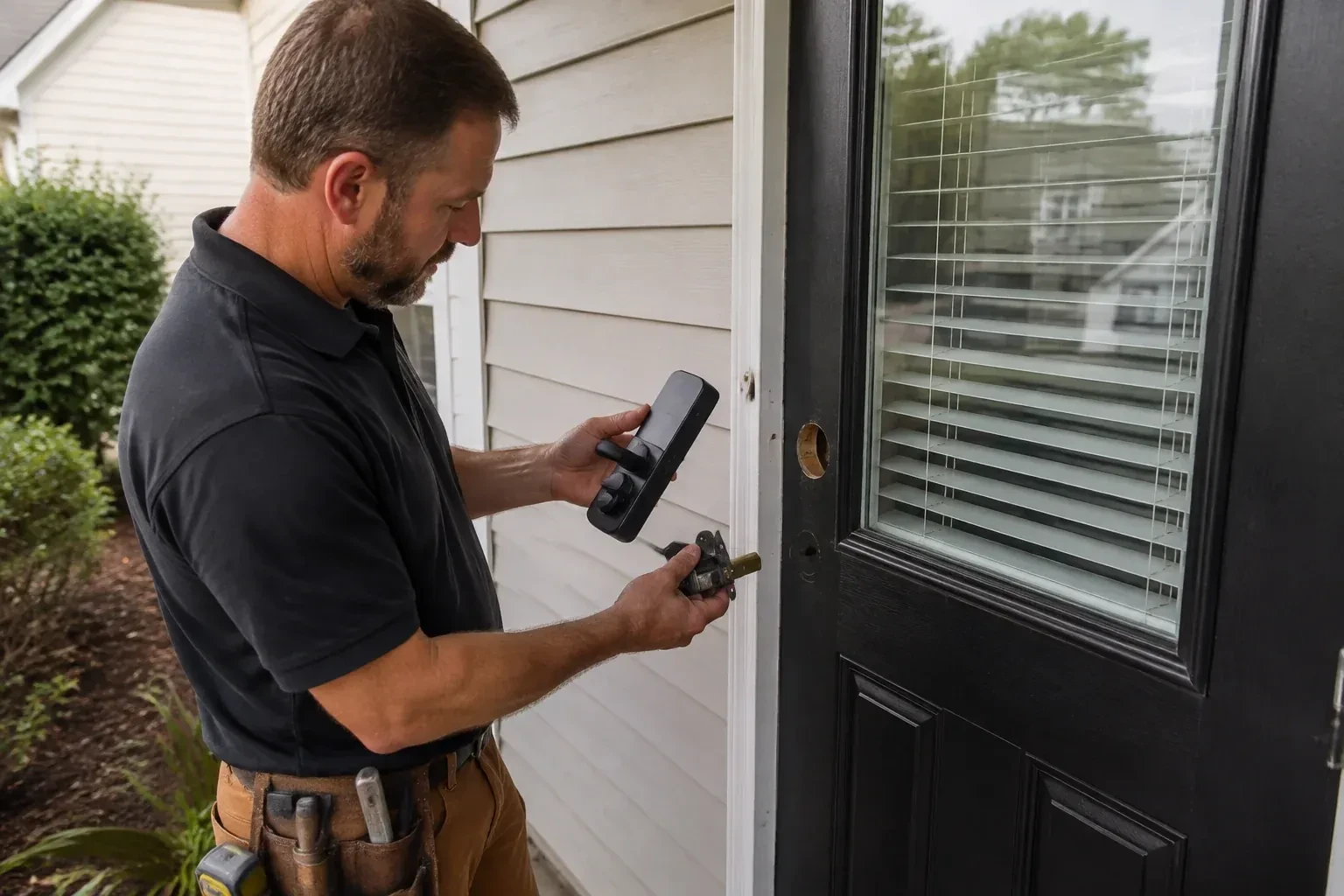
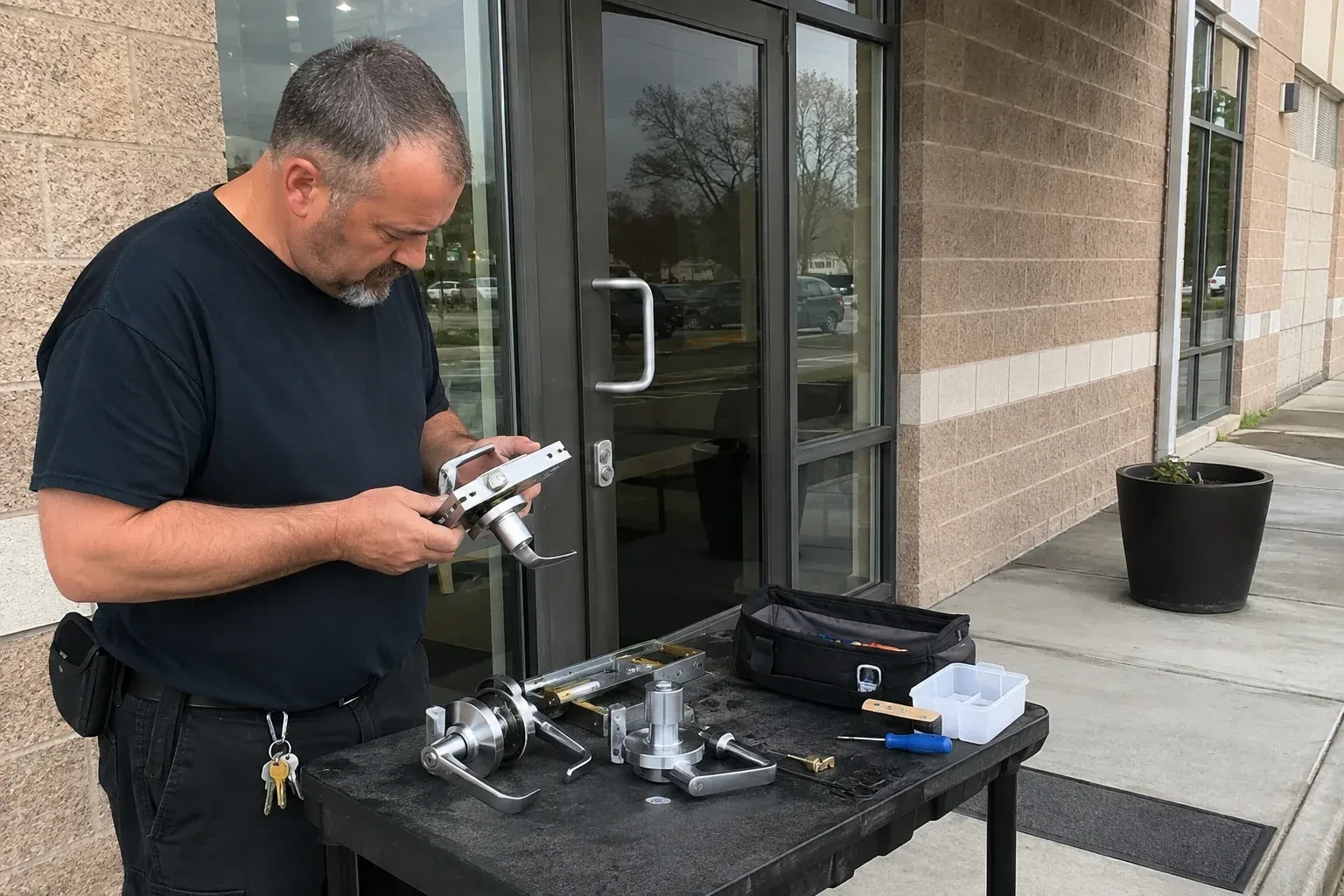
Good locksmithing is mostly measuring. Backset, bore, door thickness, the gap at the strike, the swing of the hinge: get those right and the hardware fits and turns without a struggle. Get them wrong and a new lock is worse than the old one. We measure twice, order once, and test every door with the key in hand before packing up.
The key you reach for. The door you come home to. Good locksmith work begins with understanding how you use them.
22years in business
24/7open every day
You set the pace. We explain, you decide, we work. If you would rather sleep on a bigger change, we do what is needed now and leave the rest for another visit.
The reasoning behind each suggestion. Every recommendation comes with the reason for it, in language that does not require you to know the trade. Ask why as often as you like.
Order restored. Tools packed, dust cleared, doors closed properly. We leave your home or business looking as it did, with the lock problem gone.
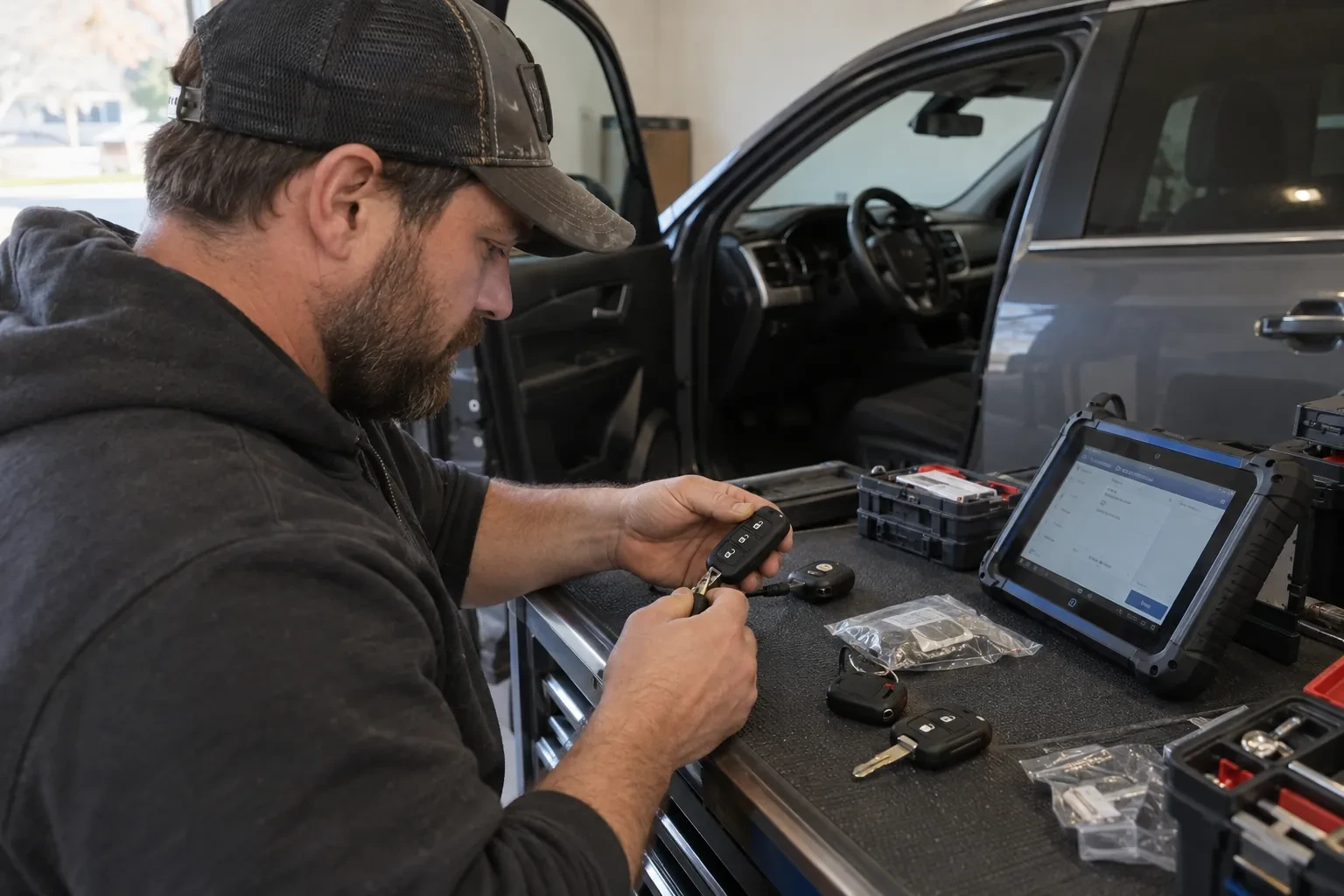
We split our work into emergency, residential, automotive and commercial, but plenty of jobs sit between them. A landlord's rekey is residential work done with commercial thinking. A car key made in a driveway is automotive work with a home visit. Ask, and we will place it.
The lawyer's envelope held two keys for the new house. The previous owners mention a cleaner, a dog walker and a brother who checked on the place, and the builder's paperwork shows six were cut originally. Four are unaccounted for.
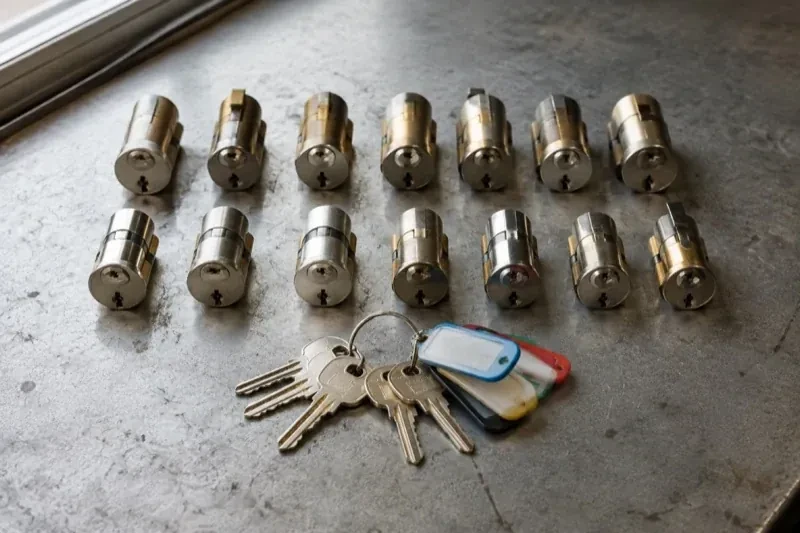
The previous owners left a coffee tin of keys on the counter, some labelled, most not. The house is yours now, but you have no idea how many copies were cut over the years or who still has one in a drawer somewhere.
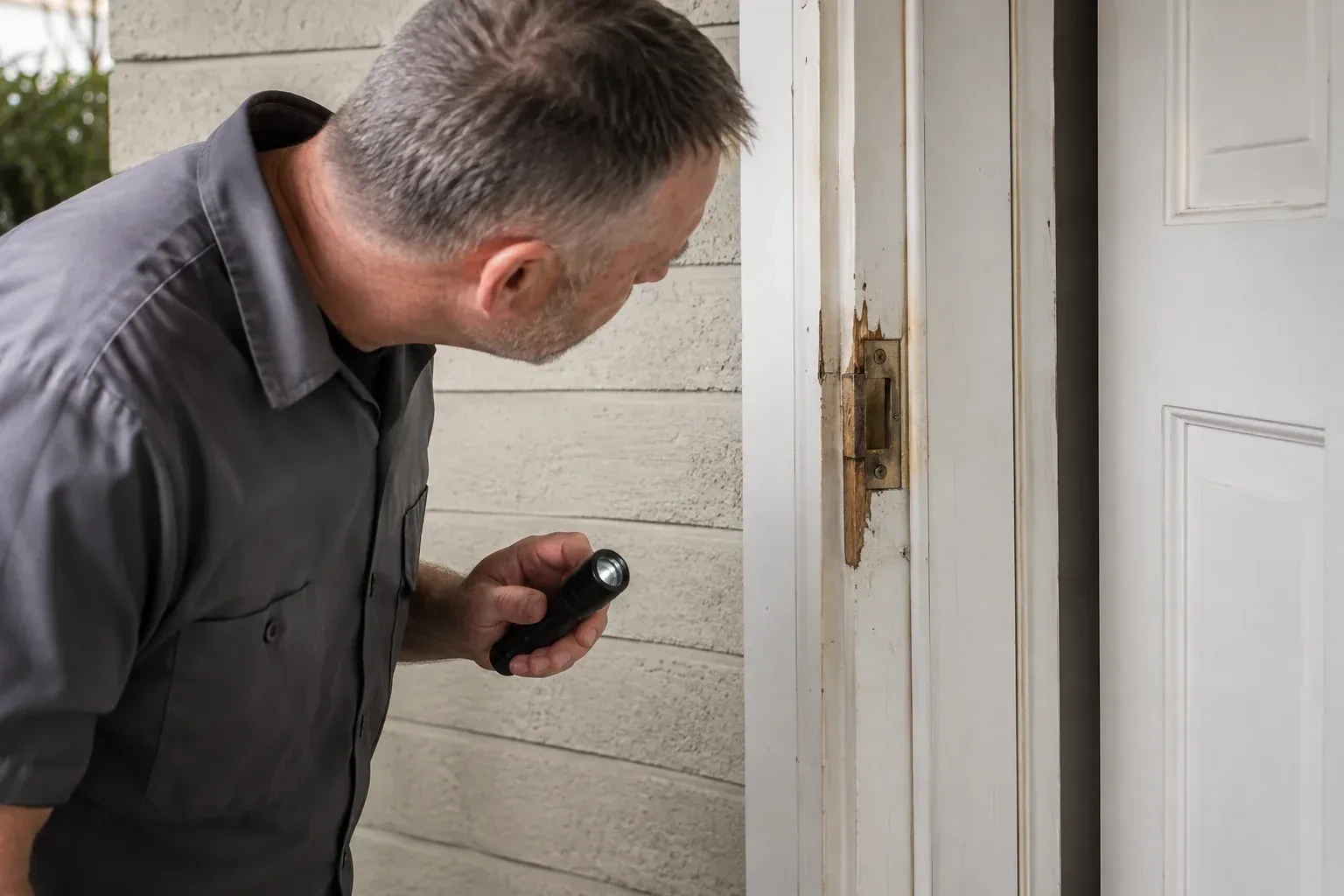
A break-in overnight took the cash float and a staff member's bag with her work keys inside it. The glass is being replaced this morning, but the key that opened the door yesterday will still open it tonight unless the cylinders are changed.
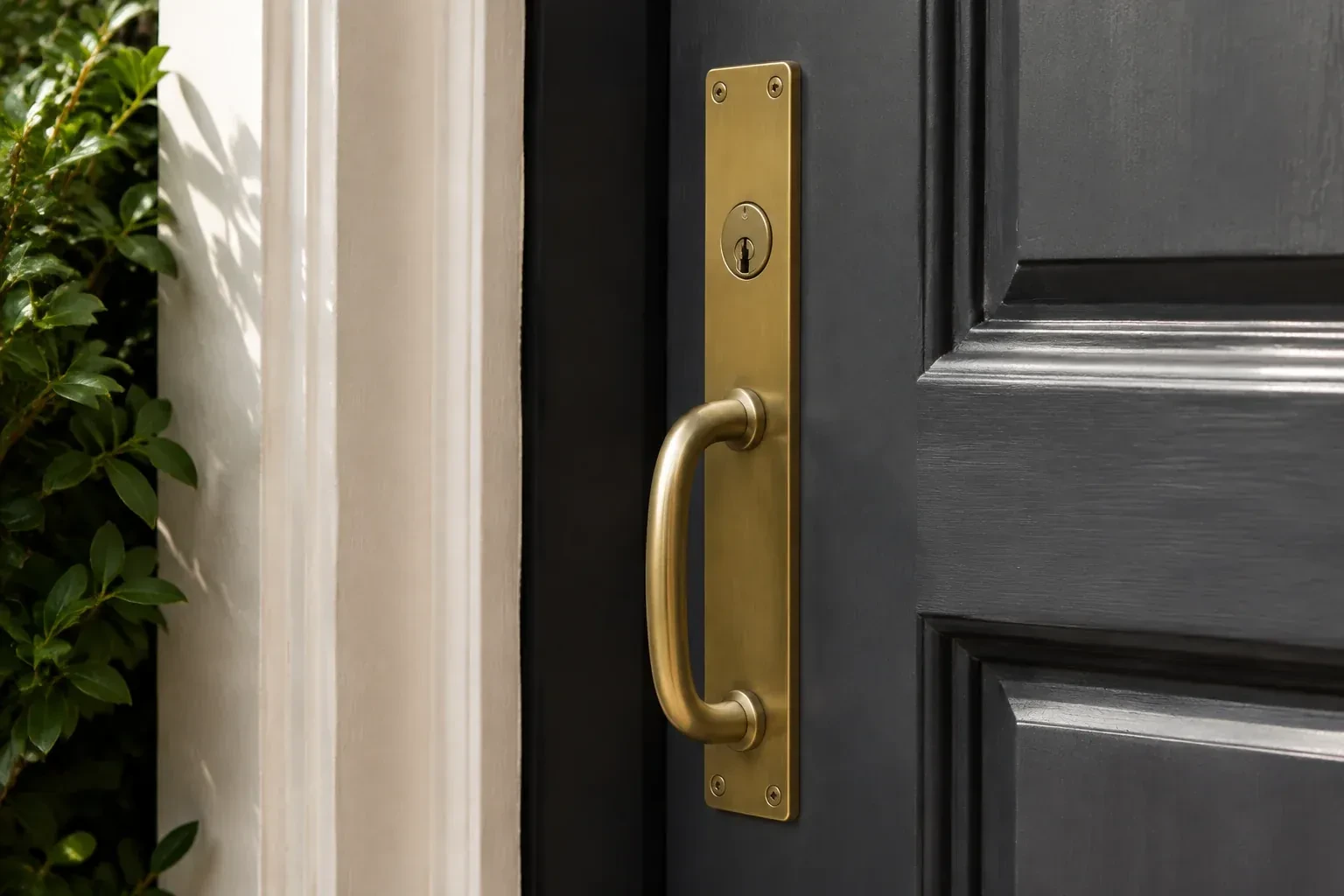
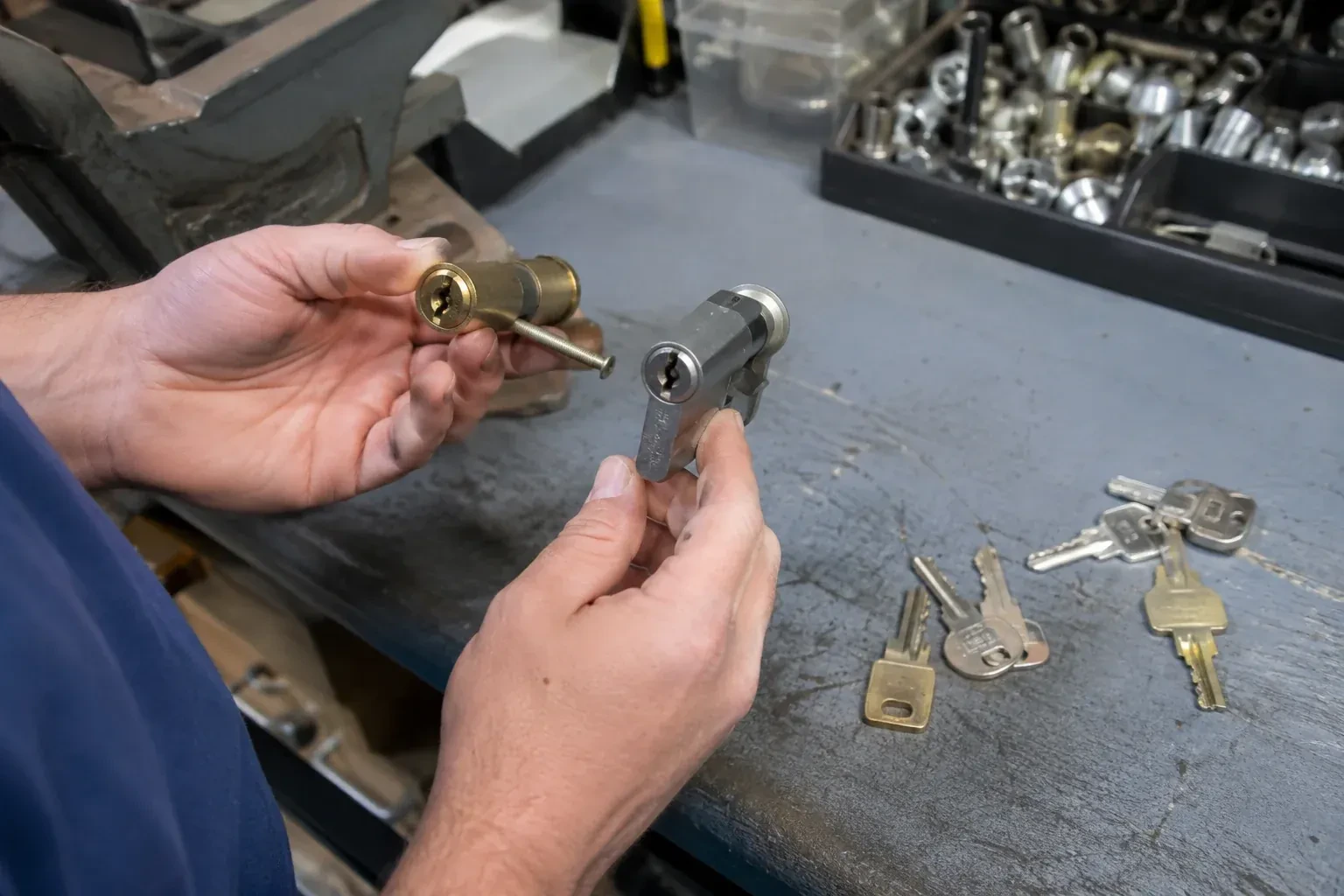
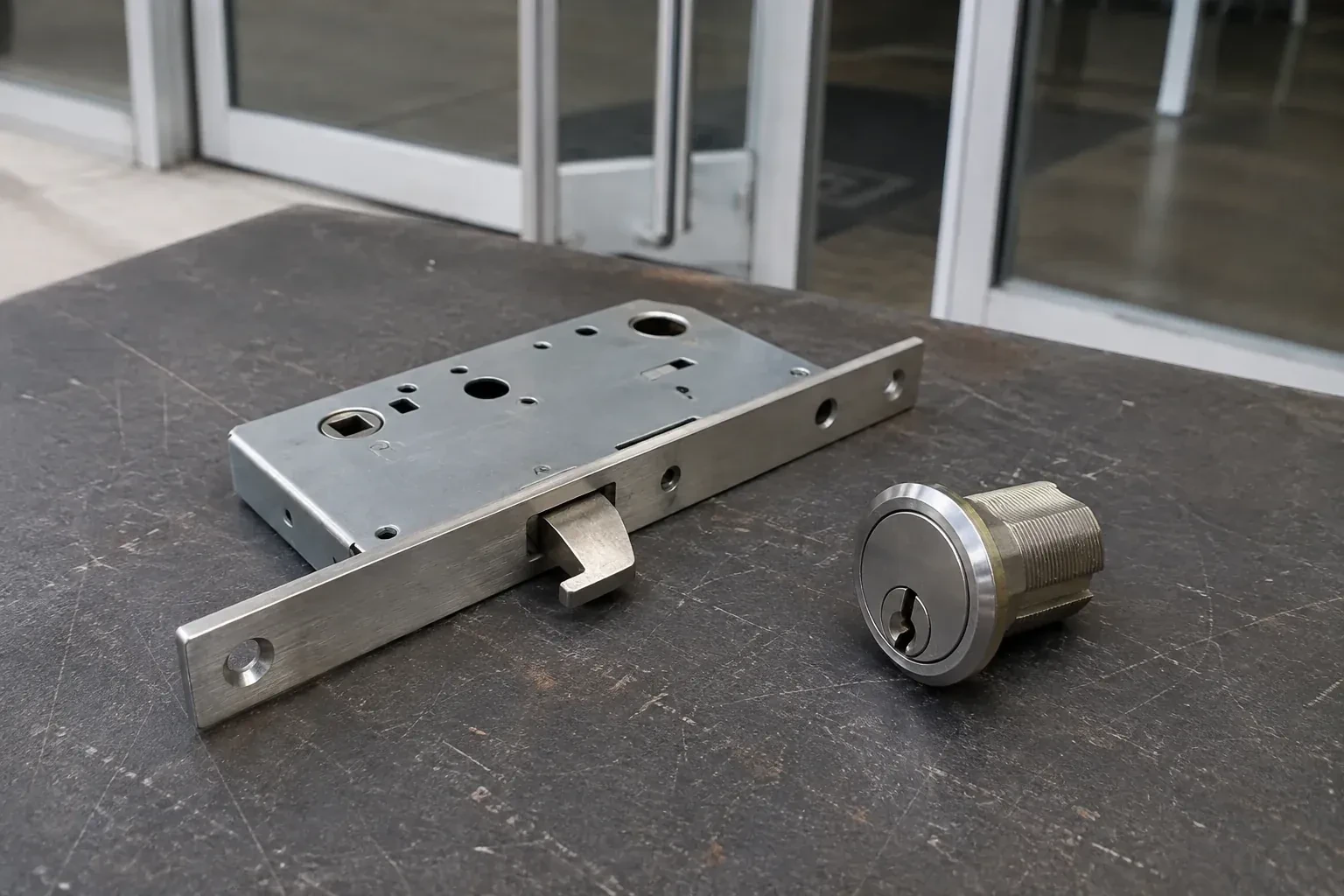
Deadbolts differ in how far the bolt travels, how hard the bolt is, whether the cylinder guard spins free under a wrench and whether the housing shrugs off a hammer. High security deadbolts do well on all four, and we can show you the difference in hand.
The house is fifteen years old and every exterior door still wears the light hardware the builder fitted: a short bolt, a thin strike held by two small screws, and a knob lock that never suited a street entrance.
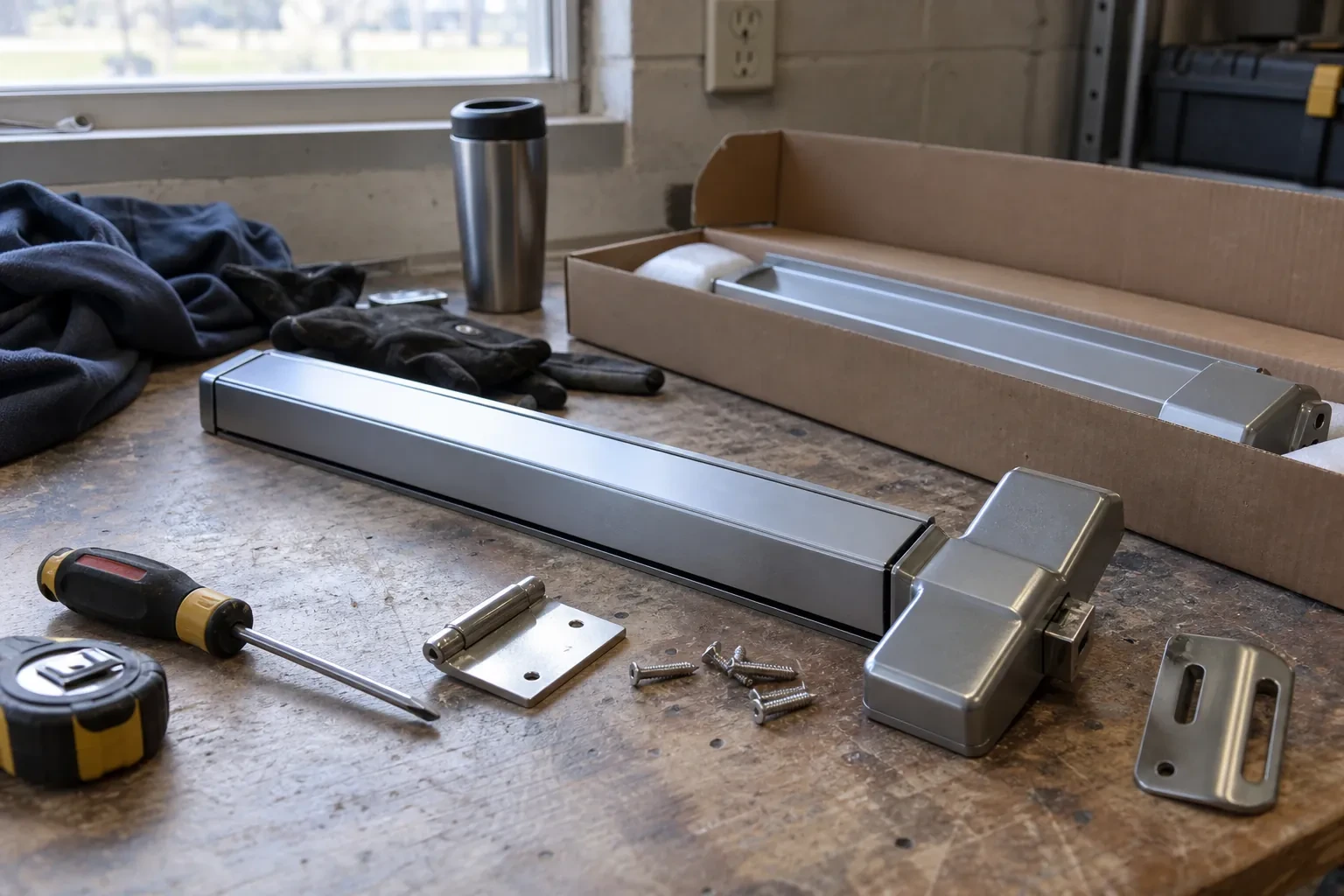
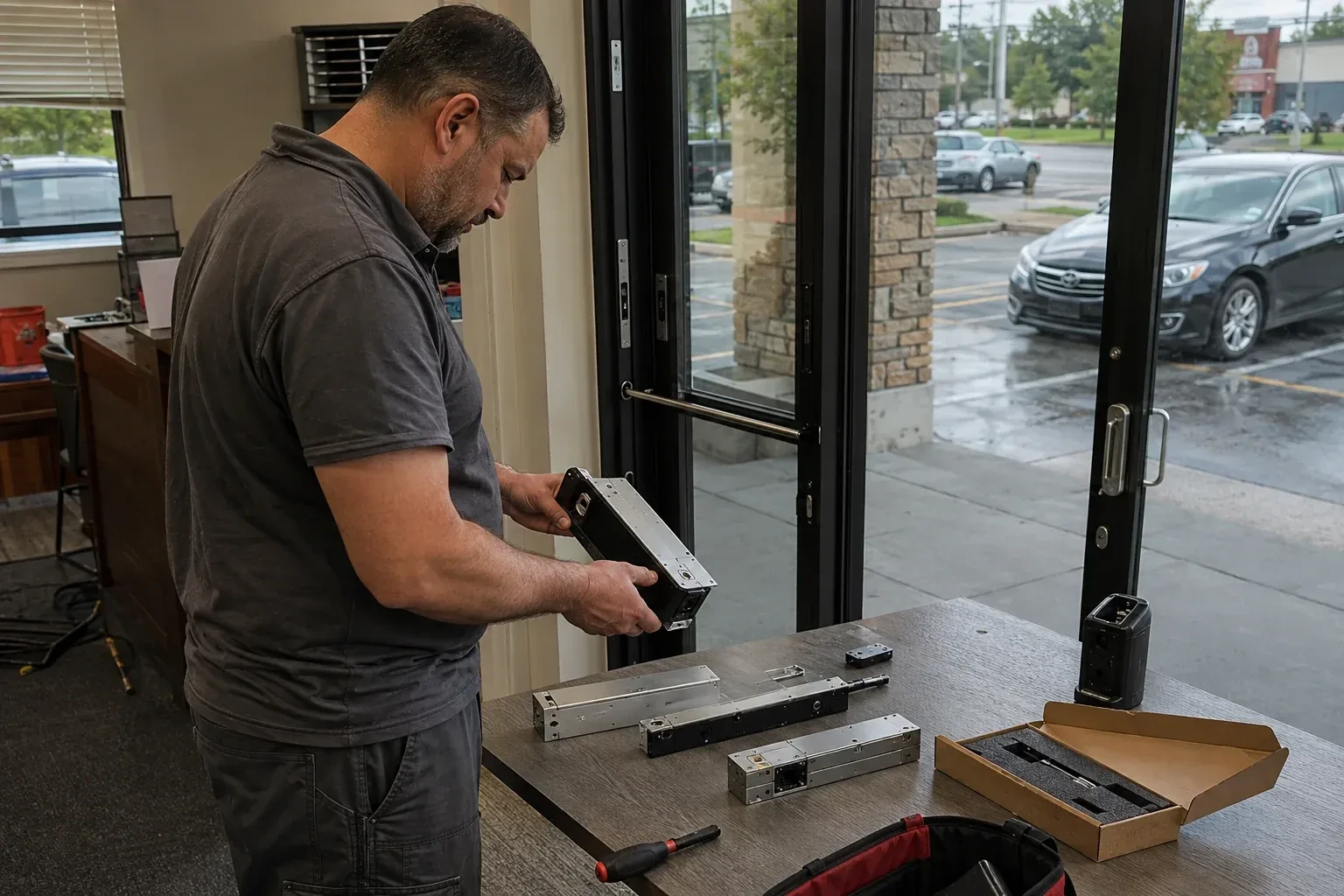
Every commercial door should do three things: open for the right people, stay shut for everyone else, and let people out in a hurry without a key. The services in this group serve those three, and we will say which door falls short on which one.
The pharmacy's drop safe has a keypad that finally lost power for good, and the little override key that was supposed to live behind the counter cannot be found anywhere.
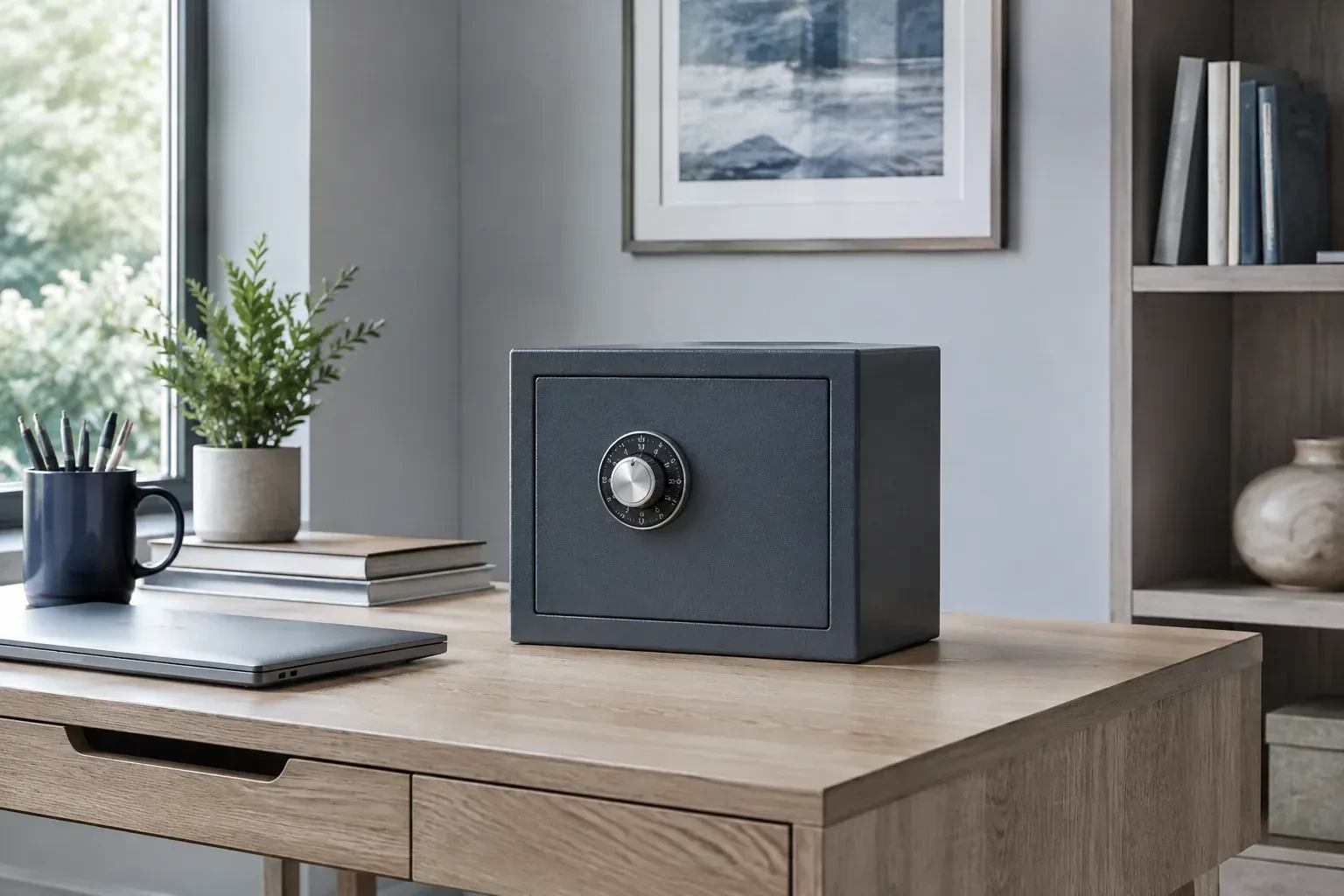
A community group counts the weekend's raffle and bake-sale cash on a kitchen table, then carries it home in a tote bag until the bank opens Monday, because there has never been anywhere safer to leave it.
Which fix fits?
Your smart lock stopped responding and the app shows nothing.
WhyA break-in repair happens alongside a police file and an insurance claim, and a good locksmith keeps both in mind.
How a visit goes
Describe the property, the hardware and what has changed, and the visit starts from what you have seen.
1
2
3
01
Making the door safe first
The priority is a door that closes and locks tonight. We assess the frame, the strike and the lock, and secure whatever was forced so you can stop worrying about the opening.
02
Sorting permanent from temporary
Some damage needs a proper repair later; some can be fixed on the spot. We separate the two clearly and explain what a lasting fix involves without pushing you into it.
03
Rekeying or replacing
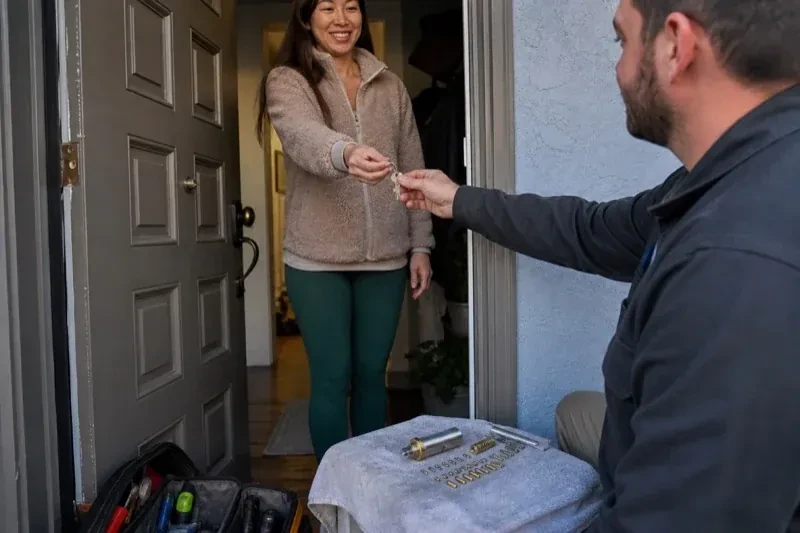
If keys were taken or the lock was compromised, we rekey or replace before leaving. You end the visit with a door that locks and keys that only you hold.
About 41% of homes in Centre Wellington were built in 1980 or earlier, according to the 2021 Census.
Where housing is mixed, doors that have been replaced sit beside doors that never were. A new door in an old frame, or an old door in a repaired frame, needs its strike and hinges checked together so the whole assembly works as one.
Single-detached houses make up about 73% of homes in Centre Wellington (2021 Census).
Mostly houses
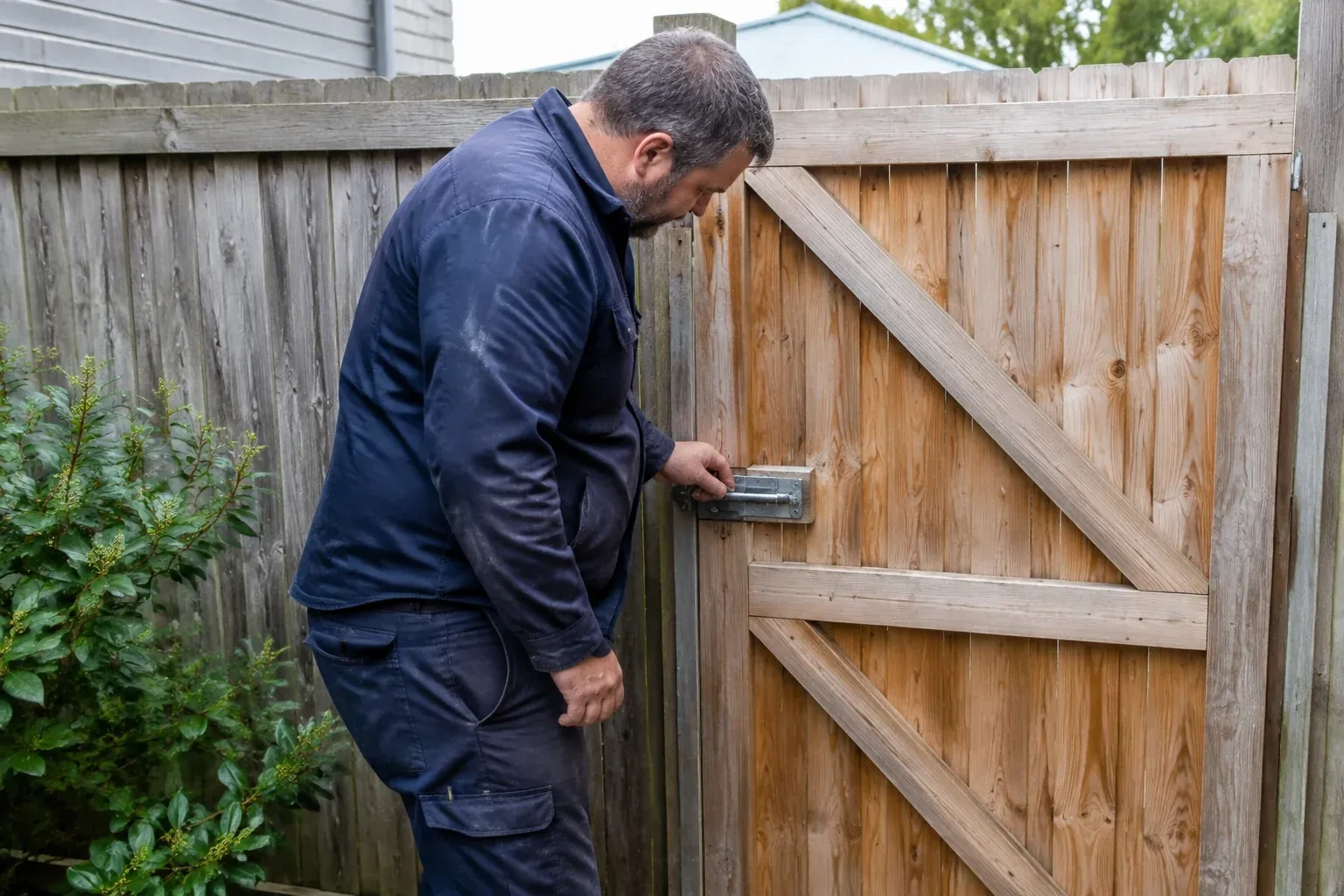
Detached houses have their own garages, sheds and gates, and each tends to carry a lock chosen on the day it was needed. A locksmith visiting such a home looks at all of them, not just the front door, and brings the whole property up to one standard.
I just moved in. Should the new deadbolt be keyed to a new key?
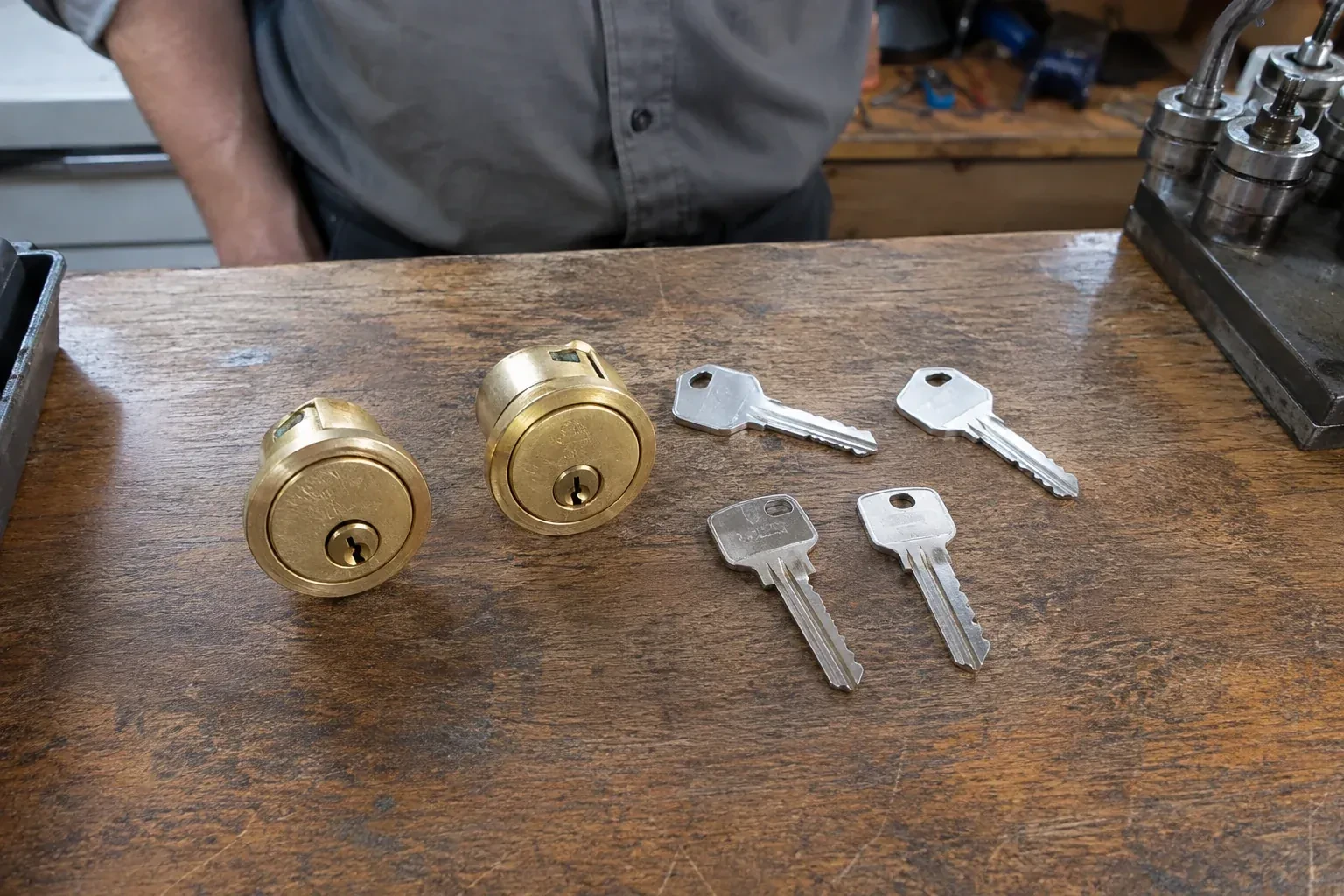
It is a good moment for it. Nobody knows how many copies of a previous owner's key exist, so pinning the new bolt, and the rest of the exterior doors, to one fresh key retires all of them at once. Lock manufacturers list a move as one of the main reasons to rekey. You come away with a known number of keys, each tested in every door it is meant to open.
Can I supply my own deadbolt?
Yes. Bring the box, the template and the instructions, and tell the locksmith the model beforehand so the bore and backset can be checked against your door. If the kit turns out to need a larger hole or a different faceplate than the door has, the locksmith adapts the door or suggests a matching model. Hardware bought online sometimes arrives set for a different door thickness, which is a small adjustment on site.
What about glass beside the door or a window in it?
Glass within reach of the lock is the one case where a plain thumb-turn deserves thought. Options include a captive thumb-turn that turns freely until you remove its small key, laminated glass or a tested security-film system with its specified frame attachment, or simply setting the bolt farther from the glass. Lock manufacturers describe sidelights as a weak point, so the locksmith measures the reach and lays out the choices rather than defaulting to a key on the inside.
Do high security locks need special maintenance?
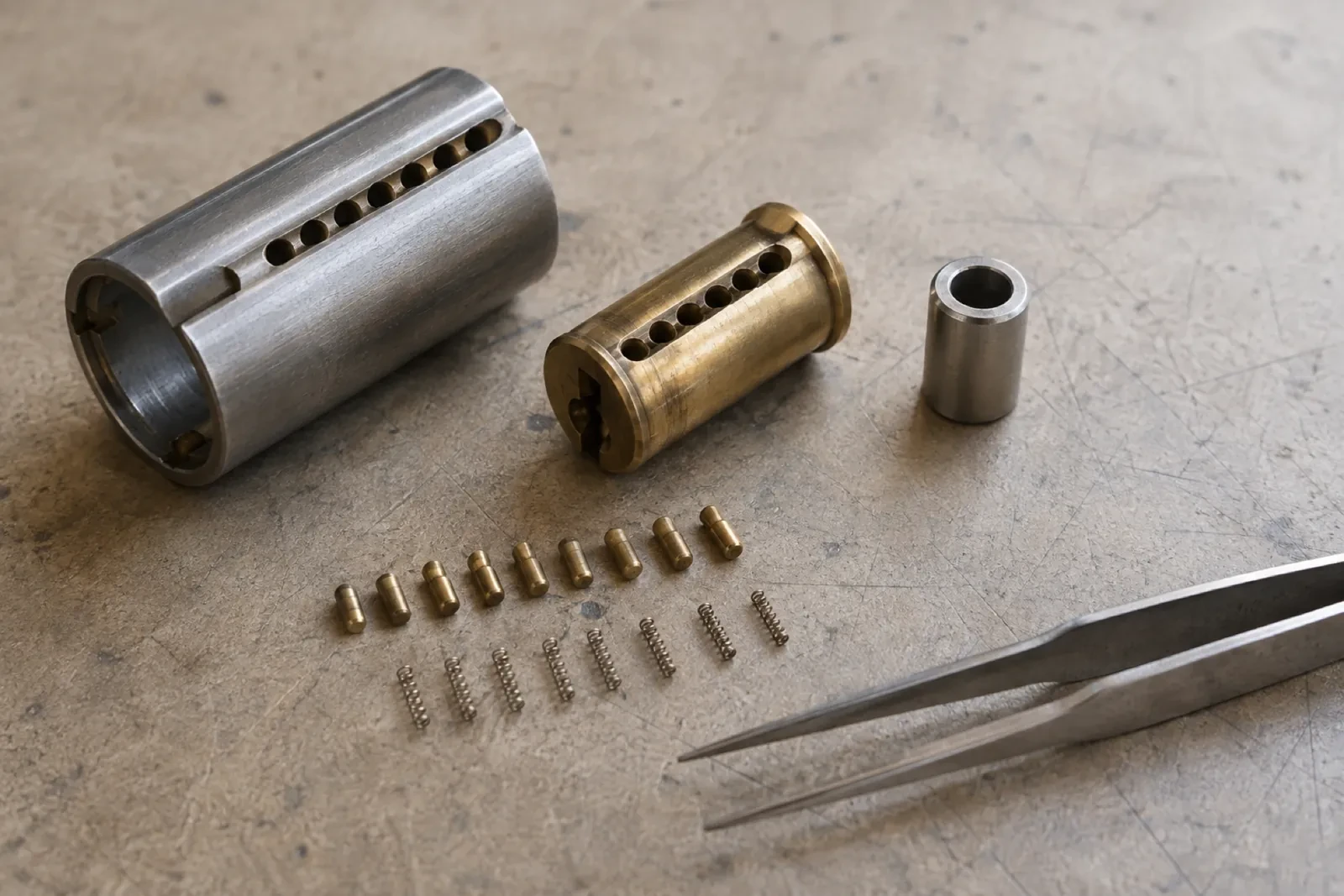
Only light care. Use the dry lubricant the locksmith recommends once or twice a year, never oil, which gathers grit around the finger pins and sidebar. Keep the keyway free of debris and insert the key fully before turning. In winter, warm a resisting key in your hand or use a de-icer rather than forcing it. Check hinge and strike screws each season so the door stays aligned. Treated this way the cylinder lasts for decades.
Request a visit
Winter is part of how we work in Centre Wellington. Doors swell and shrink, frames shift, keys snap in cold cylinders, and salt finds its way into hardware. We choose lubricants that stay fluid in the cold, set strikes with the seasons in mind, and show you the small habit that stops a key from freezing in the lock.