Lockouts · Centre Wellington
Break-In Damage Lock Repair
The patio slider is sitting crooked on its track.
In plain words
A break-in repair happens alongside a police file and an insurance claim, and a good locksmith keeps both in mind. Before any hardware is moved the damage is photographed as found: door face, edge, strike, jamb, hinges and glass. The old parts are kept for the adjuster unless you prefer otherwise, and the written record at the end lists what was broken, what was replaced, what was reinforced and what is left for another trade. Insurers ask policyholders to document losses, keep damaged property and keep receipts, and this visit produces all three. You choose who does the repair; the locksmith makes it easy to show what it took.
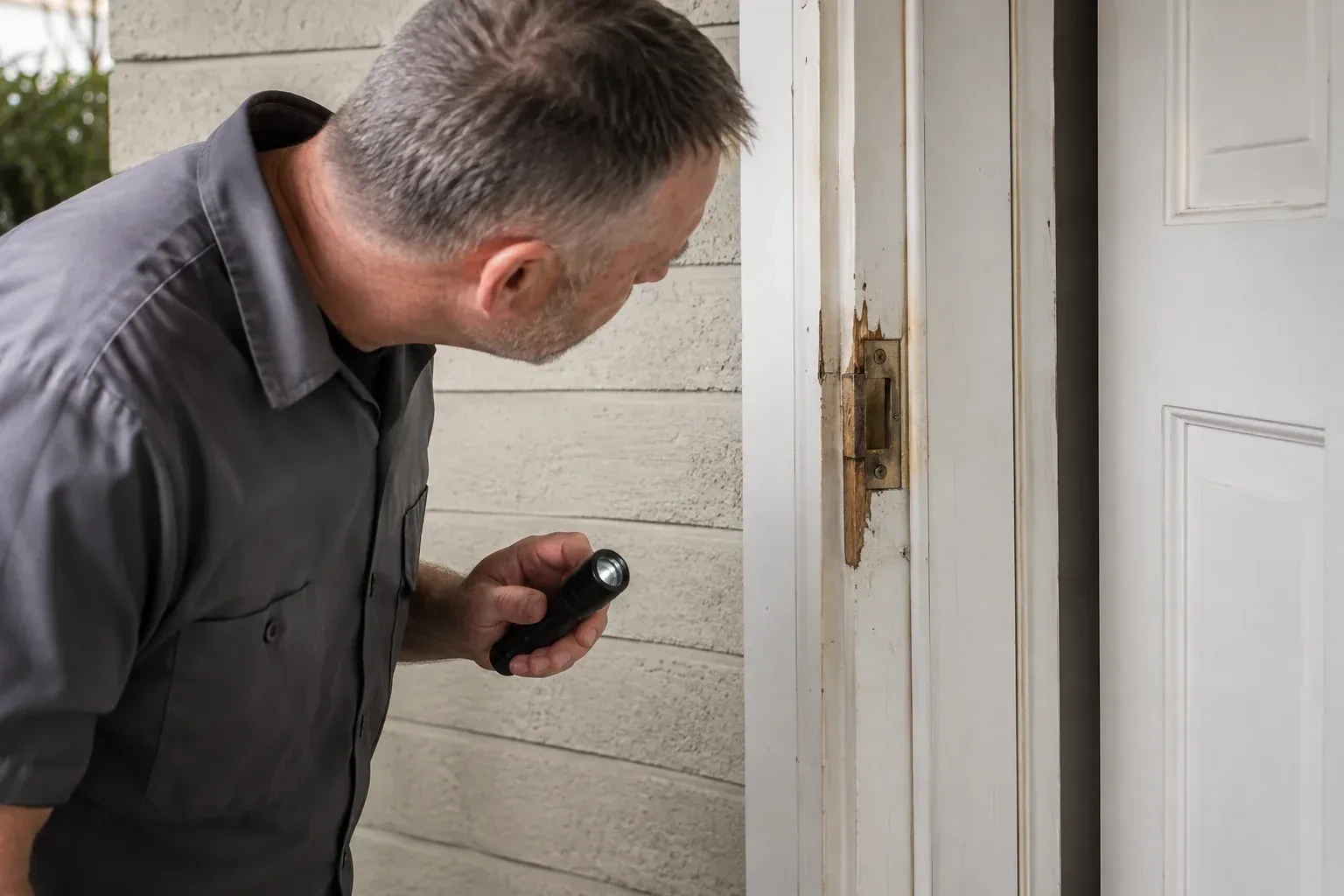
How the visit goesYou came home to find the front door standing open. The deadbolt is still thrown, but the strike plate is dangling from one screw and a fist-sized piece of the jamb is lying on the hall floor.
Break-In Damage Lock Repair
How the visit goes


Does the door still hang true
An impact hard enough to break a strike usually moves the door as well. The locksmith checks that the door sits square in its opening, closes on its weatherstrip without force, and that the bolt lines up with its pocket rather than dragging on the strike lip. Hinge screws are tested for grip, since a kick can pull them from the jamb even on the side that was not attacked, and the hinge leaves are checked for bending. Manufacturers treat strike position, pocket depth and door alignment as working parts of the lock, and a repair that ignores them produces a door that locks badly the day after it was fixed.
Securing the opening for the night
Before anything permanent, the door has to close and lock. Where the slab and frame are sound, a new deadbolt or cylinder goes straight in and the job moves on to reinforcement. Where the jamb is split, a steel repair plate is screwed over the break to hold the wood together and give the strike something to bite, or the strike is boxed and screwed into the stud behind the damage. Where the frame or door is too broken for hardware, plywood is fitted across the opening with cleats from inside, arranged so the household can still get out without a key. You know before the locksmith leaves exactly how the door is being held.
Glass and the reach-in problem
When entry came through glass beside the door, the lock was never the weakness, and the follow-up is about the glass. A tested security-film system, applied with its specified frame attachment, can slow an arm from passing through the sidelight, or the pane is replaced with laminated glass by a glazier. Where the layout allows, the deadbolt is repositioned beyond arm's reach of the glass. A thumb-turn stays on the inside, because it lets everyone leave without hunting for a key, and a keyed inside cylinder trades one risk for a worse one if there is ever a fire. The result keeps the intruder out and the way out clear.
Break-In Damage Lock Repair
In the van
Wrap-around door edge reinforcer
Three-inch strike and hinge screws
Jamb repair plate
Hinge reinforcement plate
Anti-lift blocks and foot bolt

Break-In Damage Lock Repair
What affects the quote
Grade of the replacement deadbolt
A residential deadbolt with a one-inch throw and hardened insert, a heavier commercial-grade unit and a keypad or smart deadbolt sit at different points, and the quote names the one you choose.
Door and frame material
A wood jamb over a stud takes standard reinforcement. Steel frames, jambs on masonry, fibreglass doors and aluminum storefront stiles each need their own fasteners and methods, which changes both labour and parts.
Matching finish and style
Choosing hardware that matches the existing trim, finish and handle style on your other doors can mean ordering rather than fitting from stock, which the quote notes.
What to have ready
- Is this a suite door in an apartment or condo building?
- Have the police been called, and do you have an occurrence number?
- Have you photographed the damage as you found it?
Break-In Damage Lock Repair: questions
QuestionsWill the repair be visible from outside?
Mostly not. A boxed strike sits flush in the jamb, long screws hide behind hinge and strike plates, and a repaired jamb is filled and dressed so paint or stain covers it. A wrap-around door edge reinforcer is the one part that shows, as a slim steel band at the lock, and it can be finished to match the hardware. New deadbolts are matched to the trim on your other doors where you want them to blend in.
Can the locksmith start before the police have finished?
The door is left as found until the police have seen it or said they will not attend. What can happen in the meantime is planning: the locksmith can look at the damage, photograph it, measure for hardware and prepare the temporary securing so that the moment the scene is released the work begins. Nothing is removed or moved before then, because the marks on the door are part of the report.
Someone reached through the sidelight to turn the thumb-turn. Should I fit a deadbolt keyed on both sides?
It is tempting, but a thumb-turn lets everyone in the household leave by that door without hunting for a key, special device or special knowledge, so a keyed inside cylinder is the wrong fix. Better answers are a tested security-film system or laminated glass in the sidelight to slow an arm from passing, moving the deadbolt beyond arm's reach of the glass where the door allows, and a glass-break sensor if you have an alarm.
Related services
- Business Lockout ServiceThe key went in stiffly, turned a quarter of the way, and came out in two pieces.
- Broken Key ExtractionOvernight the deadbolt froze, and this morning the key would only turn partway.
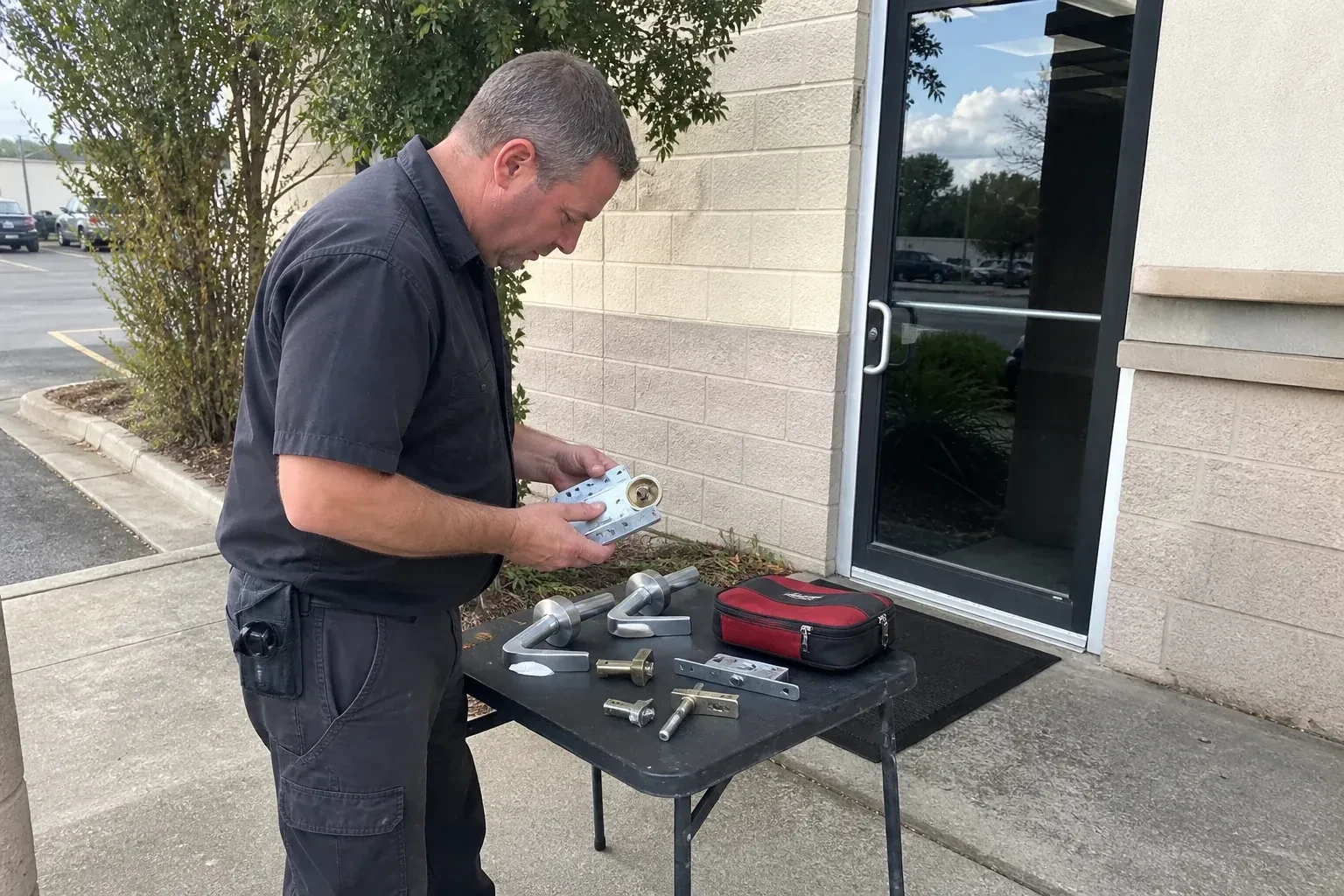
- Seized & Jammed Lock OpeningThe shop's lever handle goes down as usual, but the latch inside the mortise case never pulls back.