Change or rekey · Centre Wellington
Deadbolt Installation
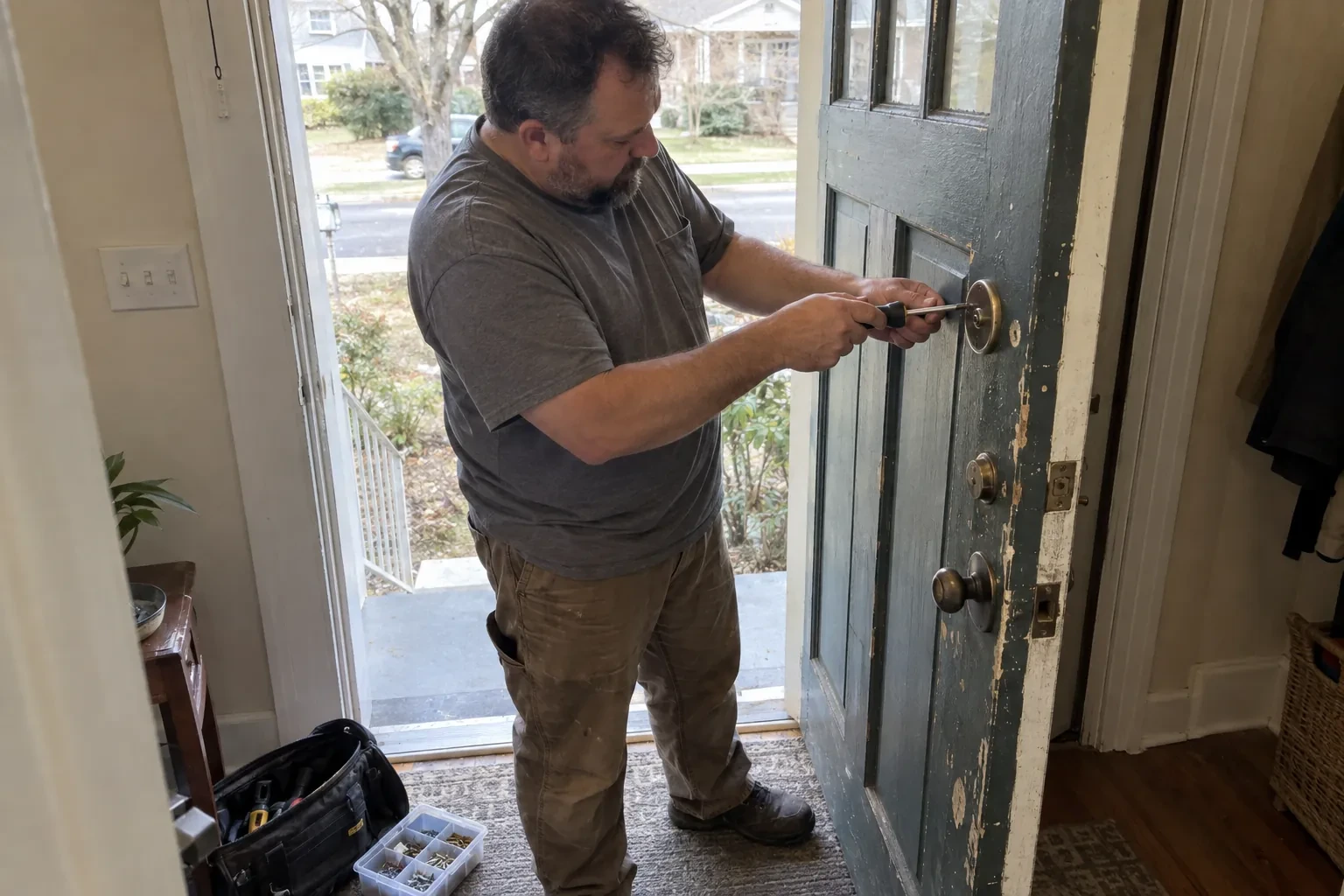
The back door has a deadbolt in name only: a short bolt, a thin brass strike held by two little screws, and a jamb you can flex with your palm.
In plain words
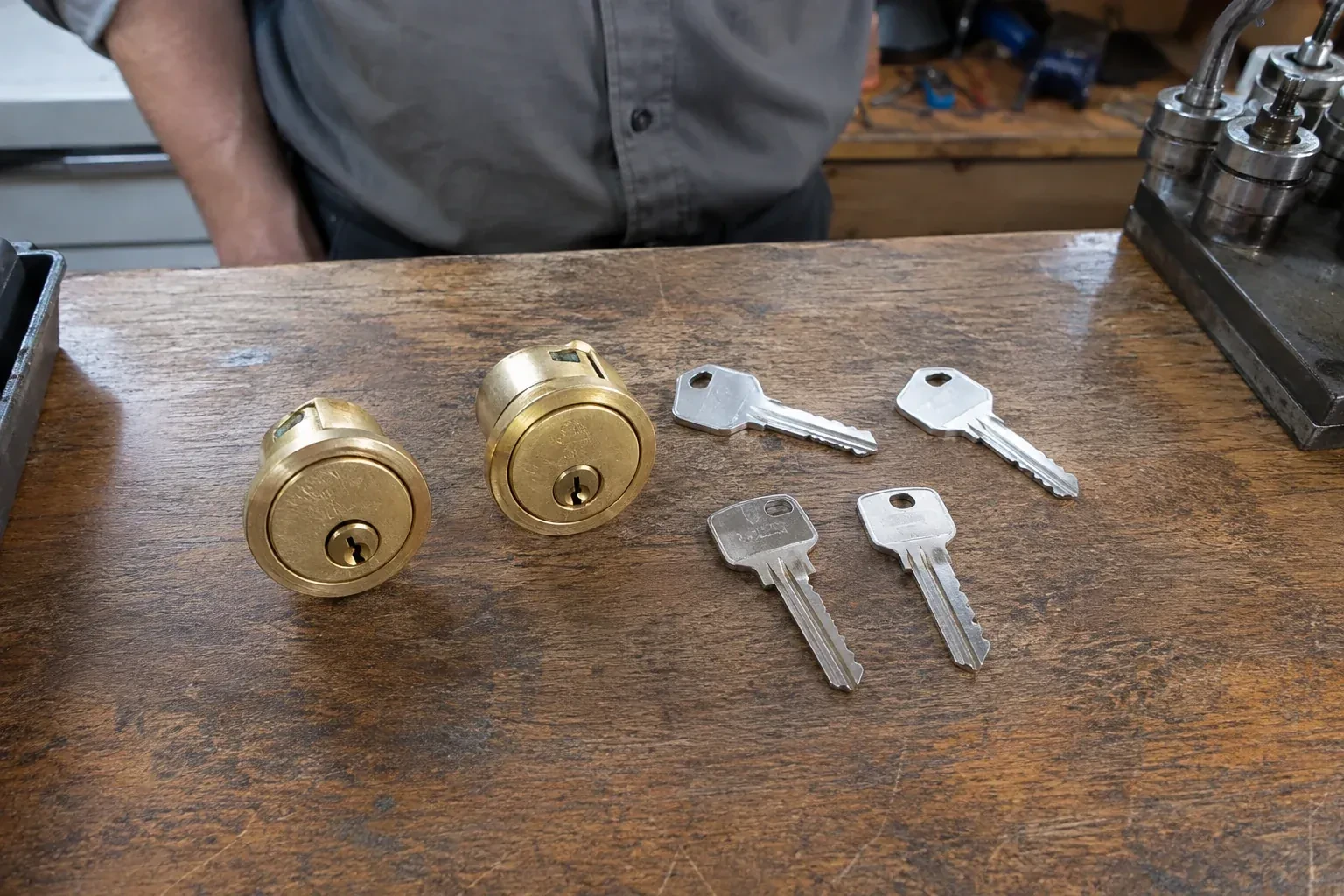
A deadbolt installation is also the moment to sort out keys. The new cylinder can be pinned to match the key you already use, so the household stays on one key, or set to a fresh key if you would rather retire whatever copies are in circulation. Many keypad and smart deadbolts fit the same standard bore as a mechanical one, so a door prepared today for a keyed bolt often accepts one later, though the exact model's bore and thickness still need checking. Either way you leave with keys that work in every door they are meant to, tested one by one.
How the visit goesThe front door has a handsome lever and a keyed knob, and that is all. Nothing above it. When the door is shut, the only thing keeping it closed is a spring latch the width of a thumbnail, and you have started to notice.
Deadbolt Installation
How the visit goes
Glass, sidelights and what is within reach
Glass changes the conversation about which deadbolt to fit. A pane in the door or a sidelight within an arm's reach of the lock means an inside thumb-turn could be reached by breaking the glass, which is why double-cylinder deadbolts are sometimes suggested. The locksmith measures the distance from the glass to the lock, notes whether it is tempered, laminated or plain, and lays out the options: a captive thumb-turn that needs a key only when you choose, a laminated pane or a tested security film that can delay an arm, or moving the bolt height. The aim is a door that keeps a stranger out and still lets everyone inside leave with one turn of the hand.
Testing open, then closed, then keyed alike
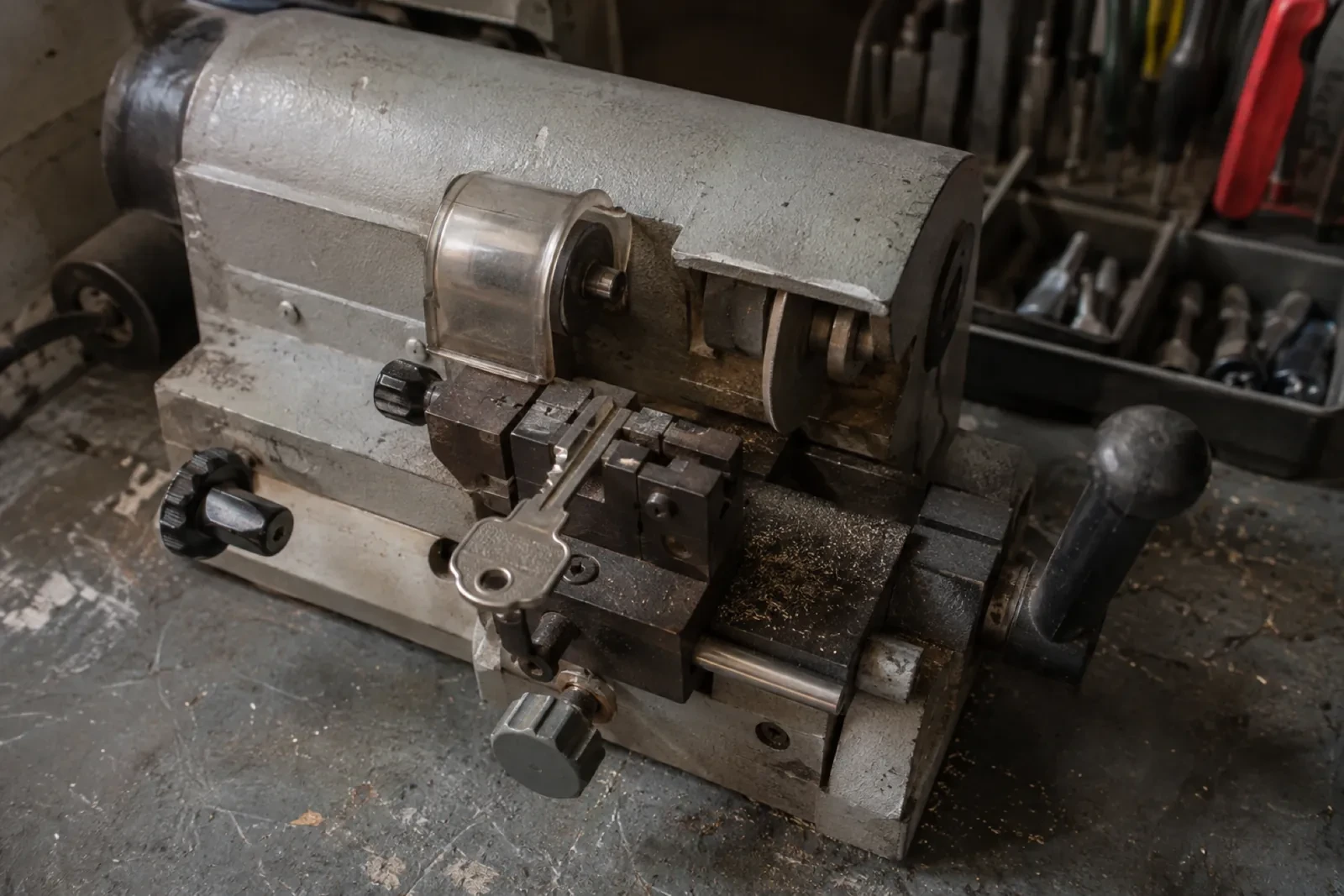
The finished lock is proved in three stages. With the door open, the thumb-turn and then the key are cycled several times to confirm the bolt throws fully and returns freely. With the door closed, the same tests show whether the bolt clears the strike opening and seats in the pocket; any drag is marked with chalk and the strike is dressed or shifted until the bolt moves with fingertip effort. If the cylinder is being keyed to the household key, it is repinned on the bench and tested from outside with the door closed, and every key that should work is tried before the tools go back in the van.
The rest of the door, tidied
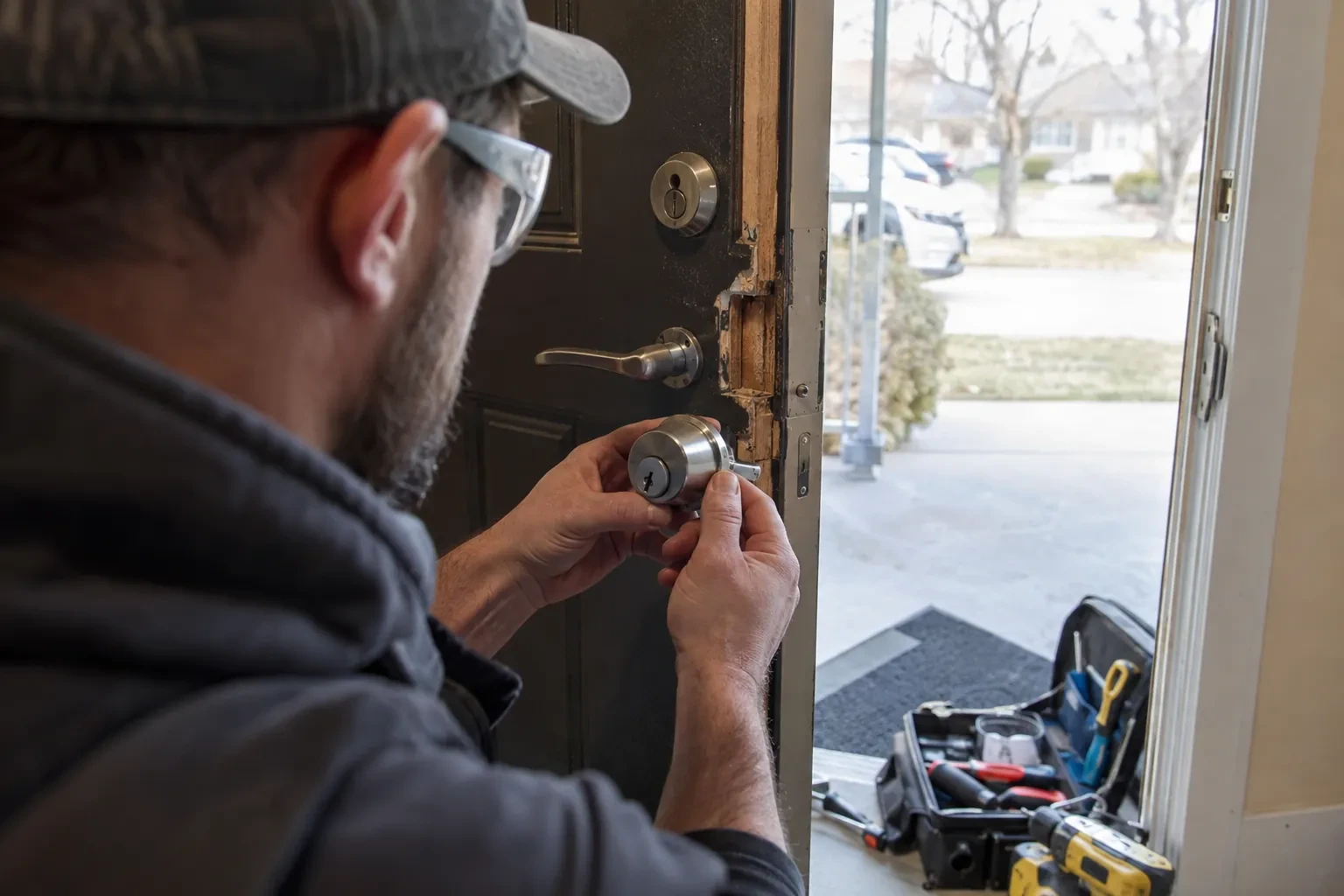
A deadbolt installation usually leaves the whole entry better than it found it. Hinge screws that were loose have been replaced with longer ones that bite into the framing, so the door hangs square. Weatherstrip that pinched the door has been trimmed and the latch below the new bolt has been checked against its own strike. The bore edges are clean, any shavings and steel filings have been vacuumed from the sill and the core, and the finish around the new hardware is unmarked. Open and close the door a few times over the next week and let the locksmith know if anything changes as the door settles.
Deadbolt Installation
In the van
Sharp chisel and mallet
Manufacturer's bore template
Jamb reinforcer
Single-cylinder deadbolt
75 mm (3 in) strike screws
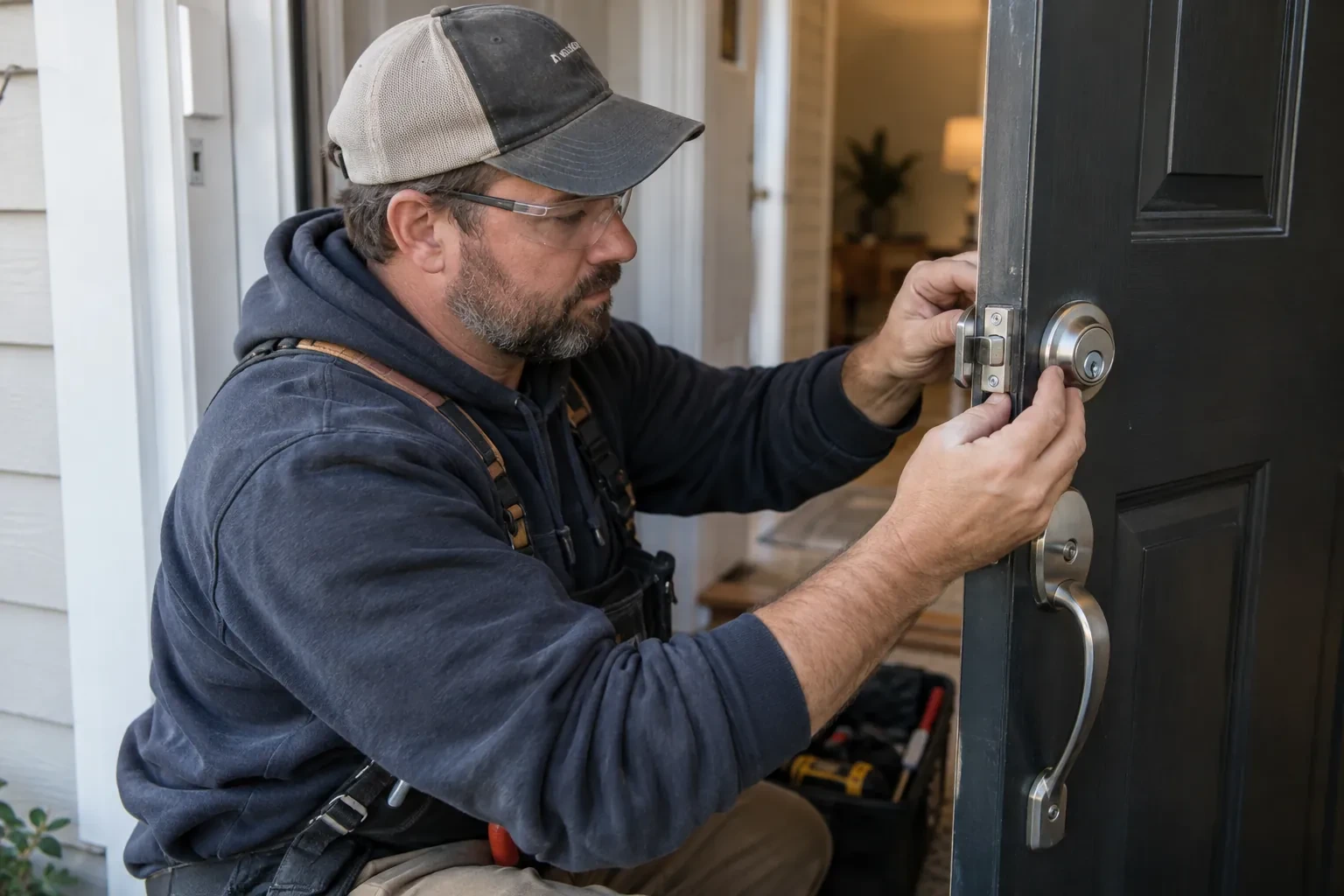
Deadbolt Installation
What affects the quote
Door and hinge corrections
A sagging door, loose hinge screws or thick weatherstrip are put right before a bolt is fitted, and that adjustment is quoted as its own line rather than folded into the lock.
Grade and type of deadbolt
A builder-grade bolt, a residential model with a high security grade, and a heavy commercial-pattern deadbolt sit at different points in the hardware part of the quote, and the locksmith explains the differences.
Number of doors
One front door is the simplest case. Front, back, side and garage-to-house doors done in one visit share the travel and setup, so the per-door figure usually eases as the count rises.
What to have ready
- Have you already bought the hardware, and if so which model and does the template come with it?
- Is the door solid wood, steel-clad or fibreglass, and roughly how thick is it?
- Is there a storm door or screen door in the same opening?
Deadbolt Installation: questions
QuestionsCan a deadbolt be added to a door that only has a knob?
Yes, on nearly any wood, steel-clad or fibreglass entry door. The locksmith marks a spot above the knob, clamps a jig to the door and bores a cross hole through the face and a smaller hole through the edge, then cuts a pocket and fits a strike on the frame. The main things checked first are the door's thickness, what is inside it at that height and whether glass sits close by.
What should I have ready before the locksmith arrives?
Know which doors you want bolted, what they are made of, and whether each already has a deadbolt or only a knob. A photo of the door face and edge helps. Have any existing keys to hand, decide whether you want everything on one key, and mention glass near the lock, a storm door in the same opening, or a rental agreement. If you have already bought hardware, keep the box and template together.
Why does the strike plate matter so much?
The strike is the metal plate the bolt throws into, and it is where a kicked door usually fails: short screws bite only into the thin jamb board, which splits. A reinforced strike or strike box fastened with 75 mm screws passes through the jamb into the stud behind, so a blow is met by the framing of the house. On a wood frame, strike screws that reach at least 30 mm into solid wood behind the jamb are what actually holds.
Related services
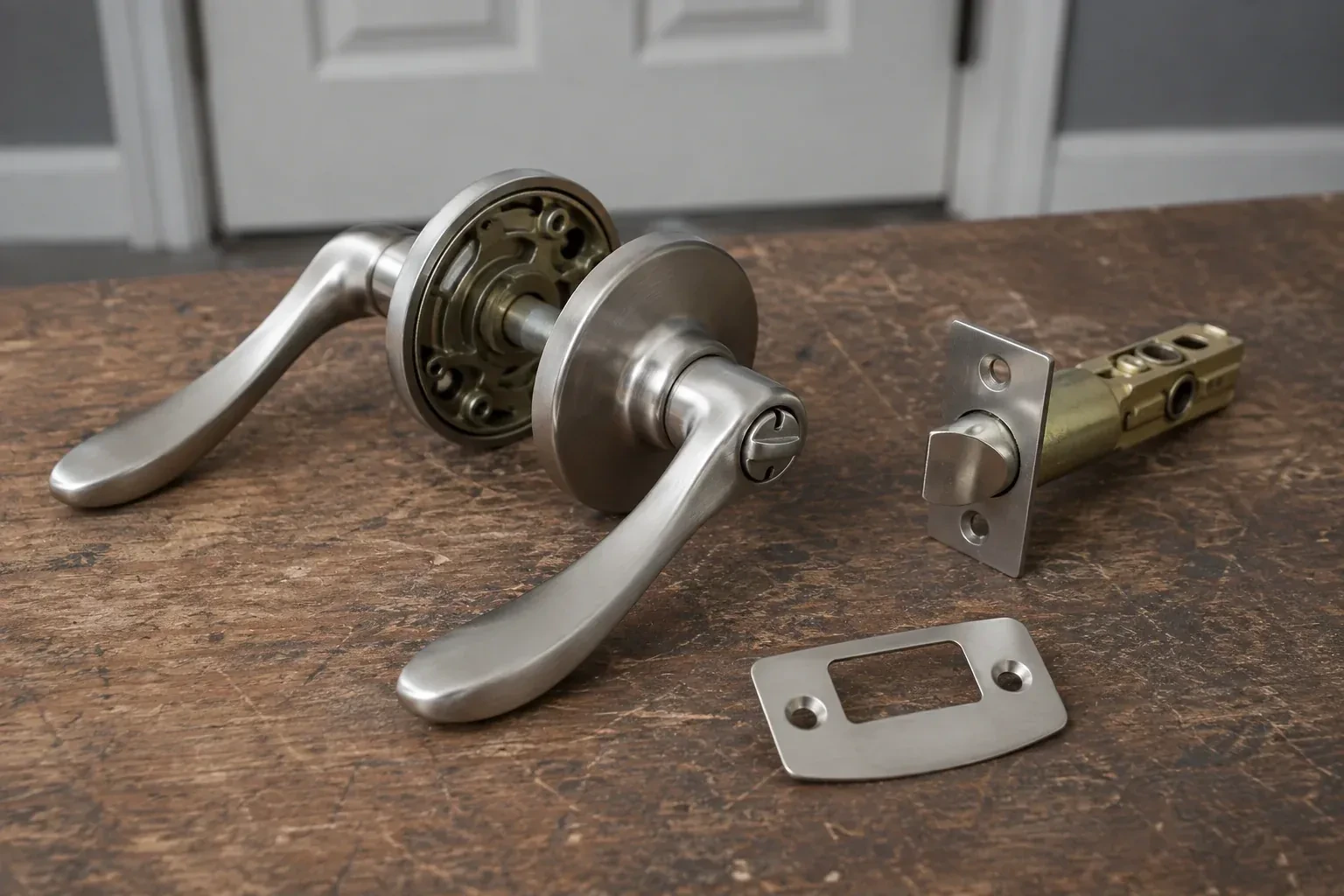
- Lock Replacement & UpgradeThe house is fifteen years old and every exterior door still wears the light hardware the builder fitted: a short bolt, a thin strike held by two small screws, and a knob lock that never suited a street entrance.
- Vintage Mortise Lock ServiceThe old skeleton key still fits the keyhole, but it now needs a jiggle, a lean on the door and a little luck before the bolt moves.
- Smart Lock InstallationYour mother still lives on her own, and the personal support worker, the pharmacy delivery and two siblings all need to get in on different days.