Change or rekey · Conn
Deadbolt Installation in Conn
The back door has a deadbolt in name only: a short bolt, a thin brass strike held by two little screws, and a jamb you can flex with your palm.
In plain words
Most of the value in a deadbolt is on the frame side, which is why a good installation spends as much time on the jamb as on the door. The bolt is only as strong as the pocket it throws into and the screws that hold the strike. Short screws in a standard strike bite only into the thin jamb board; a reinforced strike fastened with 75 mm screws passes through that board into the stud behind, so a blow against the door meets the house rather than a strip of pine. The pocket is cut deep enough for a full throw and aligned so the bolt slides home freely.
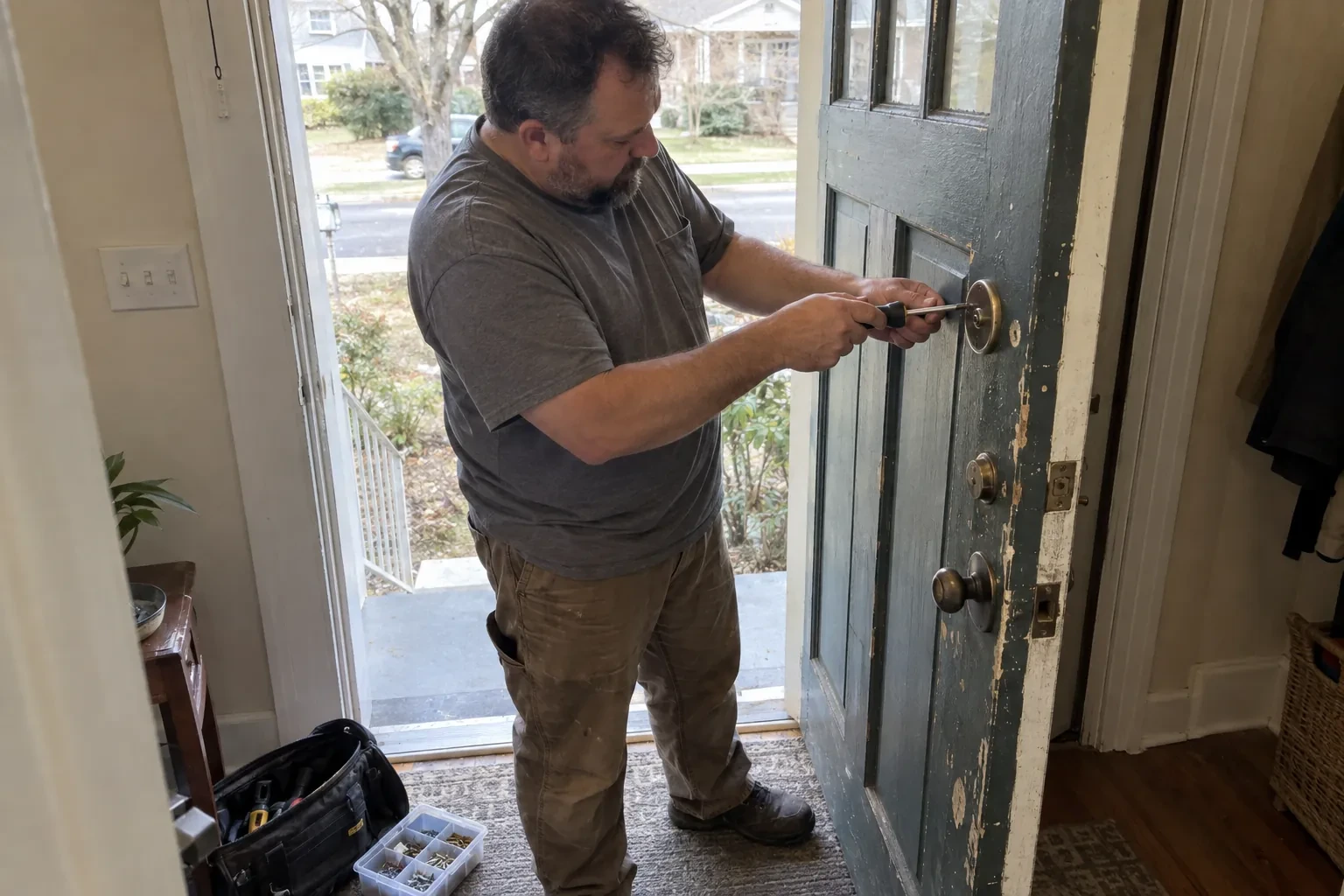
How the visit goesThe bolt on the front door is keyed on both sides. Getting out at night means finding the key in the dark, and with a toddler in the house you have decided the inside should turn by hand. You want it done properly, not just swapped.
Deadbolt Installation
How the visit goes


How the door hangs and closes
Before a new bolt goes in, the door has to close properly on its own, so the locksmith swings it a few times and watches. A door that drops on tired hinges, binds against thick weatherstrip or has to be pulled to latch will put a new deadbolt out of line the moment the season changes. Hinge screws are tested for grip, the gap around the door is read for evenness, and the existing latch is checked against its strike. Small corrections here, such as a longer hinge screw into the framing or a trimmed weatherstrip, are made first so the deadbolt can be set to a door that sits square and stays there.
Working on a steel-clad or fibreglass door
Insulated doors are cut with the skin in mind. A hole saw with fine teeth is run at low speed through the metal face, with the jig doing the steering so the saw does not skate on the smooth surface, and the cut is finished from the second face to keep both skins clean. Swarf is vacuumed out of the core so it cannot work into the bolt. The edge is usually a wood or composite stile inside a folded metal lip, and the bolt is finished with a drive-in collar or a plate screwed into the stile rather than a chiselled mortise. Fibreglass is scored first so the skin does not chip, then cut the same way.
Ready for a smart lock later
Because the door was prepared to the standard bore and backset, it suits many future options, though the model chosen later still sets its own bore, backset and thickness requirements. Keypad and app-controlled deadbolts fit the same 54 mm cross bore and the same edge bore as the mechanical lock fitted today, so upgrading later means swapping the hardware, not cutting the door again. The backset and bore measurements are written on the packaging left with you. If you want to think about a keypad down the road, ask the locksmith which models suit the door thickness and whether a backup keyed cylinder is worth having for the one day the batteries are flat.
Deadbolt Installation
In the van
Sharp chisel and mallet
Manufacturer's bore template
Jamb reinforcer
Single-cylinder deadbolt
75 mm (3 in) strike screws

Deadbolt Installation
What affects the quote
Number of doors
One front door is the simplest case. Front, back, side and garage-to-house doors done in one visit share the travel and setup, so the per-door figure usually eases as the count rises.
New bore or replacement into existing holes
Boring a door that has never had a deadbolt takes more time and tooling than dropping a new bolt into holes that are already there, and the quote reflects which of the two your door needs.
Travel to the property
Distance and access are part of any call-out: a house on a suburban street and a rural property down a long road involve different driving time, and the quote says so.
What to have ready
- Does anyone in the household have trouble with small knobs or stiff thumb-turns?
- Is there glass in the door or a sidelight beside it within arm's reach of the lock?
- Is the door between the garage and the house one of the doors you want bolted?
Deadbolt Installation: questions
QuestionsCan a deadbolt be added to a door that only has a knob?
Yes, on nearly any wood, steel-clad or fibreglass entry door. The locksmith marks a spot above the knob, clamps a jig to the door and bores a cross hole through the face and a smaller hole through the edge, then cuts a pocket and fits a strike on the frame. The main things checked first are the door's thickness, what is inside it at that height and whether glass sits close by.
What should I have ready before the locksmith arrives?
Know which doors you want bolted, what they are made of, and whether each already has a deadbolt or only a knob. A photo of the door face and edge helps. Have any existing keys to hand, decide whether you want everything on one key, and mention glass near the lock, a storm door in the same opening, or a rental agreement. If you have already bought hardware, keep the box and template together.
Why does the strike plate matter so much?
The strike is the metal plate the bolt throws into, and it is where a kicked door usually fails: short screws bite only into the thin jamb board, which splits. A reinforced strike or strike box fastened with 75 mm screws passes through the jamb into the stud behind, so a blow is met by the framing of the house. On a wood frame, strike screws that reach at least 30 mm into solid wood behind the jamb are what actually holds.
Related services
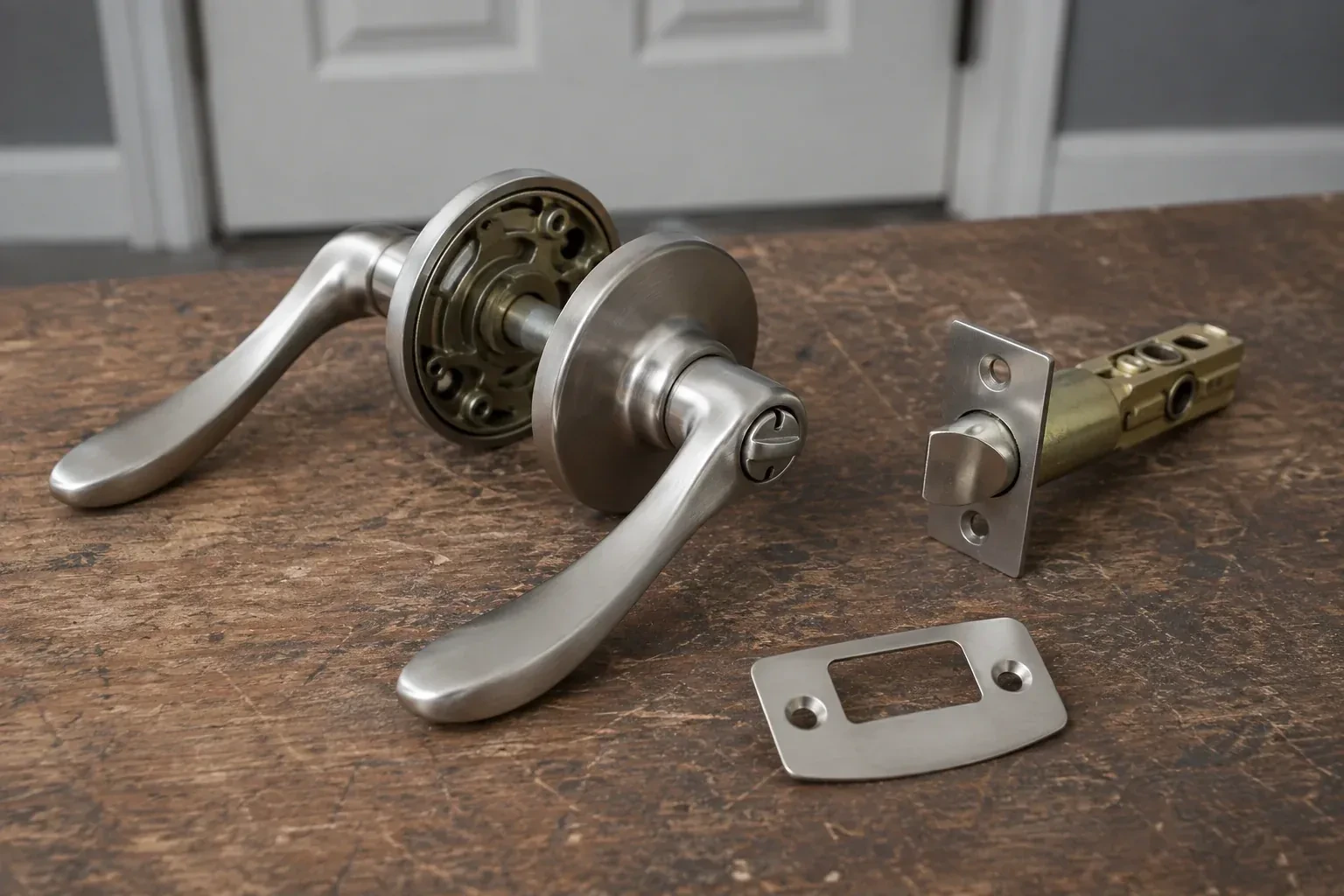
- Lock Replacement & UpgradeThe house is fifteen years old and every exterior door still wears the light hardware the builder fitted: a short bolt, a thin strike held by two small screws, and a knob lock that never suited a street entrance.
- Vintage Mortise Lock ServiceThe old skeleton key still fits the keyhole, but it now needs a jiggle, a lean on the door and a little luck before the bolt moves.
- Smart Lock InstallationYour mother still lives on her own, and the personal support worker, the pharmacy delivery and two siblings all need to get in on different days.