Lockouts · Conn
Business Lockout Service in Conn
The key went in stiffly, turned a quarter of the way, and came out in two pieces.
In plain words
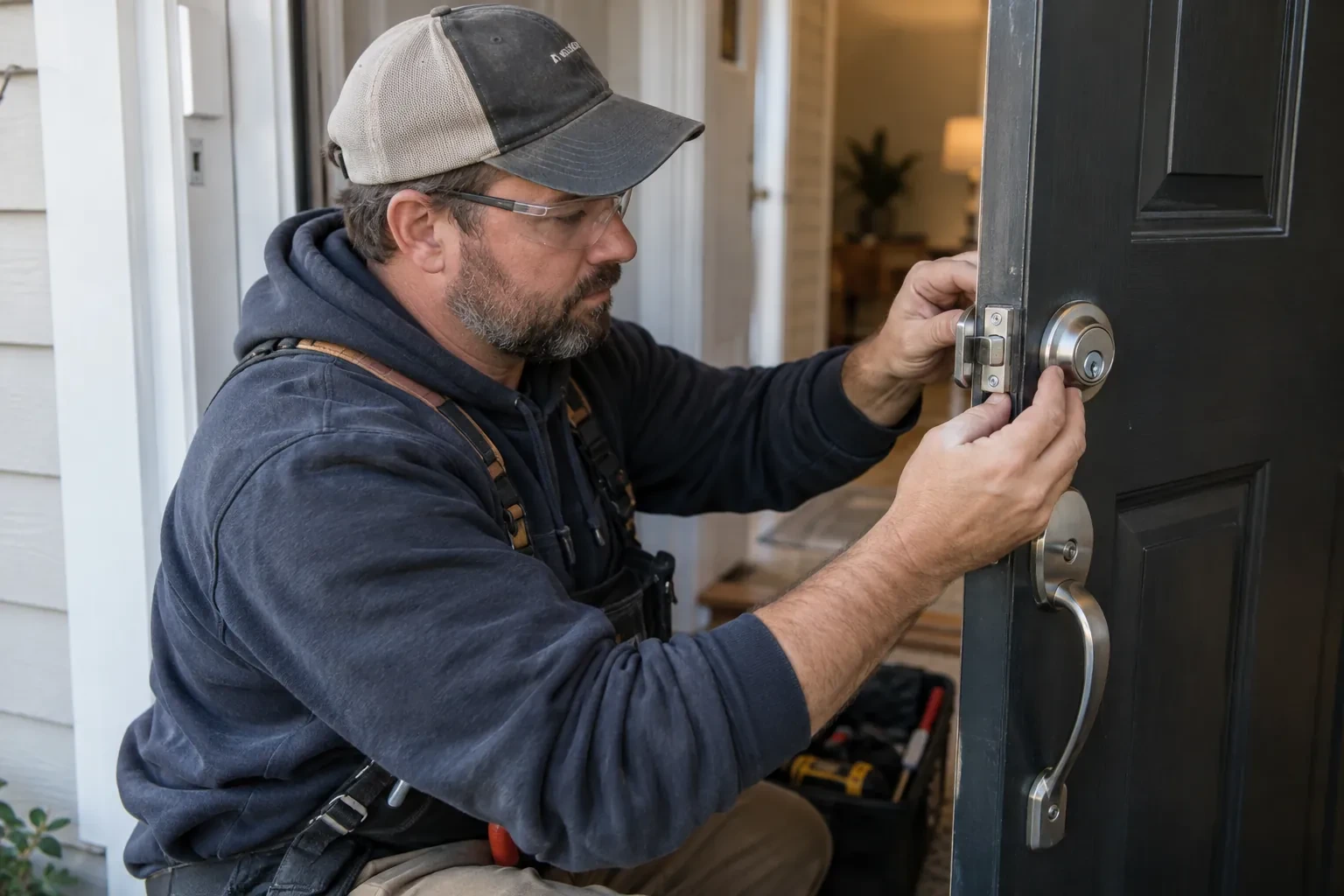
A locked business loses trading time, so the visit is arranged around getting people back to work. The locksmith opens the door first and settles the cause second: a snapped key is extracted and the cylinder checked, a lost key leads to rekeying while staff open up, a failed deadlatch spring is replaced before the door is trusted again. What matters as much as the opening is closing time. Every door worked on is locked and unlocked from both sides before the locksmith leaves, so the person doing the final walk-round that evening has no surprises and the premises are as secure as they were before.
How the visit goesA cook stepped into the alley with the recycling and the rear door swung shut behind him. The push bar works from inside, but the outside handle has a keyed cylinder and the key is hanging in the kitchen office. The front door is locked too.
Business Lockout Service
How the visit goes
Which door and what is fitted to it
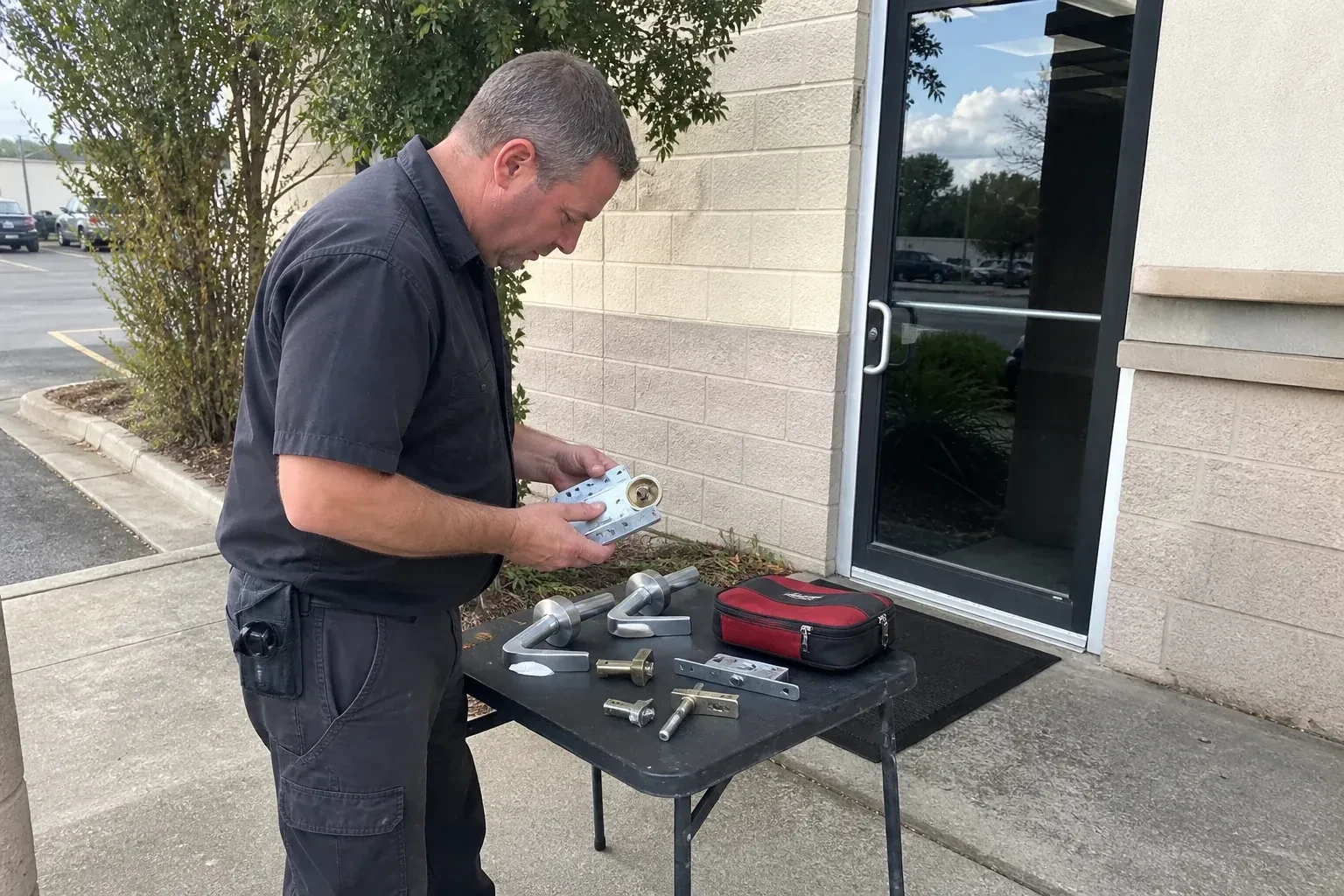
Commercial hardware is identified before it is touched. On a glass storefront door the locksmith looks at the narrow stile for a mortise cylinder, a paddle or thumb-turn inside, and the shape of the bolt in the edge: a hookbolt, a swing bolt or a spring latch with a deadlocking plunger. On a wood or steel door the tell is a lever with a small cylinder in its face, a full mortise lock with a separate deadbolt, or the outside trim of an exit device. A figure-eight core face means an interchangeable core system. Each of these points to a different opening method and a different set of spares from the van.
Lever locksets and removable cores
Office and back-of-house doors usually carry a cylindrical lever lockset in a storeroom function, locked from the outside at all times with the lever free inside. The latch has a deadlocking plunger, so the locksmith picks the cylinder in the lever face rather than reaching for a shim. In buildings with interchangeable cores, a control key held by the property manager or head office lets the small figure-eight core slide out and a temporary core go in, which is the gentlest opening there is. Where picking is not straightforward and no control key is available, the locksmith works through the lockset's own key-operated release path, then confirms the spring cage that keeps the lever level is seated correctly.
A keyholder plan so one absence never closes you
Most business lockouts trace back to a single keyholder, and the visit is the natural moment to fix that. Two named people should be able to open the premises, with a third who can be reached. A combination lockbox in a discreet spot, its code known to the opening staff and changed when someone leaves, covers the day the keyholder is stuck in traffic. For electrified doors, a second administrator on the access system means a forgotten code is an inconvenience, not a closure. Writing the opening and closing routine on one page, with the alarm company's number and the locksmith's, turns the next surprise into a short phone call.
Business Lockout Service
In the van
Broken key extractors
Commercial pick and tension tools
Storefront deadlock and deadlatch bodies
Cylinder decoder and plug spinner
Strikes, pivot shims and closer adjustment tools
Business Lockout Service
What affects the quote
Door, pivot and closer adjustment
When the lockout was really a dropped door or a tired closer, lifting the door, adjusting pivots or a continuous hinge, moving the strike and resetting the closer are quoted as their own item beside the opening.
Distance and access to the door
Travel is part of every call-out, and so is reaching the door: a plaza unit at street level, a suite behind a locked lobby, or a loading dock at the back of an industrial park each take a different amount of the locksmith's time.
Upgrades you choose while the locksmith is there
Some businesses use the visit to move to a heavier storefront deadlock, a restricted keyway, interchangeable cores, a lockbox for keyholders or a reinforced strike. None of it is needed to get you open; each is priced as its own option.
What to have ready
- Has the door been dragging, scraping the threshold or failing to latch at closing recently?
- Who on site can show identification and a document connecting them to the business?
- Where are the keys: with an absent keyholder, lost, broken in the lock, or turning without effect?
Business Lockout Service: questions
QuestionsDo you work with our alarm company and access-control provider?
Yes, and it makes the visit smoother. The alarm station is told an entry is expected and the authorised person handles the disarm and password. For access control, the provider can often confirm the controller's status, unlock a magnetic lock remotely, or re-enrol fobs once you are inside, while the locksmith handles the mechanical side and the override cylinder. Nobody's wiring is cut; each party does the part it is set up to do.
I am an employee, not the owner. Can you still open the door for me?
Yes, with the owner or a manager in the loop. Tell the locksmith who can confirm you work there and how to reach them. A call to the business owner, the regional manager or the property manager, ideally on a number that can be looked up rather than one you supply, settles it. Staff on an opening shift arrange this on the phone before the locksmith arrives so nothing waits at the door.
We need to open for customers. How do you sequence the visit?
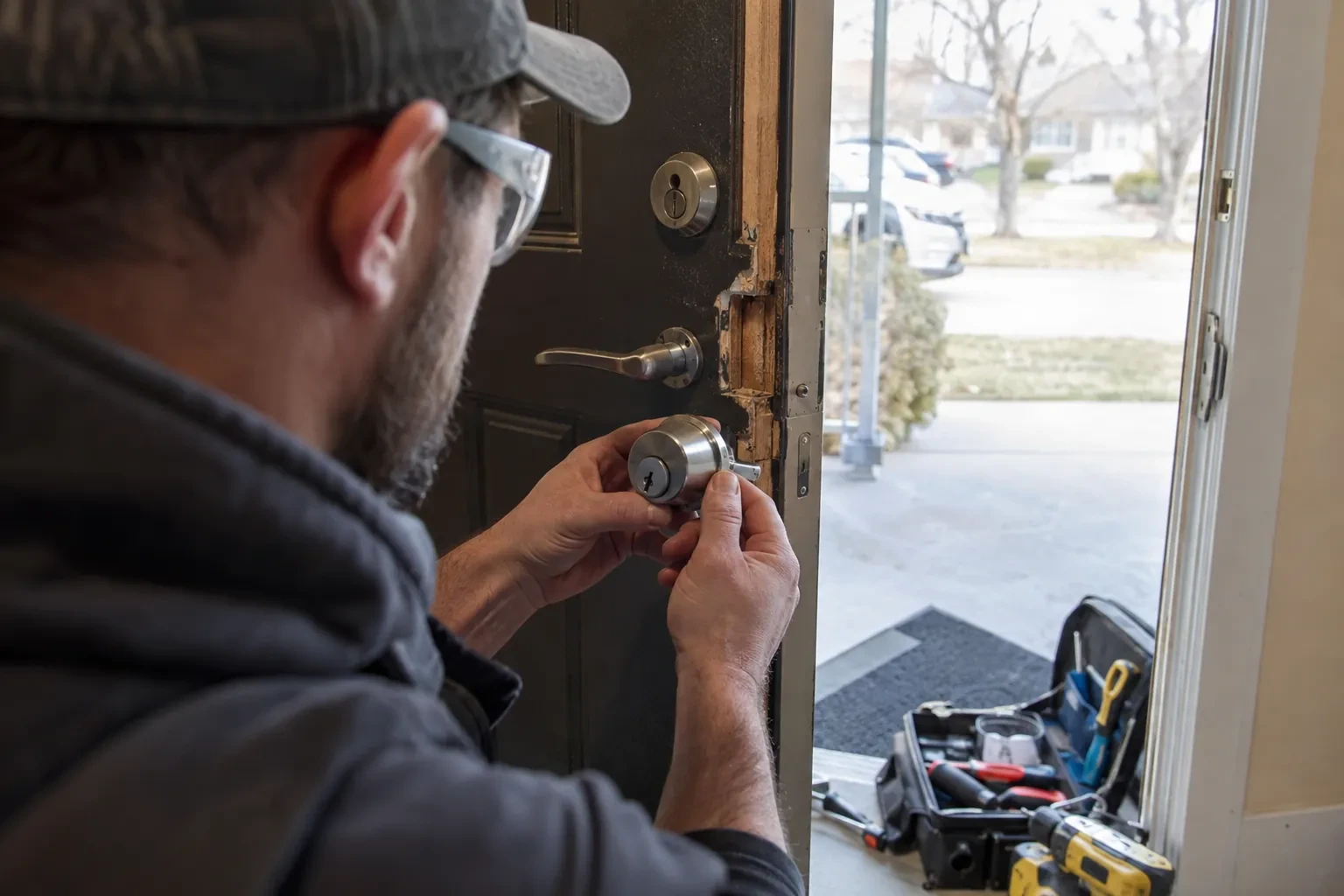
Entry comes first and repairs second. Once authority is confirmed the door is opened, staff go in and start their routine, and the locksmith turns to the cause: extracting a broken key, rekeying for a lost one, re-springing a deadlatch or lifting a dropped door. Anything that can wait for a quieter hour, such as rekeying interior doors, is offered as a return visit so the shop floor is not blocked while it trades.
Related services
- Broken Key ExtractionOvernight the deadbolt froze, and this morning the key would only turn partway.
- Break-In Damage Lock RepairThe patio slider is sitting crooked on its track.
- Seized & Jammed Lock OpeningThe shop's lever handle goes down as usual, but the latch inside the mortise case never pulls back.