Lockouts · Centre Wellington
Business Lockout Service in Centre Wellington
The key went in stiffly, turned a quarter of the way, and came out in two pieces.
In plain words
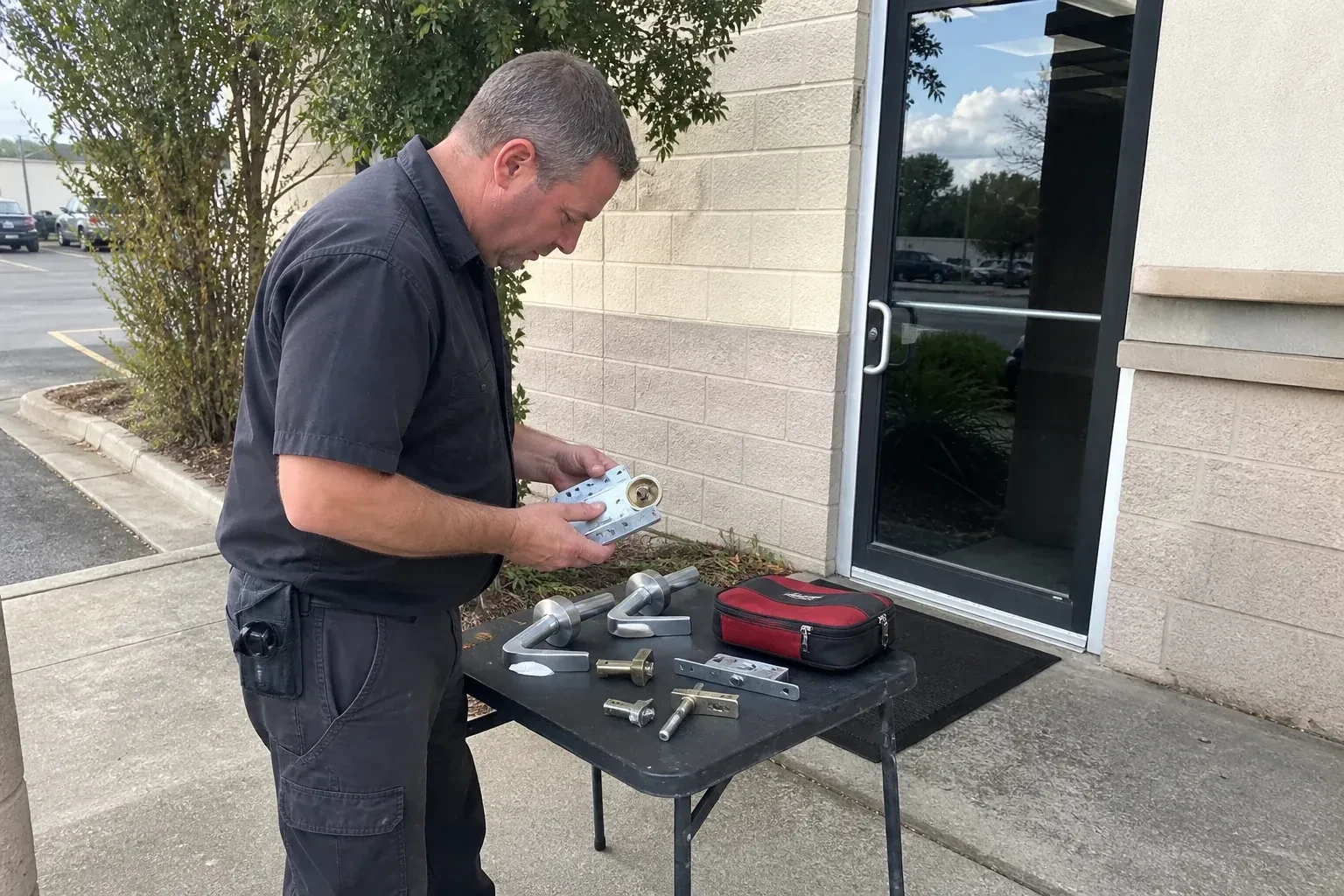
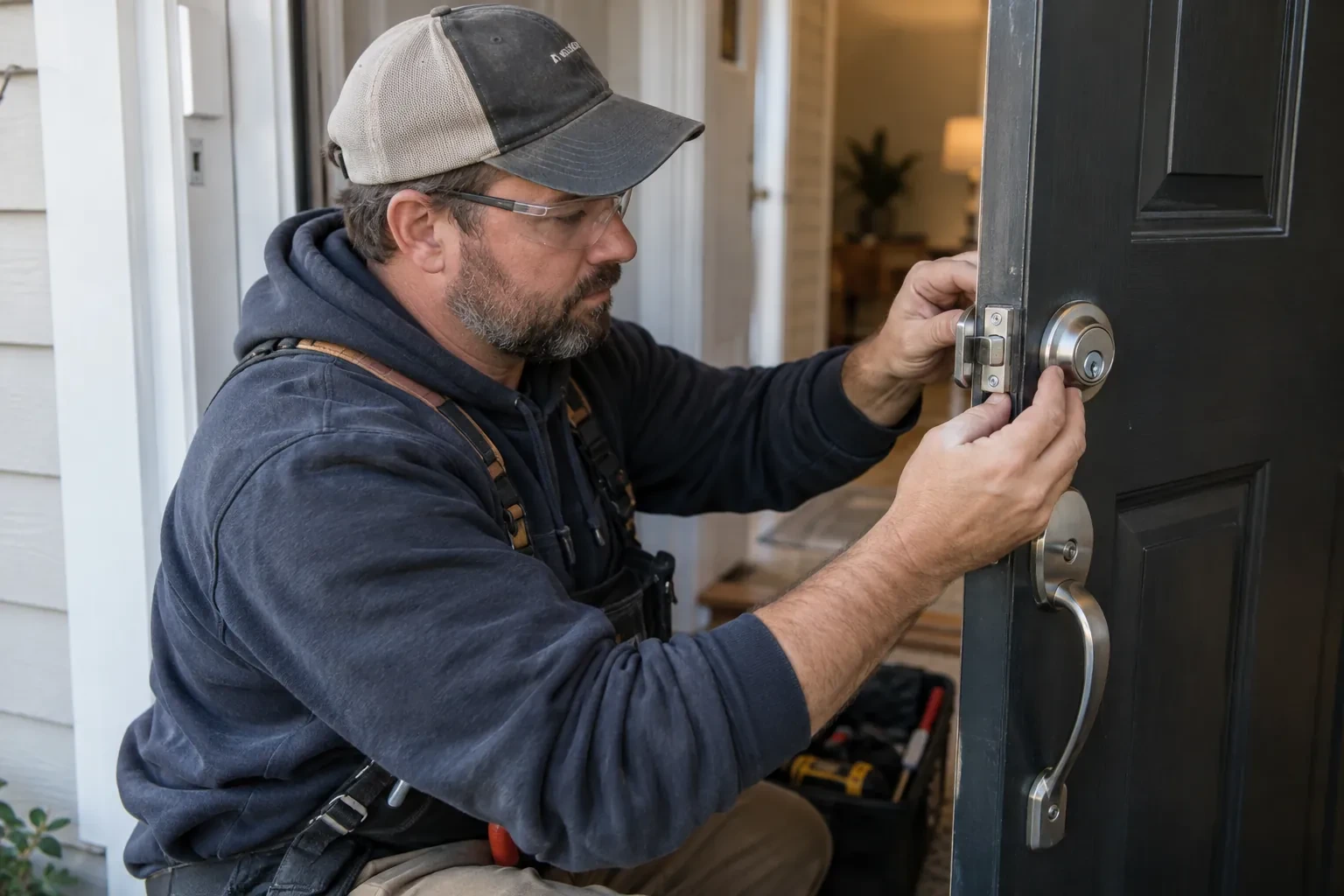
Heavy commercial doors move, and a good share of business lockouts are really door problems. A glass storefront door hangs on pivots or a continuous hinge that wear with thousands of openings a week, and once the door drops a few millimetres the hookbolt or latch binds against its strike. A hydraulic closer that has stiffened in the cold or lost its adjustment leaves a door that never latched properly the night before. Part of a lockout visit is reading the door: lifting it back into line, adjusting the strike and closer, and making sure the lock is asked to do only what a lock should do.
How the visit goesYou signed the lease on the unit last week and the landlord handed over possession, but the previous tenant's locks are still on both doors and no keys came with them. Your fixtures arrive tomorrow and the doors will not open.
Business Lockout Service
How the visit goes
Alarm, reader and anything wired to the door
Before the door moves, the locksmith asks what will notice when it does. Is there an alarm with a contact on this door, who holds the code, and should the monitoring company be told to expect an entry? Is the door controlled by a card reader, keypad or intercom, and does it use an electric strike, fail-secure or fail-safe, or a magnetic lock, which releases? Is there a mechanical override cylinder and does anyone hold its key? Has the access-control provider got remote access to unlock it? These answers decide whether the opening is a phone call, a battery, an override key or conventional lock work, and they keep the security system intact afterwards.
Making an unreturned key useless
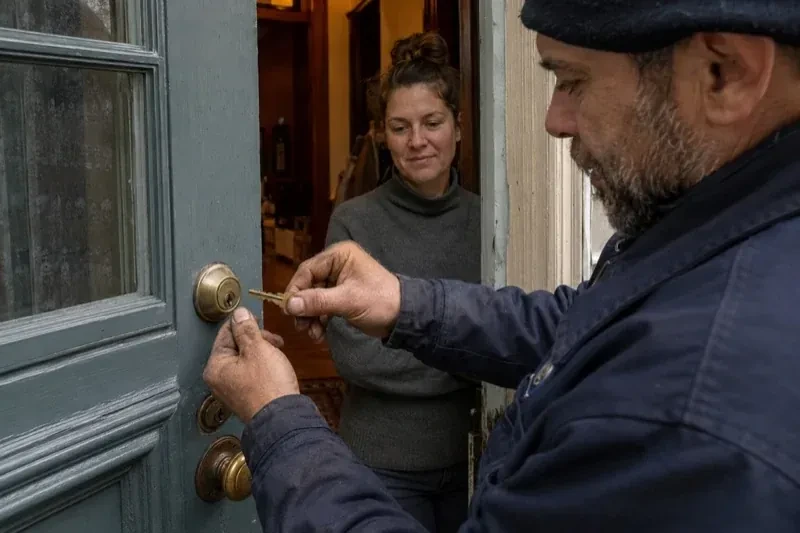
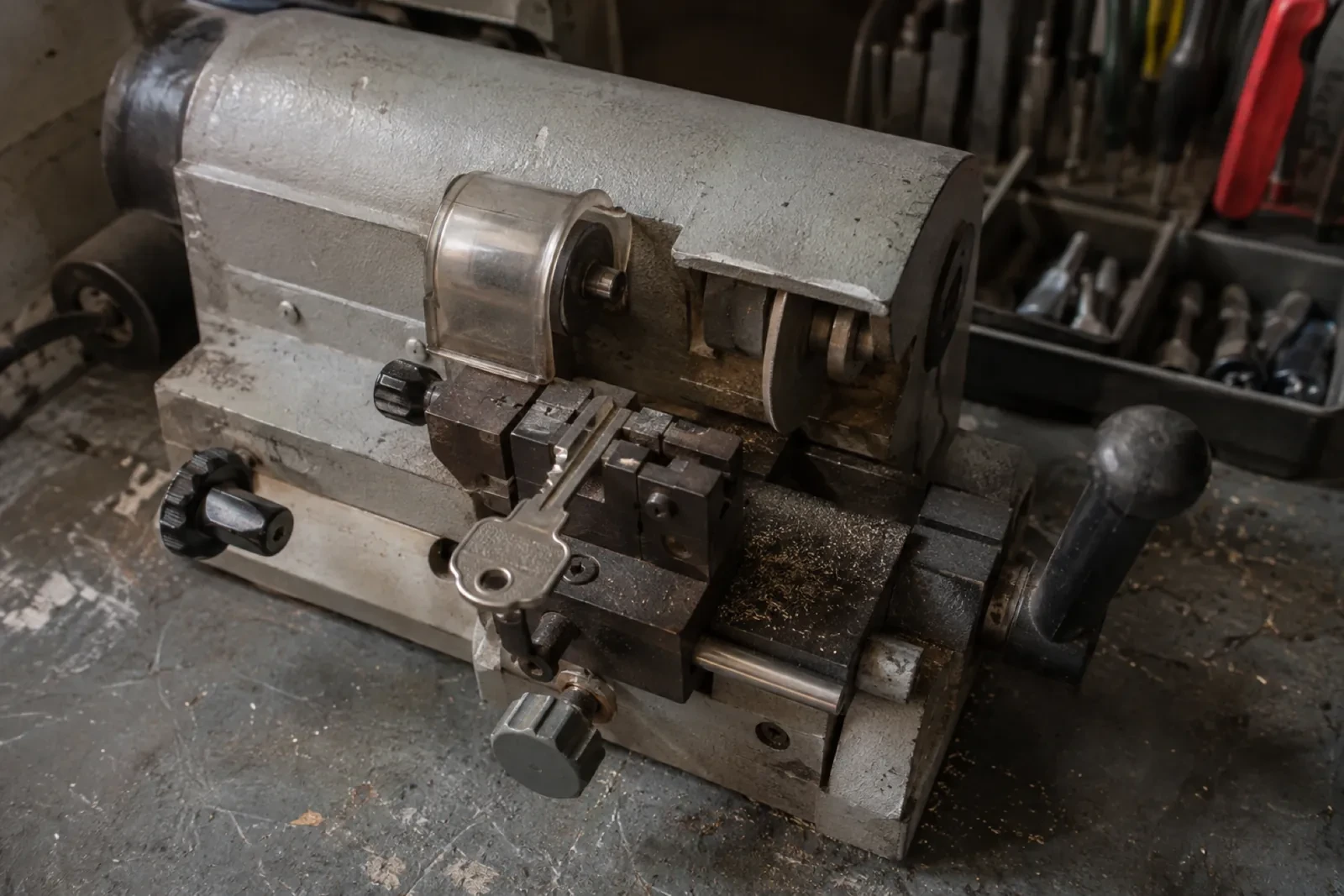
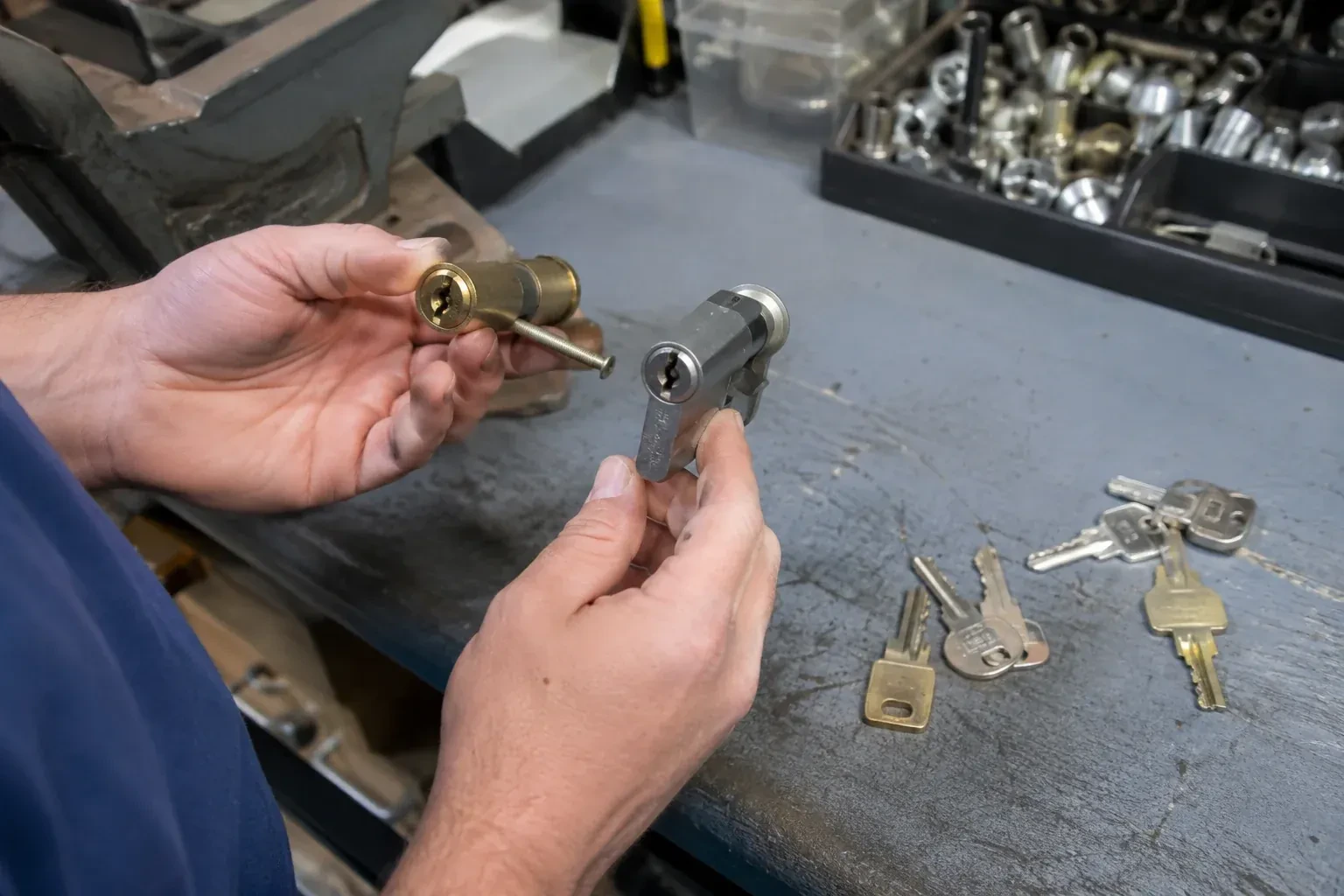
When a key is lost or unreturned, the second half of the visit is rekeying. Mortise and rim cylinders are removed, the plug slid out with a follower, and the bottom pins changed to a new combination so a fresh key operates them and the old one turns nothing. Where the building uses interchangeable cores, the core is swapped for one on a new combination. Cylinders that shared the old key are brought onto the new one, and if the door sits within a master key system the change is planned with the property manager so building keys keep working. New keys are cut, tested in every door and recorded against named holders.
Exit doors that still let everyone out
Whatever was replaced, a door on the way out of the building still opens from inside with a single motion and no key while people are in it. That standard is why a storefront gets a thumb-turn or paddle inside, a rear door keeps its push bar, and a double-cylinder deadbolt does not go on an exit route. The locksmith checks each door for this before leaving and points out any older hardware, such as a chain or a keyed-inside bolt on a back door, that the business may want to bring into line.
Business Lockout Service
In the van
Broken key extractors
Commercial pick and tension tools
Storefront deadlock and deadlatch bodies
Cylinder decoder and plug spinner
Strikes, pivot shims and closer adjustment tools
Business Lockout Service
What affects the quote
Padlocks, gates and interior doors
A shutter padlock, a compound gate and interior doors for the cash office, stockroom or server closet are lighter work than an exterior lock but each is its own line, and a padlock is often replaced rather than opened.
Damage from earlier attempts
A paddle bent by a pry bar, a stile scratched by a screwdriver or a cylinder wrenched by pliers may need repair as well as opening, and the locksmith points out what was already there before quoting it.
When the call comes in
A weekday morning, an evening after closing, a weekend or a statutory holiday all cost the same amount for a business lockout, and locksmiths are reachable at any hour. The figure is confirmed at the door once the locksmith has looked at the door and the hardware involved.
What to have ready
- Where are the keys: with an absent keyholder, lost, broken in the lock, or turning without effect?
- Who on site can show identification and a document connecting them to the business?
- Is anyone able to reach the owner, head office or property manager to confirm the request?
Business Lockout Service: questions
QuestionsDo you work with our alarm company and access-control provider?
Yes, and it makes the visit smoother. The alarm station is told an entry is expected and the authorised person handles the disarm and password. For access control, the provider can often confirm the controller's status, unlock a magnetic lock remotely, or re-enrol fobs once you are inside, while the locksmith handles the mechanical side and the override cylinder. Nobody's wiring is cut; each party does the part it is set up to do.
I am an employee, not the owner. Can you still open the door for me?
Yes, with the owner or a manager in the loop. Tell the locksmith who can confirm you work there and how to reach them. A call to the business owner, the regional manager or the property manager, ideally on a number that can be looked up rather than one you supply, settles it. Staff on an opening shift arrange this on the phone before the locksmith arrives so nothing waits at the door.
We need to open for customers. How do you sequence the visit?
Entry comes first and repairs second. Once authority is confirmed the door is opened, staff go in and start their routine, and the locksmith turns to the cause: extracting a broken key, rekeying for a lost one, re-springing a deadlatch or lifting a dropped door. Anything that can wait for a quieter hour, such as rekeying interior doors, is offered as a return visit so the shop floor is not blocked while it trades.
Related services
- Broken Key ExtractionOvernight the deadbolt froze, and this morning the key would only turn partway.
- Break-In Damage Lock RepairThe patio slider is sitting crooked on its track.
- Seized & Jammed Lock OpeningThe shop's lever handle goes down as usual, but the latch inside the mortise case never pulls back.