Change or rekey · Centre Wellington
Gate & Building Entry Locks in Centre Wellington
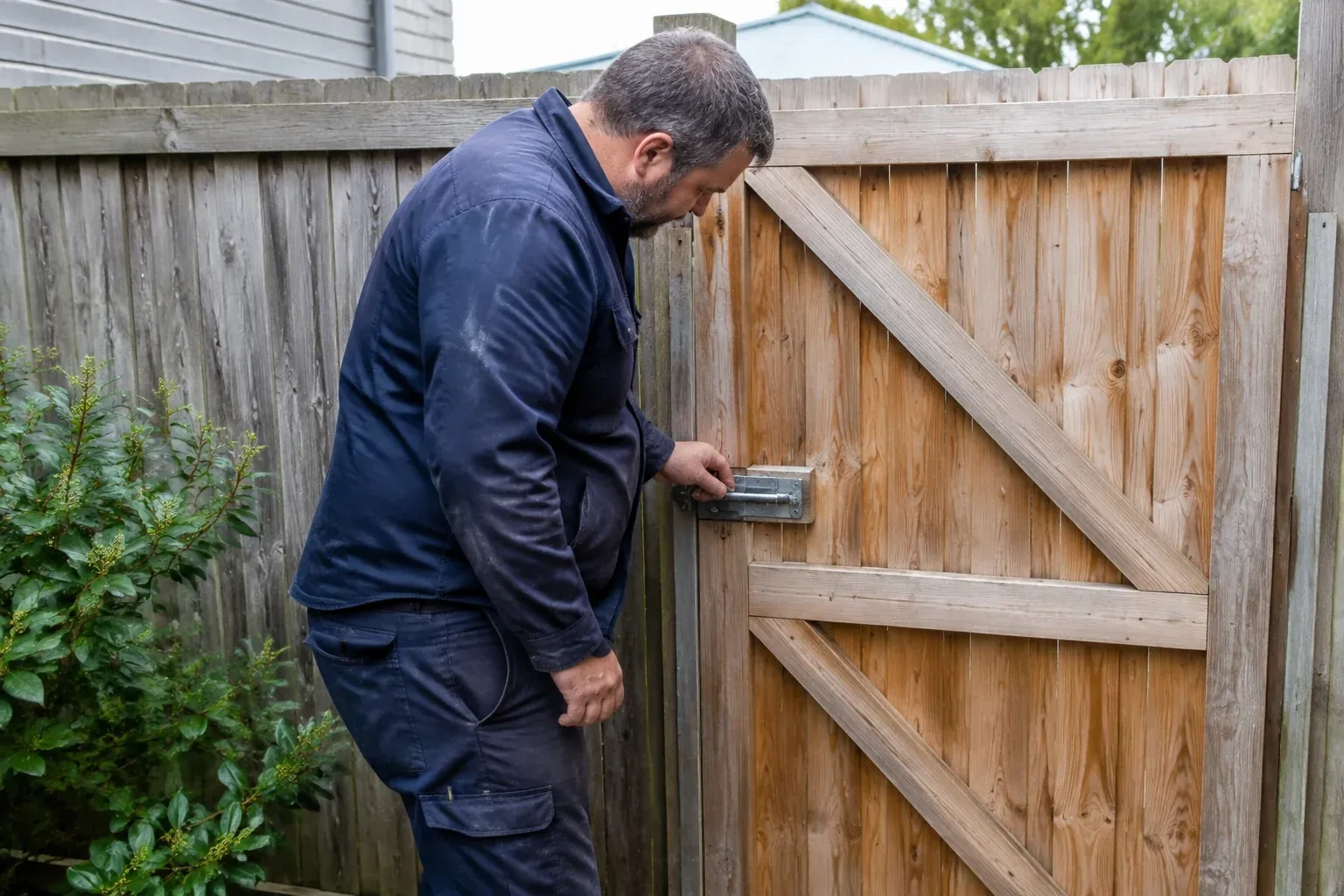
The padlock on the side gate has gone stiff every winter for three years running, and this year the key simply will not turn past the first few pins.
In plain words
Gate hardware tends to struggle most in the season that stresses it hardest, and a cylinder or closer that has been sluggish all autumn rarely improves once the weather turns. Booking this service ahead of winter gives the locksmith a chance to catch a stiff cylinder, a slow closer or a gate that has started to sag before ice, salt and cold make the same problem harder to reach. What starts as a seasonal check-up often heads off a call made from outside a locked gate in January.
How the visit goesA visitor buzzes from the panel downstairs, someone presses the button by the door, and nothing happens. The electric strike on the lobby door used to click open on cue; now it stays silent, and residents are propping the entry with a folded flyer instead.
Gate & Building Entry Locks
How the visit goes


Weather exposure and corrosion
A gate lock lives outside in every season, so the assessment looks specifically for what weather has already done to it: pitting on the cylinder face, a stiff plug that hints at rust inside, green corrosion around a padlock shackle, or a closer that has started to weep hydraulic fluid. Ground-level hardware near a driveway or walkway gets checked especially closely, since de-icing salt collects there over winter. What this turns up decides whether the existing hardware can be cleaned and lubricated or whether weather has already gone past what maintenance alone can address.
Working on the cylinder itself
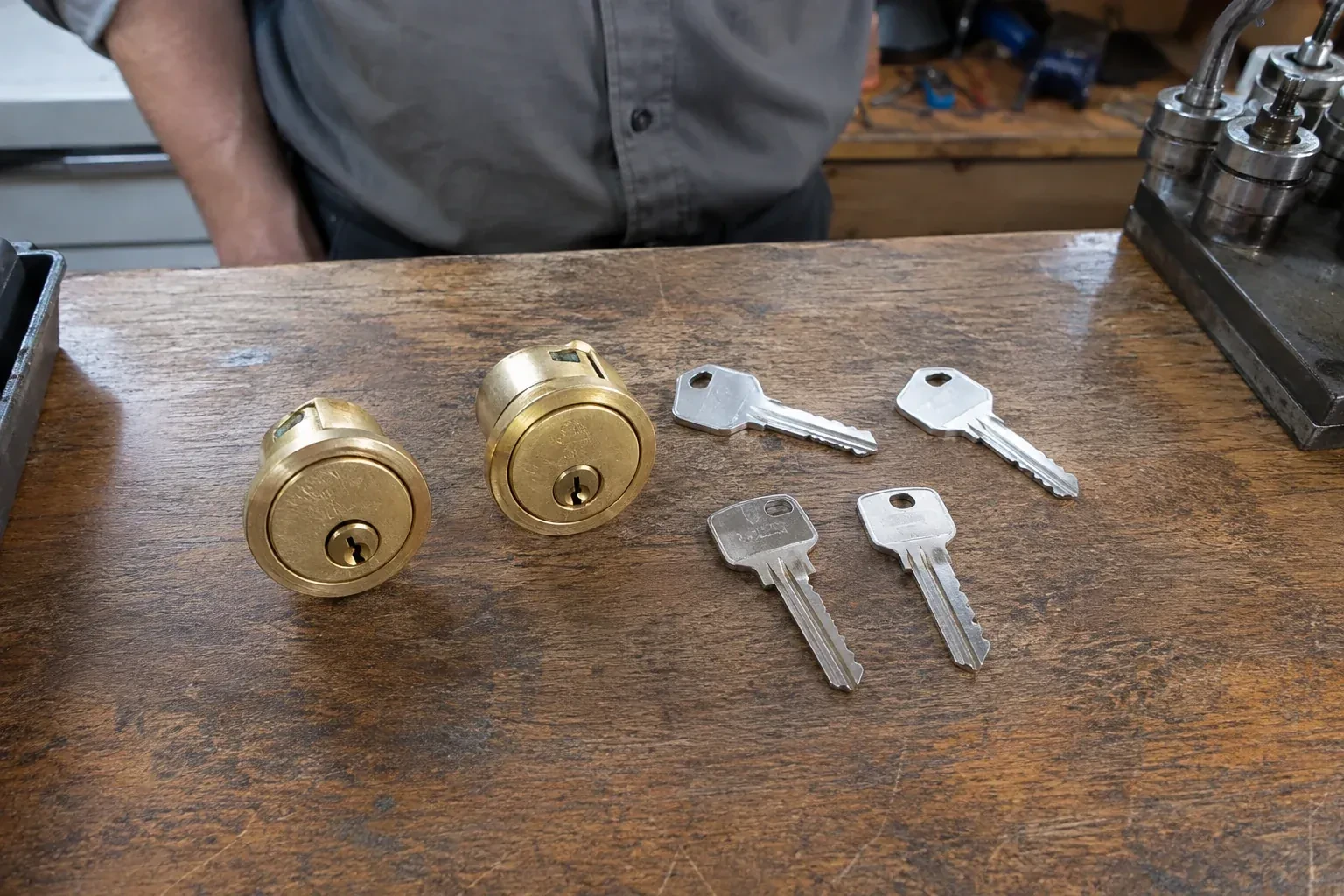
Depending on what the assessment found, the cylinder is either rekeyed, replaced with a weather-rated unit, or decoded so a fresh key can be cut to match it. Rekeying removes the existing pin combination and sets a new one, so old keys stop working while the same housing stays on the gate. A full replacement suits a housing that is worn, pitted or the wrong grade for outdoor use. Either way, the new or updated cylinder is cycled repeatedly with the new key, from both sides where the hardware has two, before it is considered finished.
A record for the owner or property manager
You leave with a plain account of what changed: which cylinders were rekeyed or replaced, how many new keys were cut and to whom, whether any gate was brought onto a shared key or deliberately kept separate, and what was adjusted on the closer, strike or post. For a rental or a condo, this note is worth passing to whoever manages the building, since it settles later questions about who currently holds a working key without anyone having to guess or ask around.
Gate & Building Entry Locks
In the van
Keyed-alike cylinders
Weather-rated cylinders
Strike plates and keepers
Voltage tester for electric strikes
Gate locks and latches

Gate & Building Entry Locks
What affects the quote
Corrosion or damage already present
A cylinder that is merely stiff is a lighter job than one that is visibly pitted, seized or cracked from years of weather exposure, and the quote reflects whichever condition the hardware is actually found in.
Access to the gate or entry
A ground-level gate on an easy driveway is straightforward. A shared building entry behind a locked lobby, a gate at the far end of a long property, or awkward scaffolding around the hardware adds time the quote takes into account.
Number of gates or entries involved
One gate lock is the simplest case. A front gate, a side gate and a shared building entry looked at in the same visit is naturally a longer job with more hardware to work through.
What to have ready
- Are there other gates on the property that should share a key?
- Is the gate sagging, dragging, or hard to close by hand?
- Does the entry have a buzzer, keypad or electric strike?
Gate & Building Entry Locks: questions
QuestionsDoes this service cover the gate itself, or only the lock?
Both, where the two are connected, which on a gate they usually are. A locksmith working on a gate lock also looks at the hinges, the post and the closer, since a lock rarely fails on its own when the real cause is a sagging gate or a post that has shifted. Work that goes beyond hardware the locksmith carries, such as rebuilding a rotted post or a damaged fence panel, is flagged so it can be handled by whoever normally does that kind of repair.
A tenant moved out of our building. Do we need to rekey the shared entry?
It is worth doing, since a move-out is exactly the situation a rekey is meant to cover: a former tenant's key still operates the same lock everyone currently living there relies on. Rekeying resets the cylinder to a fresh combination and issues new keys to current residents, without requiring a whole new lock in most cases. Bringing any other gates or doors that share that key along at the same time keeps the whole property on one current combination.
How long does a gate or building entry lock visit usually take?
It depends on what the assessment finds once the locksmith is looking at the actual hardware. A single gate lock that only needs adjusting or rekeying is a shorter visit than one where the closer, hinges and post all need attention, or where several gates on a property are being brought onto one key. Electronic hardware such as a buzzer or electric strike adds its own testing time. The locksmith can give a closer sense of the scope once the gate or door has been examined in person.
Related services
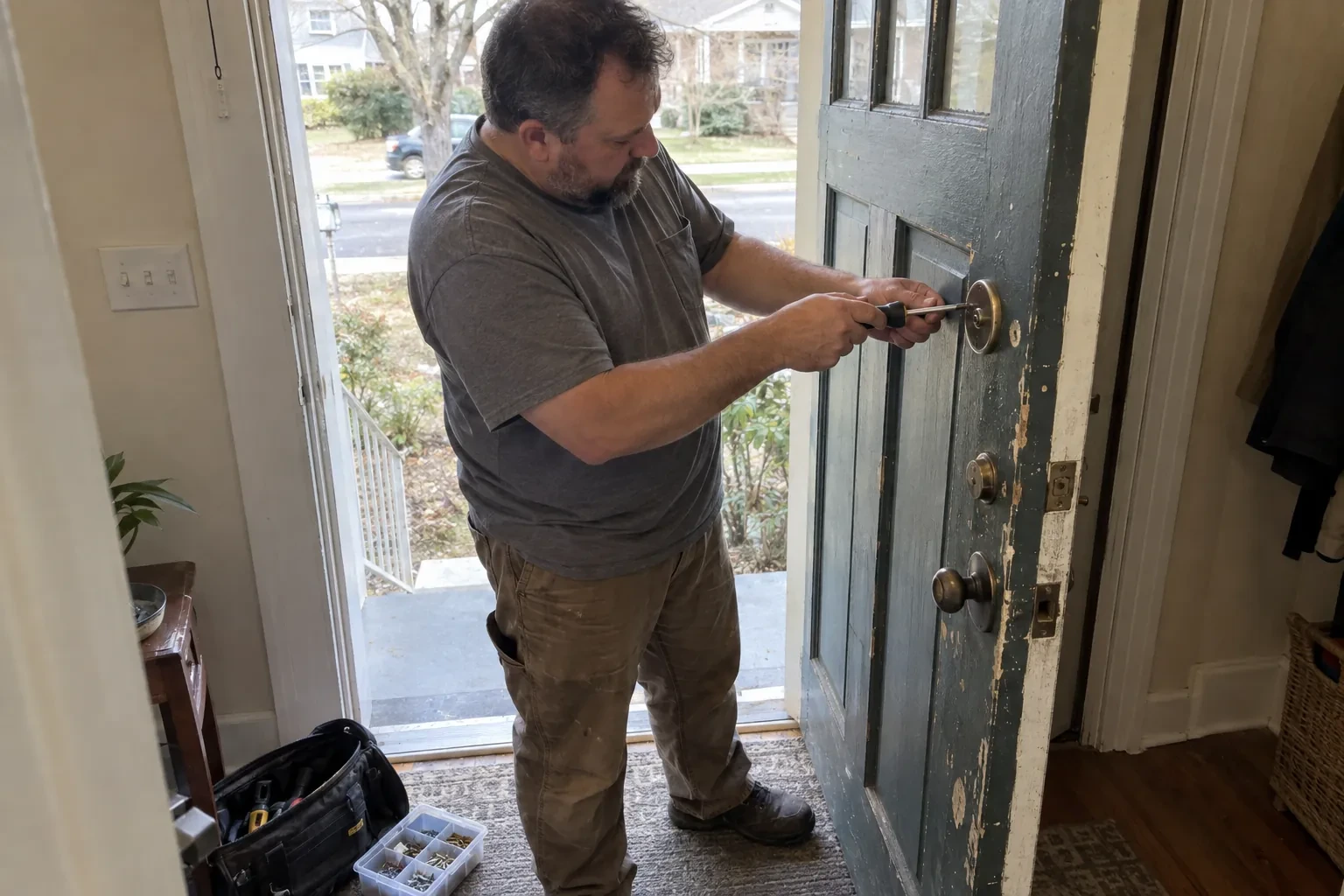
- Deadbolt InstallationThe back door has a deadbolt in name only: a short bolt, a thin brass strike held by two little screws, and a jamb you can flex with your palm.
- Lock Replacement & UpgradeThe house is fifteen years old and every exterior door still wears the light hardware the builder fitted: a short bolt, a thin strike held by two small screws, and a knob lock that never suited a street entrance.
- Vintage Mortise Lock ServiceThe old skeleton key still fits the keyhole, but it now needs a jiggle, a lean on the door and a little luck before the bolt moves.