Car keys · Centre Wellington
Motorcycle & Scooter Keys
The dash lights come on, the starter cranks, and the engine simply refuses to catch, though the same key has run this bike since it was new.
In plain words
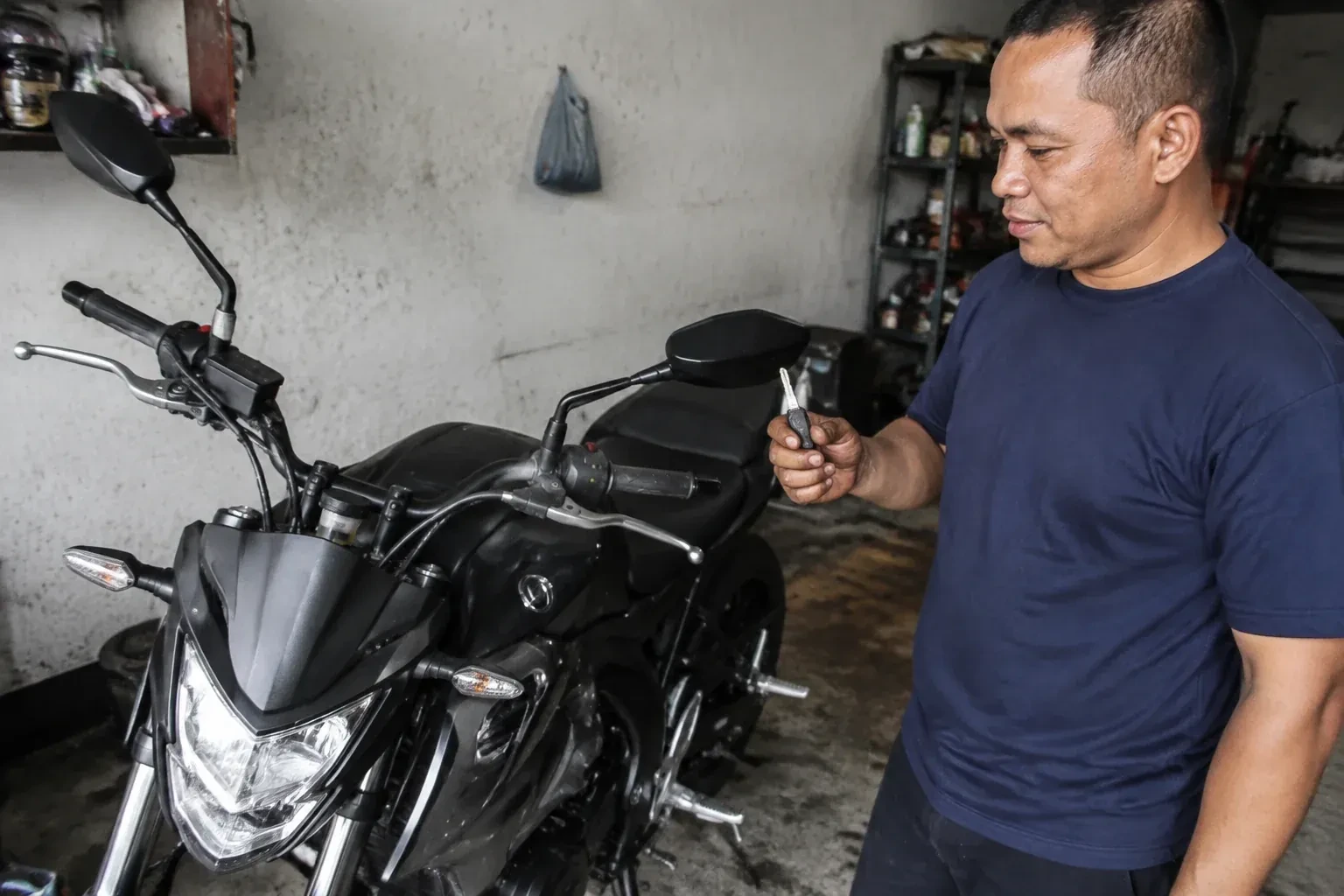
A motorcycle rarely has just one lock. The ignition and steering are usually paired, the seat has its own latch, and older machines add a keyed fuel cap, each of which may or may not share a cut with the others depending on how the factory keyed it. Key service starts by mapping which locks are on the machine and which of them the owner wants running from a single key, and bringing a seat or fuel-cap lock onto the ignition's cut is common where those cylinders are compatible and serviceable, though some models need a matched lock set instead.
How the visit goesThe key turns half a rotation in the ignition, catches, then the blade lets go with a small snap. The bow is still in your hand; the rest of it is somewhere inside a lock that now has nothing to grip.
Motorcycle & Scooter Keys
How the visit goes


Assessing wear and corrosion
Locks that live outdoors on a machine take on grit, road salt and moisture in a way that an indoor lock never does, and the locksmith checks the lock face and keyway for rust, stiffness and a gritty feel before cutting anything. A lock with corrosion inside the wafers can defeat even a correctly cut key until it is cleaned and lubricated, so this check decides whether the visit stays a straightforward key job or also needs the lock itself serviced before a new key is tested against it.
Decoding a lock with no key at all
Without any key to copy, the lock has to speak for itself. The locksmith picks the cylinder and reads each wafer's resting depth with feeler tools or a small scope, or uses a decoder built for that keyway, translating what is found into a cutting code. A key is then cut to that code and tested in the lock before being trusted on the ignition proper. This route takes longer than copying an existing key, since every wafer has to be read individually, but it produces a key that matches the lock exactly rather than an approximation.
A record worth keeping
A short written note of what was done, whether the lock was cut from an existing key, decoded from scratch, or paired as a new transponder, is worth keeping with the machine's other paperwork. It answers a question that often comes up later: whether a particular key is original or a replacement, and whether other locks on the bike were brought onto the same cut. For a machine that changes hands again down the road, that note saves the next owner from starting the same process from a single worn key and no history.
Motorcycle & Scooter Keys
In the van
Replacement transponder chips
Fob shells and batteries
Contact cleaner
Wafer lock decoder
Torx and security bits

Motorcycle & Scooter Keys
What affects the quote
Any prior damage or attempts
Any prior attempt at the lock, a failed hardware-store copy or a scratched keyway, may need to be worked around or corrected before a new key can be properly tested, adding to the job.
Bringing multiple locks onto one key
Bringing the seat, fuel cap or a storage lock onto the ignition's key is extra work per lock rekeyed, separate from cutting the key itself, and is priced as its own line.
Number of locks on the machine
A single ignition lock is the simplest case. A machine with a separate seat, fuel cap and storage lock involved is a longer visit with more hardware to read, cut and test.
What to have ready
- Has anyone already tried to cut or copy this key elsewhere?
- Was the machine bought used, and how many keys came with it?
- What is the make, model and year of the machine?
Motorcycle & Scooter Keys: questions
QuestionsCan you cut a key for an older or vintage motorcycle?
Yes, provided the lock or an existing key survives to read from. Older mechanical locks are generally simpler than current wafer or transponder systems, and a locksmith familiar with vintage keyways can often decode or duplicate them the same way as a newer lock. Where a replacement lock is genuinely needed rather than a key, sourcing period-correct hardware can take longer than the key work itself.
What is the difference between decoding a lock and picking it?
Picking manipulates the wafers to open the lock without necessarily learning their depths, useful when the goal is just to turn the lock once. Decoding reads each wafer's actual depth, usually with a scope or a feeler-style tool, so that information can be turned into a cut key. For key service the lock is generally decoded rather than only picked, since the point is producing a working key, not just a single turn.
Can the seat, fuel cap and ignition all be set to the same key?
On many serviceable, compatible systems, yes. Each lock is opened and its internal wafers are replaced with a set cut to match the ignition's combination, the same principle used to rekey a house lock applied to smaller hardware. Every lock is tested individually afterward so the finished key is confirmed against each one rather than assumed to work. Locks that were never on the same key from the factory can usually be brought together this way during one visit.
Related services
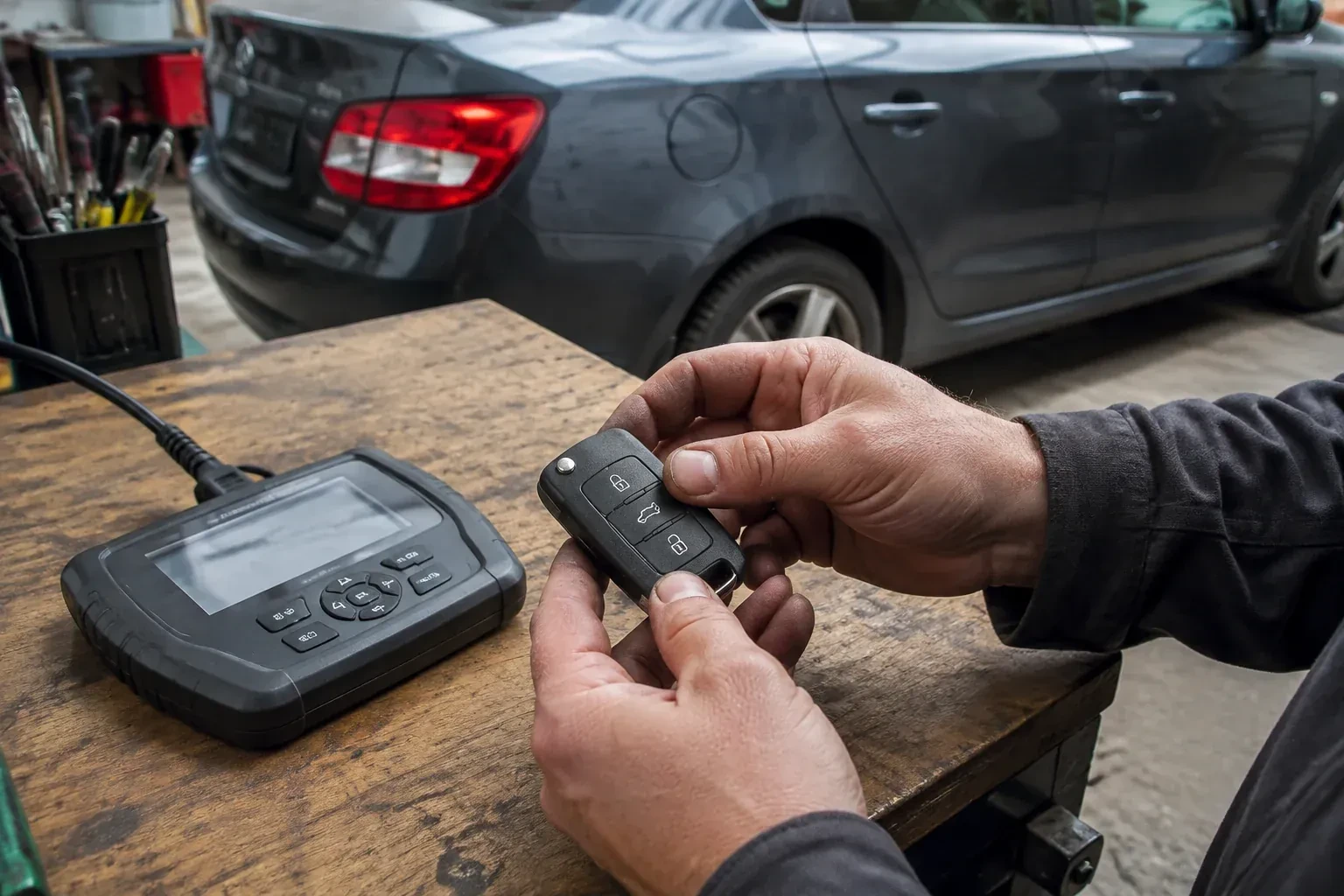
- Car Key ReplacementThe key snapped at the head while you were turning it in a stiff, frosty door lock.
- Spare Car Key DuplicationThe proximity fob has ridden in a pocket for years, the range feels shorter than it used to, and a dashboard warning mentioned a battery a while back.
- Key Fob ProgrammingA cracked case or a spin through the wash left the fob unresponsive, and opening it up reveals a slightly corroded board where the buttons used to sit.