Car keys · Centre Wellington
Car Lockout Service
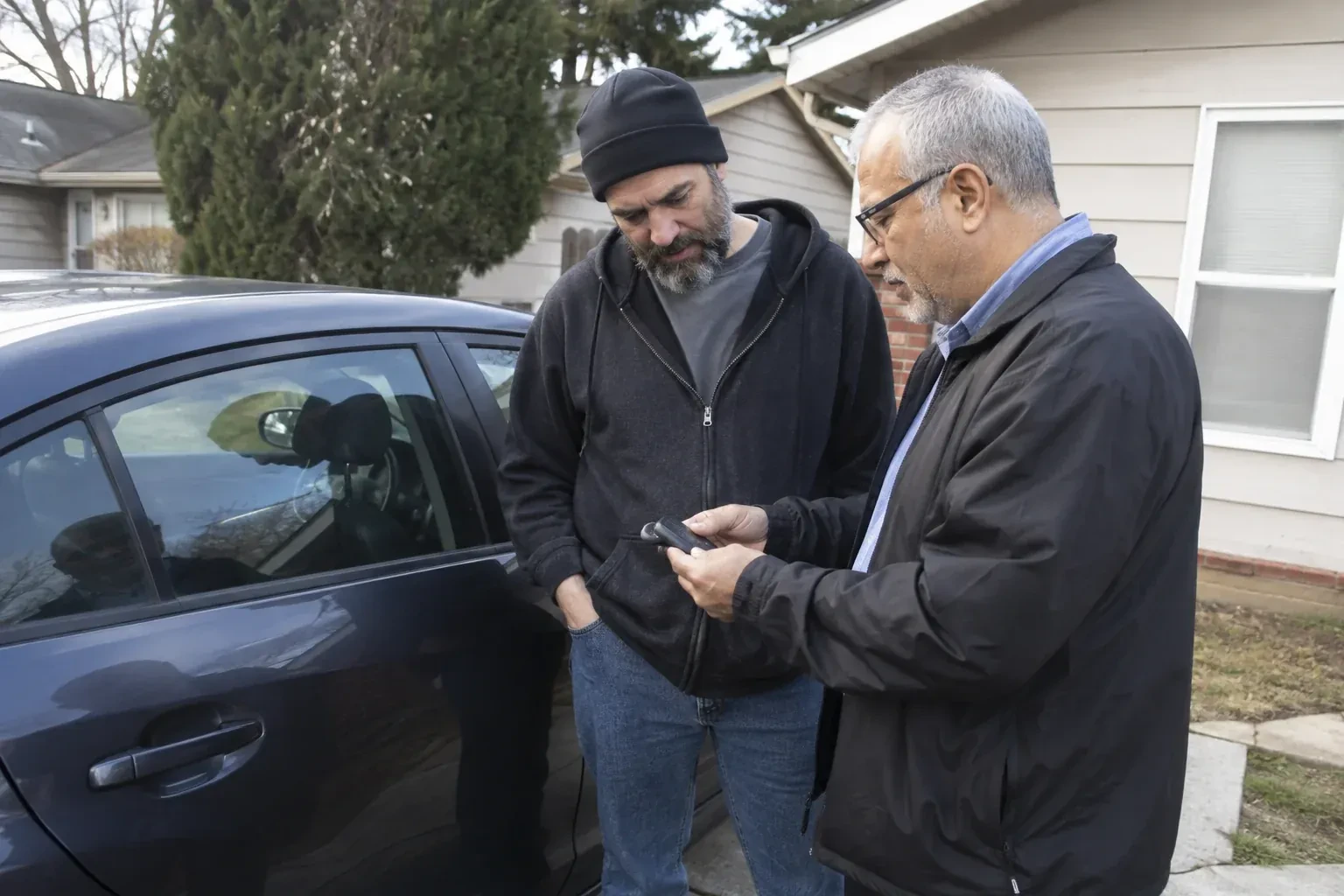
It is a January morning, minus twenty with the wind, and the key will not enter the door cylinder.
In plain words
Winter makes its own lockouts. Slush runs into a door cylinder by day and freezes solid by night; a door bonds to its rubber seal in a cold snap; a fob battery gives up on the first minus-twenty morning; and a weak car battery leaves the remote with nothing to talk to. A cold-weather lockout visit treats the car gently: de-icer and warmth instead of force on a frozen cylinder, a careful release of a door stuck to its seal, a fresh coin battery in the fob, and a jump for the car if needed, then silicone on the seals so the next freeze passes quietly.
How the visit goesThe trunk is full of groceries, the cart is back in its corral, and the keys are sitting in the cup holder in plain view. Every door handle lifts and stops. The car locked itself the moment the last door closed, and it is a warm afternoon.
Car Lockout Service
How the visit goes


What has already been tried
The last part of the first look is a short conversation about what happened before the call. A neighbour may have tried a coat hanger through the window gap, a friend may have leaned on the door frame with a screwdriver, or a passer-by may have pressed the fob until it gave up entirely. Each of those changes the approach: a stretched seal wants the wedge placed differently, a scarred cylinder may need to be decoded rather than picked, and a fob that has been mashed may need its battery checked before anything else. None of it is a problem; it simply belongs in the plan so the opening goes cleanly.
The gentlest route first
Opening a car follows a ladder of methods, starting with the ones that leave no trace. If a door cylinder exists and the keyway is known, a pick-and-decoder made for that lock turns it as a key would. If not, an inflatable wedge is eased into the top corner of the door frame, opened only as far as a slim padded reach tool needs, and the tool presses the unlock button or lifts the interior handle. Door-edge guards sit between tool and paint the whole time. Improvised slim tools that fish for rods inside the door belong to an earlier generation of cars and are not used on a modern one.
The lost key retired for good
When a replacement key was made because the original is gone, you leave with more than a key that turns. On vehicles that allow it, the lost key has been erased from the immobiliser, so even if it turns up in someone else's hands it will unlock the doors but not start the engine, and the door cylinders can be recoded later if that matters to you. Count the keys you now hold, note which is programmed and which is a plain blade, and keep the record of the key code somewhere safe, rather than as a clear photo of the cut pattern, since a sharp image alone can be enough to reproduce a working key.
Car Lockout Service
In the van
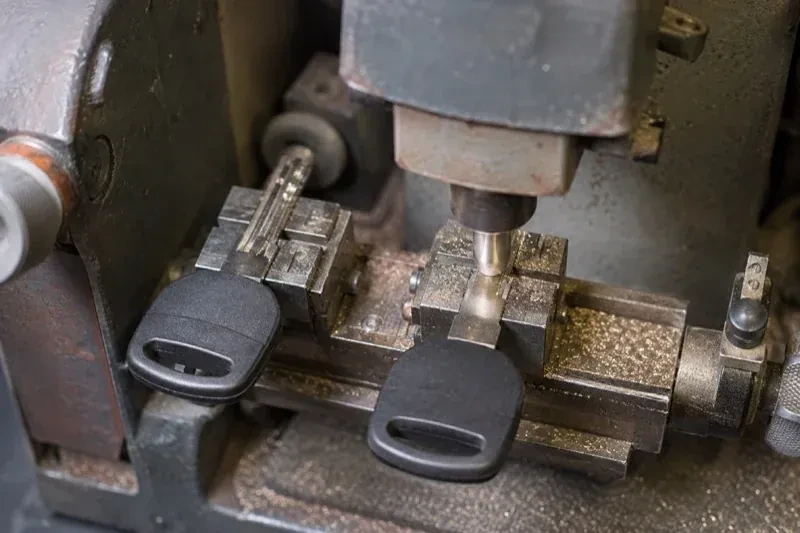
Key cutting machine
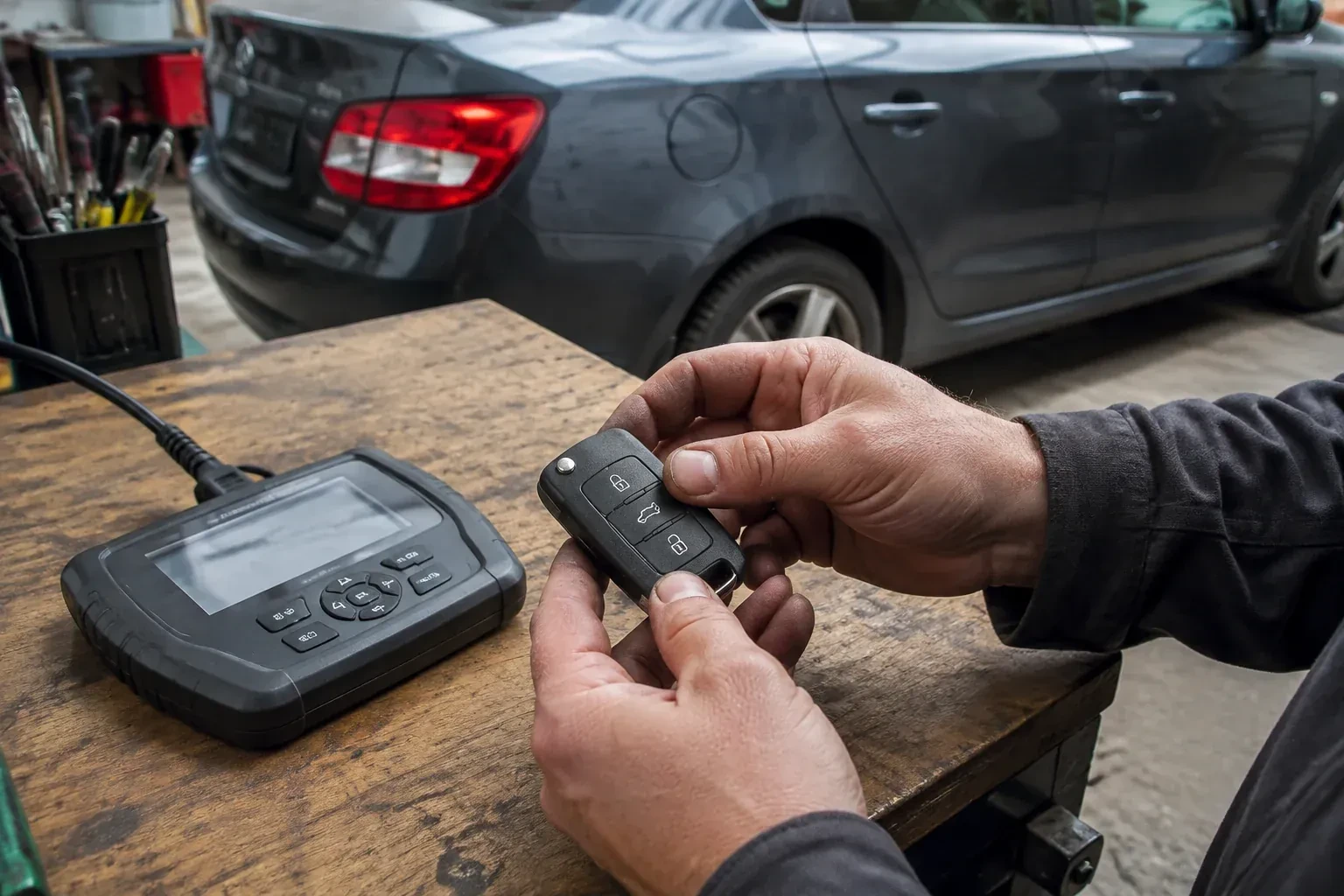
Automotive pick and decoder
Twelve-volt jump pack
Inflatable air wedge
Key programmer

Car Lockout Service
What affects the quote
Where the car is parked
A driveway is simple. A highway shoulder needs a shielding position and extra care, a gated lot needs access arranged, and a tight underground garage adds time for light and clearance.
Broken key extraction
Drawing a snapped blade out of a door or ignition cylinder before the opening, then cutting a fresh key from the pieces or the code, is quoted as work in addition to the entry.
Weather on the day
A cylinder frozen solid or a door frozen shut against its seal takes patient thawing before any opening can begin, so a call during a deep cold snap is quoted with that time in mind.
What to have ready
- Is the car on a highway shoulder or anywhere near moving traffic?
- What is the make, model and year of the vehicle?
- Is anyone, including a child or a pet, inside the car?
Car Lockout Service: questions
QuestionsWhy not just use a coat hanger or a slim jim?
Those tools suited cars from decades ago with simple rods inside the door. A modern door is packed with wiring, window regulators, speaker leads and side-airbag sensors, and a blind tool fishing among them can cut a harness or set off a fault. Coat hangers also tear seals and scratch glass. Purpose-made wedges, padded reach tools and keyway-specific picks do the job from outside the door's workings, which is why locksmiths carry them instead.
The alarm went off. Is that a problem?
It is expected. Opening a door without the fob or key wakes most factory alarms, and quieting them is part of finishing the job: a turn of the key in the door or ignition, or a press of the fob once the car has power, usually does it. An aftermarket alarm is reset from its own valet switch. The locksmith stays until the car is quiet and every lock has been cycled.
What should I have ready when I call?
The make, model and year of the vehicle, the colour and plate if you can see it, exactly where the car is parked and how to reach it, and where the keys are: on the seat, in the trunk, lost, snapped, or in a fob that has gone quiet. Say whether anyone or any animal is inside, whether the car is a rental or a company vehicle, and whether your identification is on you or in the glovebox.
Related services
- Spare Car Key DuplicationThe proximity fob has ridden in a pocket for years, the range feels shorter than it used to, and a dashboard warning mentioned a battery a while back.
- Key Fob ProgrammingA cracked case or a spin through the wash left the fob unresponsive, and opening it up reveals a slightly corroded board where the buttons used to sit.
- Transponder Key ProgrammingEvery key that ever opened the car is gone at once, one taken with a stolen bag, the spare misplaced months ago and never replaced.