Lockouts · Centre Wellington
Home Lockout Service
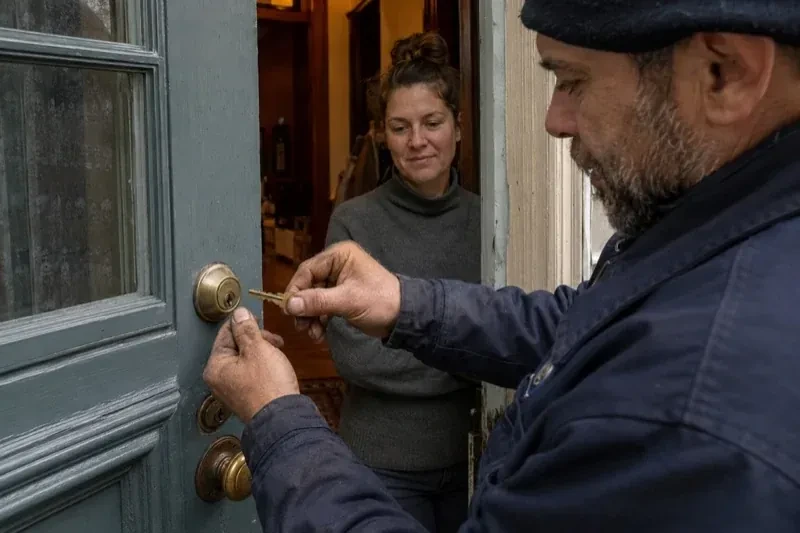
The moving truck has left, half the boxes are inside, and the single key the previous owner handed over turns the knob but not the deadbolt.
In plain words
Winter creates its own kind of lockout. Meltwater runs into a keyway during the day and freezes overnight, a weather-exposed cylinder stiffens in the cold, and a door that shrank in January may drop its bolt out of line with the strike. A home lockout visit in these conditions is as much about the door as the lock: the locksmith thaws and frees the cylinder without forcing it, checks whether the bolt or the frame is the real obstacle, and opens the door in a way that leaves the hardware sound. A little dry lubricant and a tube of de-icer usually finish the job.
How the visit goesThe moving truck has left, half the boxes are inside, and the single key the previous owner handed over turns the knob but not the deadbolt. Someone locked it on the way out, and nobody has a key that fits it.
Home Lockout Service
How the visit goes


Reading the lock itself
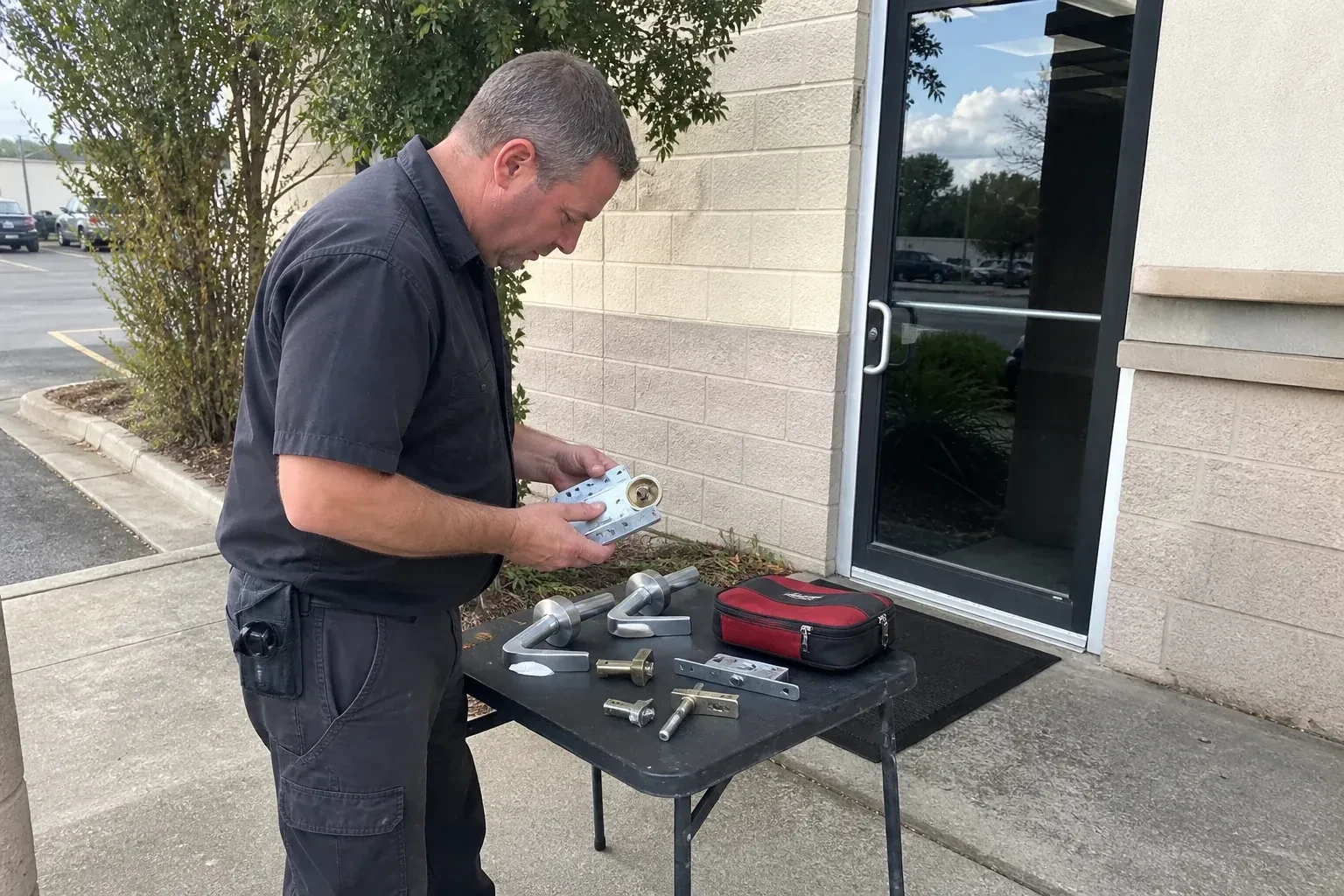
Every lock announces what it is to someone who knows where to look. The shape of the keyway, the maker's mark on the face, the presence of a thumb-turn or a second keyed side, and whether the door has a separate deadbolt above a latching knob all tell the locksmith which family of hardware they are dealing with. A residential pin-tumbler cylinder, a mortise case in a century home, a restricted keyway with security pins and a keypad lock with a hidden override each respond to different techniques. Identifying the lock correctly before touching it is what makes a clean, non-destructive opening the usual outcome.
Relieving a bound door
When the bolt is jammed against the strike because the door has swollen or sagged, picking achieves nothing until the pressure comes off. The locksmith lifts or leans on the door to bring the bolt back into line with its pocket while the key or pick turns the cylinder, and the bolt slides home. With the door open, the cause is addressed so it does not lock you out again: tightening or shimming a hinge that let the door drop, dressing the strike pocket so the bolt has room, or trimming a weatherstrip that pushes the door out of square. The lock was never the problem; the door simply moved around it.
The missing key is now just a piece of metal
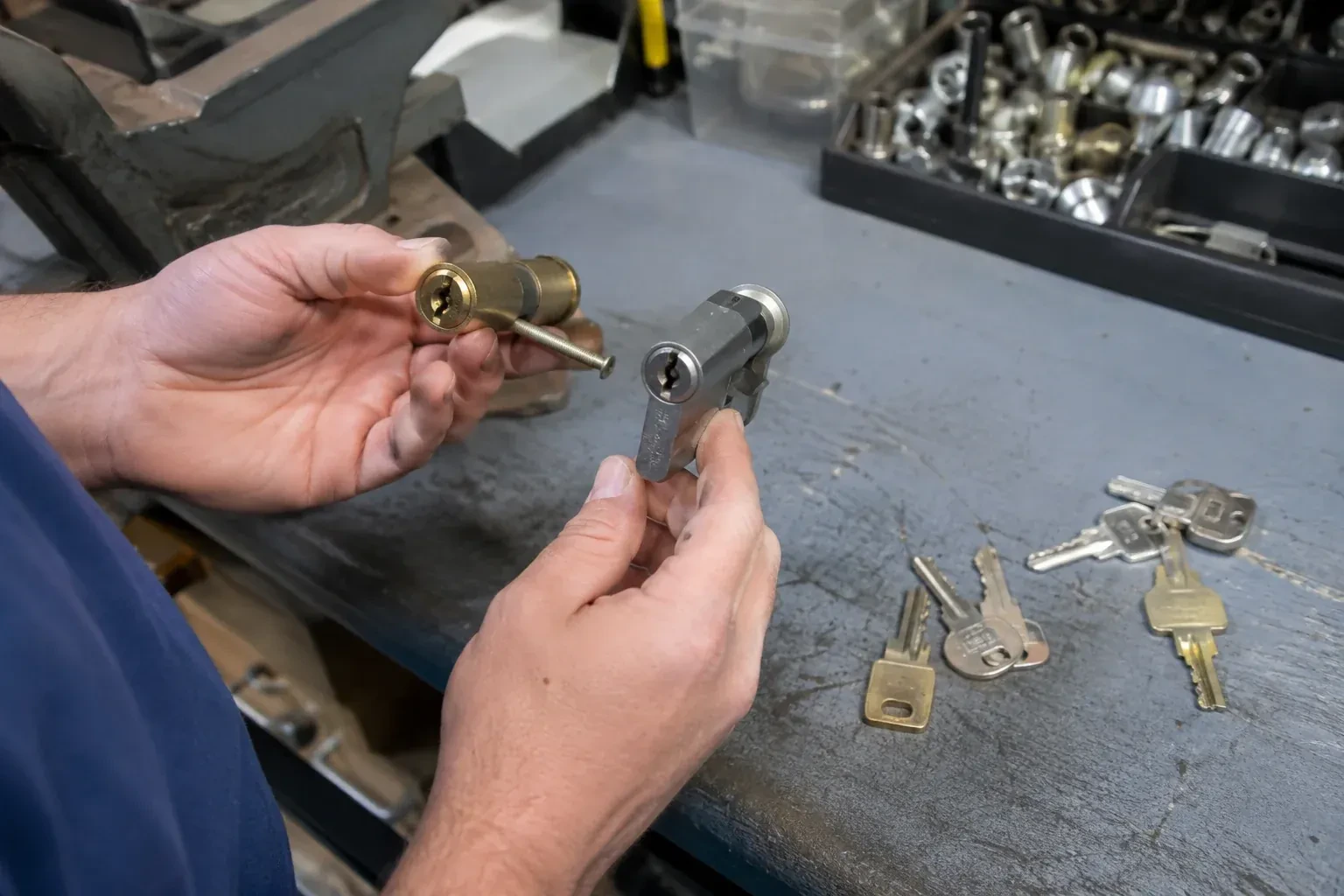
If the cylinder was rekeyed, whoever has the old key is holding something that fits the keyway and turns nothing. You receive the new keys, typically two or three, cut from the fresh pin combination rather than copied from a worn original, so they will operate crisply for years. It is worth counting them, deciding who in the household gets one, and writing down where the spare lives. If several doors were brought onto the same new key, test each one before the locksmith drives off. From this point the lost key is a story to tell, not a worry to carry.
Home Lockout Service
In the van
Plug spinner
Latch and bypass tools
Pick and tension tools
Dry graphite or PTFE lubricant
Plug follower and repinning kit

Home Lockout Service
What affects the quote
Electronic lock work
A dead smart lock may need batteries, a reset, reprogramming of codes or pairing to your phone once the door is open. Each of those is a small task that the quote names separately.
Interior door or exterior door
A bathroom privacy lock or a bedroom door is generally a lighter job than an exterior deadbolt, and an old keyed interior mortise lock sits somewhere between. The quote follows the hardware, not the room.
Restricted or high-security keyways
Security pins, sidebars and patented keyways take longer to open and, if replaced, cost more as hardware than a standard cylinder. Restricted keys also have to be cut from the system's records rather than duplicated.
What to have ready
- If the key is lost, would you like the locks rekeyed during the same visit?
- Has the lock been stiff, sticky or hard to turn in recent weeks?
- Has anyone already tried to open the door with a card or tool?
Home Lockout Service: questions
QuestionsWhen does a locksmith decide to drill instead of pick?
Drilling is the last rung, reached only when the cylinder has genuinely stopped cooperating. Typical reasons are a plug seized by corrosion or a failed spring, a key snapped deep inside that blocks the pins, a high-security cylinder whose anti-pick features make picking impractical, or a lock already damaged by someone's earlier attempt. The decision is explained before the drill comes out, the hole is confined to the cylinder, and replacement hardware goes in straight afterwards.
What happens if my identification is not convincing enough on the spot?
The work pauses rather than proceeds, and the locksmith helps you find another route: a neighbour or building manager who can confirm you live there, a document on your phone, a family member who can bring paperwork, or completing the check inside after entry when the documents are behind the door. Verification protects you as much as anyone, because the same standard applies to whoever might one day claim to live at your address.
Can a frozen lock be opened, and how do I stop it freezing again?
Frozen cylinders open well with patience: lock de-icer or gentle warming melts the ice so the plug turns, and the cylinder is then dried and treated with a dry lubricant that sheds moisture. Hot water is avoided because it refreezes and can crack cold metal. To prevent a repeat, keep a storm door closed over the main lock, fit a keyhole cover on exposed side doors, and carry a small de-icer in your coat or car through the freeze-thaw months.
Related services
- Broken Key ExtractionOvernight the deadbolt froze, and this morning the key would only turn partway.
- Break-In Damage Lock RepairThe patio slider is sitting crooked on its track.
- Seized & Jammed Lock OpeningThe shop's lever handle goes down as usual, but the latch inside the mortise case never pulls back.