Lockouts · Mapleton
Business Lockout Service in Mapleton
The key went in stiffly, turned a quarter of the way, and came out in two pieces.
In plain words
The end of a business lockout is a paper trail as well as an open door. You receive a plain written account of which door was opened, how, what condition the hardware was in, what was replaced, how many keys were cut and who took them. Landlords, insurers, franchisors and head offices routinely ask for exactly this, and it saves an awkward conversation later. Where a door sits on an exit route, the record also notes that it still releases from inside with a single motion and without a key, so everyone can leave the building without hunting for anything.
How the visit goesMinus eighteen with a wind, and the exterior cylinder on the shop door has frozen solid overnight after yesterday's slush. The key goes in halfway and stops. The delivery driver is due, the phone is ringing inside, and nobody can reach it.
Business Lockout Service
How the visit goes


How the door hangs and closes
Commercial doors are heavy and busy, so the locksmith reads the door as carefully as the lock. A glass door is checked at its pivots or continuous hinge for drop and play, and at the threshold for scrape marks that show it has sagged. The closer is checked for a slow or stiff sweep that leaves the door short of the strike. The gap along the lock edge tells whether the bolt is entering its pocket square or catching its lip. A hand on the door while the key is turned often reveals that the bolt is bound rather than the cylinder failed, which changes the fix from lock work to lifting and adjusting the door.
Making an unreturned key useless
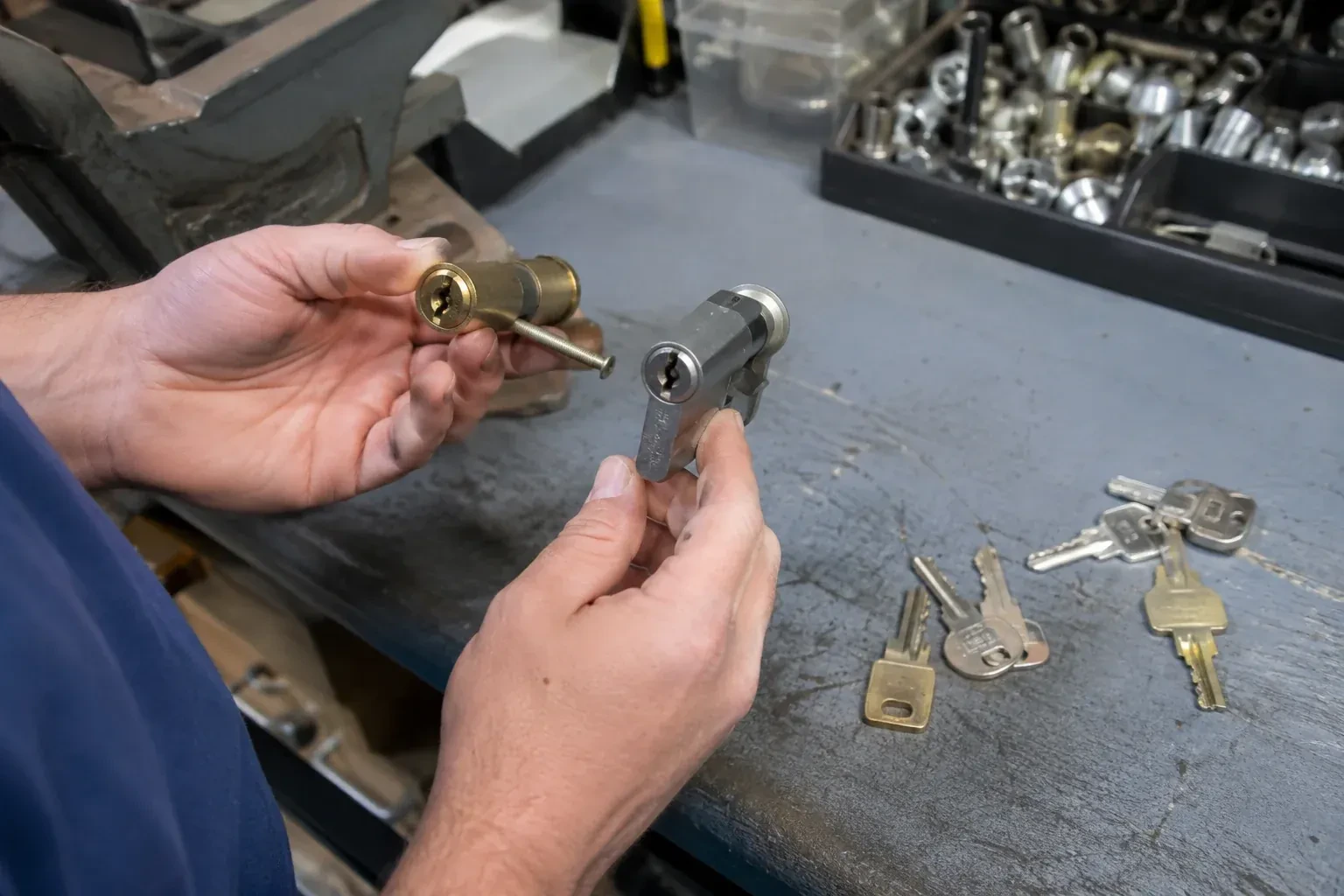
When a key is lost or unreturned, the second half of the visit is rekeying. Mortise and rim cylinders are removed, the plug slid out with a follower, and the bottom pins changed to a new combination so a fresh key operates them and the old one turns nothing. Where the building uses interchangeable cores, the core is swapped for one on a new combination. Cylinders that shared the old key are brought onto the new one, and if the door sits within a master key system the change is planned with the property manager so building keys keep working. New keys are cut, tested in every door and recorded against named holders.
Access control back on its feet
When the lockout involved a reader, strike or magnetic lock, you leave with the system working as it was designed to. Power and backup batteries are restored, the strike or lock is confirmed to hold and release on command, and the reader accepts the fobs it should. Credentials belonging to people who have left are deactivated with the provider while everyone is thinking about it. The mechanical override key is the piece most businesses misplace; it should live with a named keyholder away from the door, not in a drawer inside. A short note of the controller's location and the provider's contact goes into the record for the next person who needs it.
Business Lockout Service
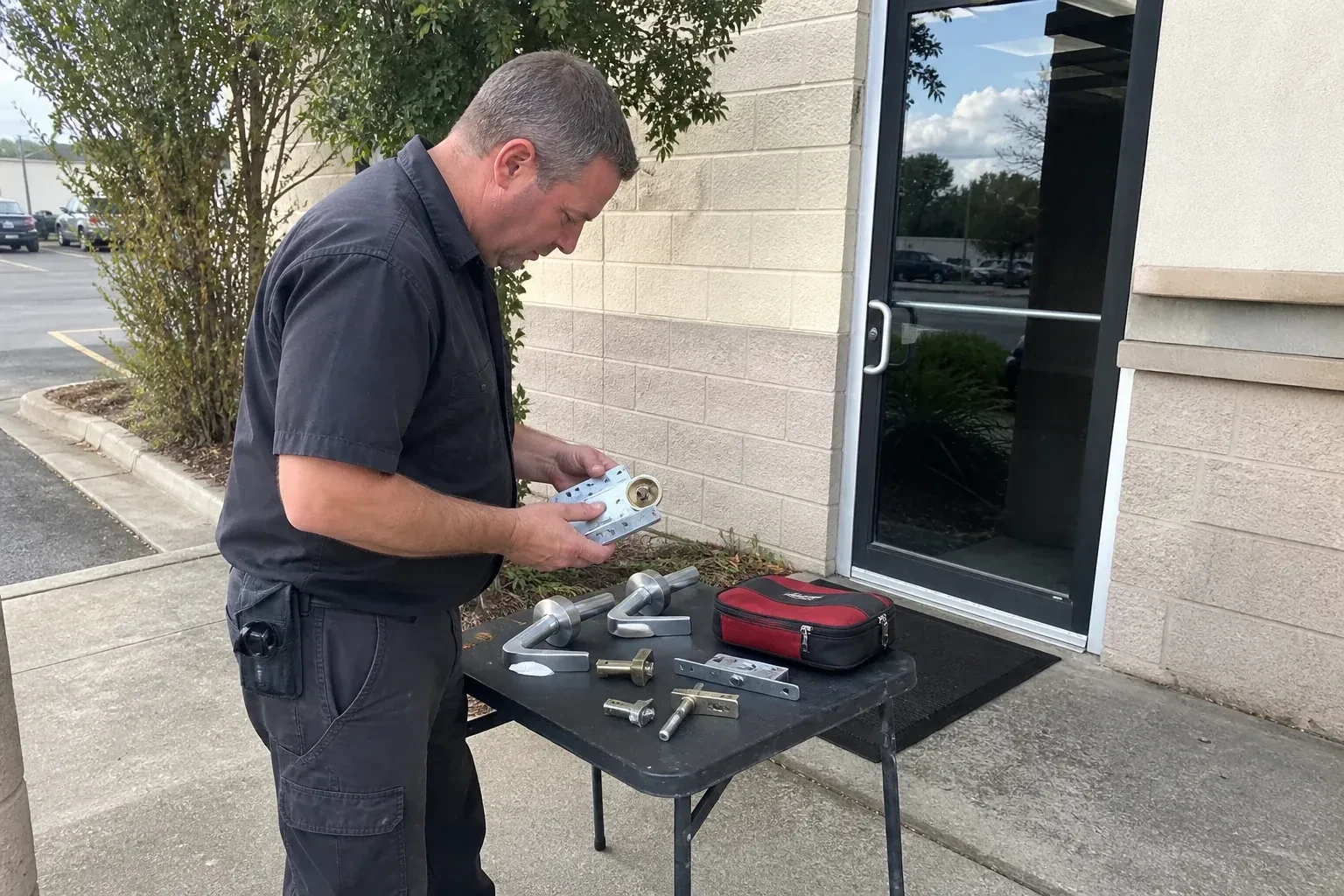
In the van
Broken key extractors
Commercial pick and tension tools
Storefront deadlock and deadlatch bodies
Cylinder decoder and plug spinner
Strikes, pivot shims and closer adjustment tools

Business Lockout Service
What affects the quote
Distance and access to the door
Travel is part of every call-out, and so is reaching the door: a plaza unit at street level, a suite behind a locked lobby, or a loading dock at the back of an industrial park each take a different amount of the locksmith's time.
Padlocks, gates and interior doors
A shutter padlock, a compound gate and interior doors for the cash office, stockroom or server closet are lighter work than an exterior lock but each is its own line, and a padlock is often replaced rather than opened.
Master key system changes
Where the door belongs to a building-wide master key system, changing it means planning with the property manager and pinning cylinders so both your key and the building key still work, which is more careful work than a single rekey.
What to have ready
- Does the building have a property manager or a master key system for the unit?
- Can you send a photo of the lock face and the edge of the door?
- Is anyone able to reach the owner, head office or property manager to confirm the request?
Business Lockout Service: questions
QuestionsDo you work with our alarm company and access-control provider?
Yes, and it makes the visit smoother. The alarm station is told an entry is expected and the authorised person handles the disarm and password. For access control, the provider can often confirm the controller's status, unlock a magnetic lock remotely, or re-enrol fobs once you are inside, while the locksmith handles the mechanical side and the override cylinder. Nobody's wiring is cut; each party does the part it is set up to do.
I am an employee, not the owner. Can you still open the door for me?
Yes, with the owner or a manager in the loop. Tell the locksmith who can confirm you work there and how to reach them. A call to the business owner, the regional manager or the property manager, ideally on a number that can be looked up rather than one you supply, settles it. Staff on an opening shift arrange this on the phone before the locksmith arrives so nothing waits at the door.
We need to open for customers. How do you sequence the visit?
Entry comes first and repairs second. Once authority is confirmed the door is opened, staff go in and start their routine, and the locksmith turns to the cause: extracting a broken key, rekeying for a lost one, re-springing a deadlatch or lifting a dropped door. Anything that can wait for a quieter hour, such as rekeying interior doors, is offered as a return visit so the shop floor is not blocked while it trades.
Related services
- Broken Key ExtractionOvernight the deadbolt froze, and this morning the key would only turn partway.
- Break-In Damage Lock RepairThe patio slider is sitting crooked on its track.
- Seized & Jammed Lock OpeningThe shop's lever handle goes down as usual, but the latch inside the mortise case never pulls back.