Lockouts · Mapleton
Broken Key Extraction in Mapleton
Overnight the deadbolt froze, and this morning the key would only turn partway.
In plain words
Two facts shape the job before the locksmith arrives: whether the door is locked or unlocked, and whether any of the key is showing. A fragment that protrudes can often be gripped and drawn straight out. One flush or deep needs extractors worked in alongside it. If the plug turned before the key broke, it has to be eased back to its resting position first so the pins line up and release the blade. A locked door means the extraction is followed by opening the lock; an unlocked one means securing it is the priority. Either way the door ends up locking with a key that fits.
How the visit goesOvernight the deadbolt froze, and this morning the key would only turn partway. One more push and it sheared off flush with the face of the cylinder. There is nothing left to grip, and the cold is not helping.
Broken Key Extraction
How the visit goes
What happened in the second before it broke
Your account of the break is evidence. A key that snapped while you were turning against resistance points to ice, a binding bolt or a swollen door. One that broke as you pushed it in suggests grit or a damaged pin in the keyway. A key that had been sticking for weeks and finally gave up hints at worn pins or a loose cylinder cap. A key that simply cracked at a deep cut with no drama was probably fatigued metal. Each story leads to a different check after the piece is out, so a few honest sentences about the moment save guesswork later.
Bringing the plug back to rest
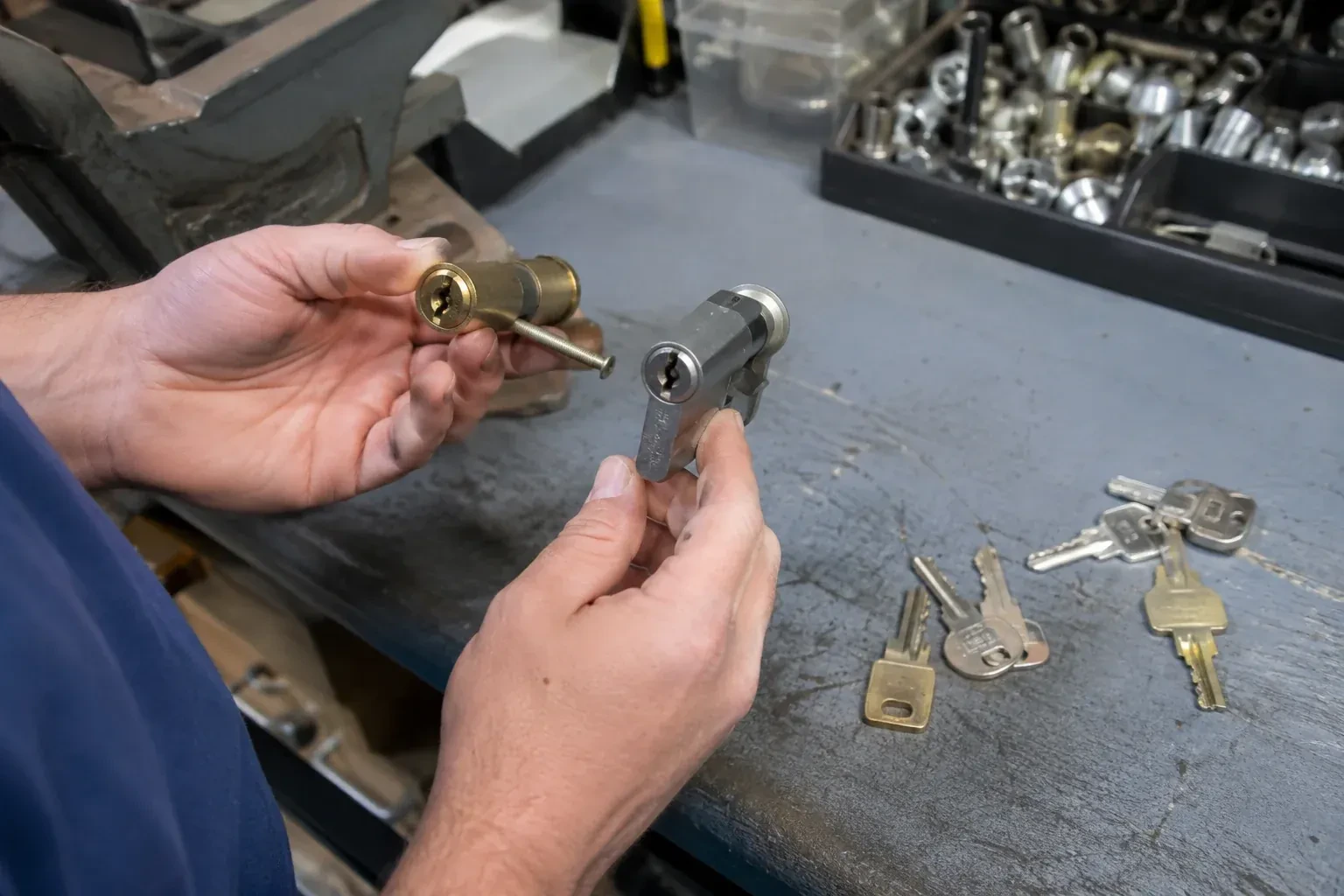
Nothing slides out of a rotated plug, because the pins that the key lifted are still sitting at the shear line and holding the blade. So when the key snapped mid-turn, the first job is to return the plug to its resting position. The locksmith applies gentle rotational pressure with a tension tool, feeling for the point where the pins drop back into the plug and the keyway lines up with the cylinder body. Sometimes a light tap on the face helps the pins settle. Only once the plug is at rest is the fragment free to move, and only then do the extractors go in.
A lock that turns like it should
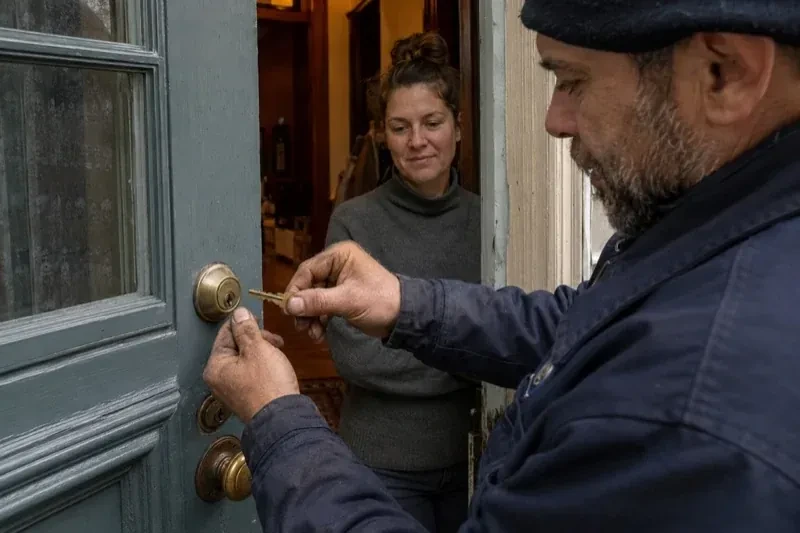
The visit closes with the lock proving itself. The new key goes in fully, turns through its full travel and comes out without a catch, from both sides, first with the door swung open, then with it shut against the strike. The bolt is watched seating fully in its pocket. You are shown the fragment that came out and told what condition the cylinder was in. Anything the locksmith noticed, a strike screw backing out or a hinge that has dropped, is pointed out so it is not a surprise later. The door is locked with your own new key as the last act of the visit.
Broken Key Extraction
In the van
Vehicle key blades and chip shells
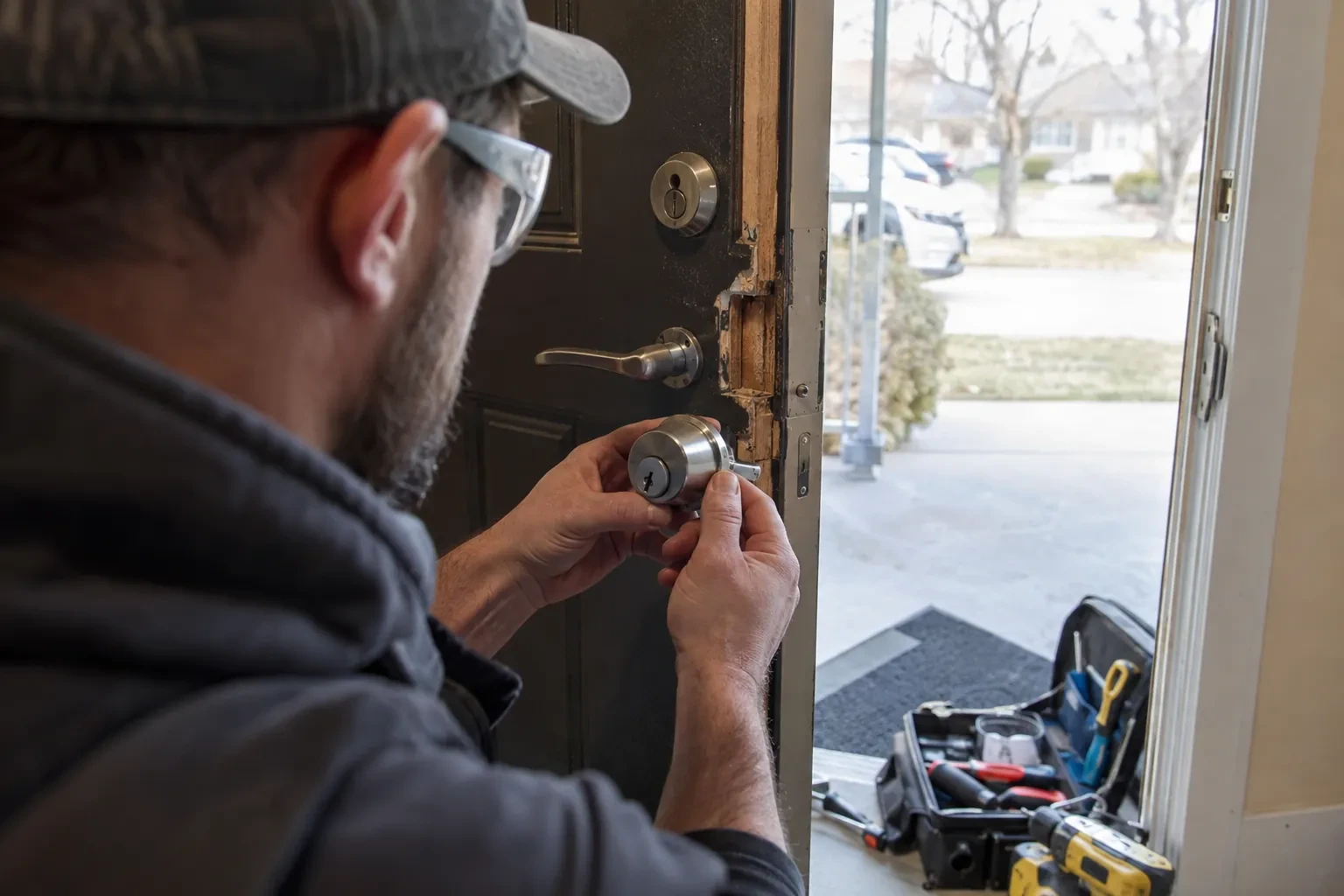
Replacement cylinder or deadbolt
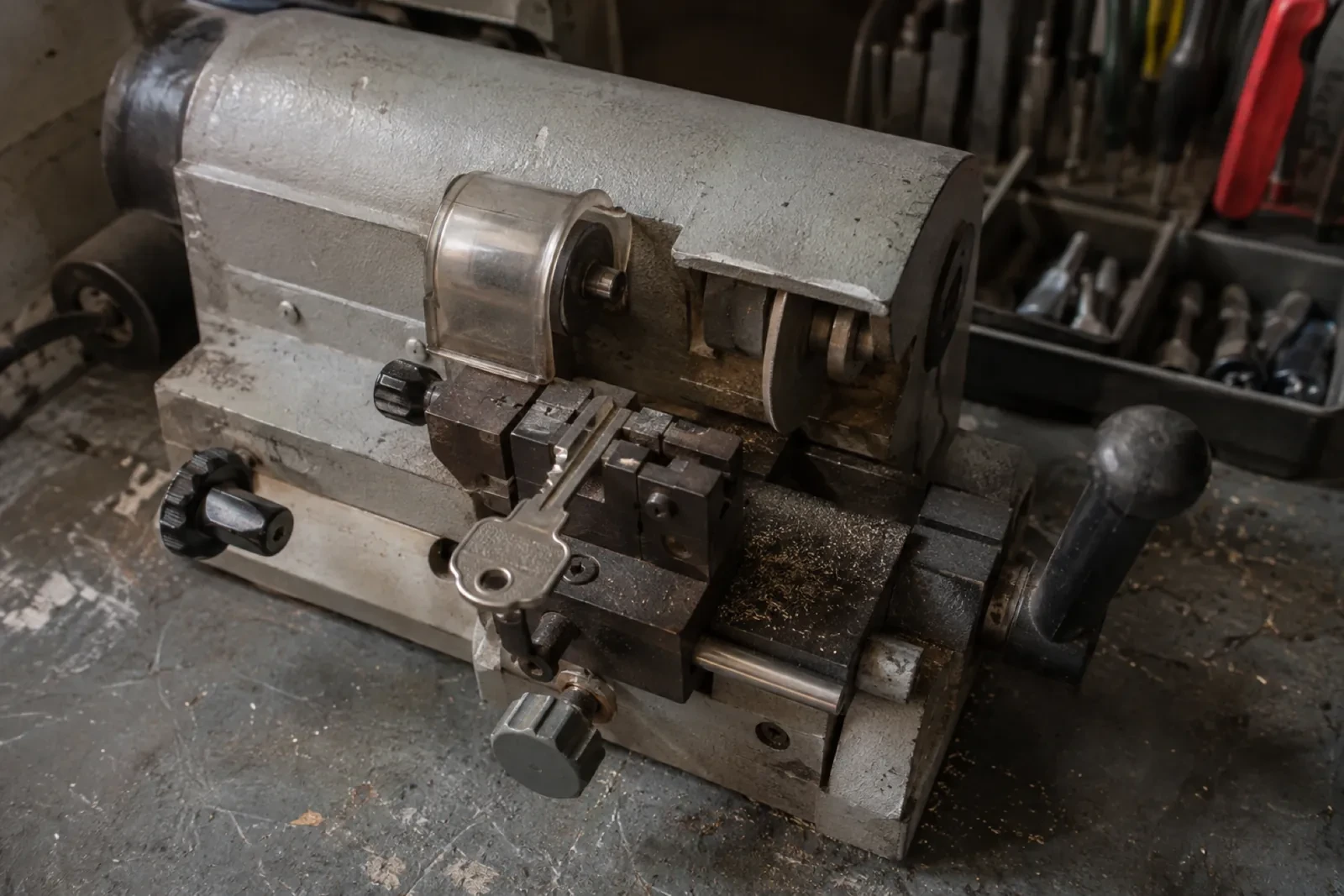
Key blanks and code cutter
Key gauge and decoder
Plug follower and cap tool
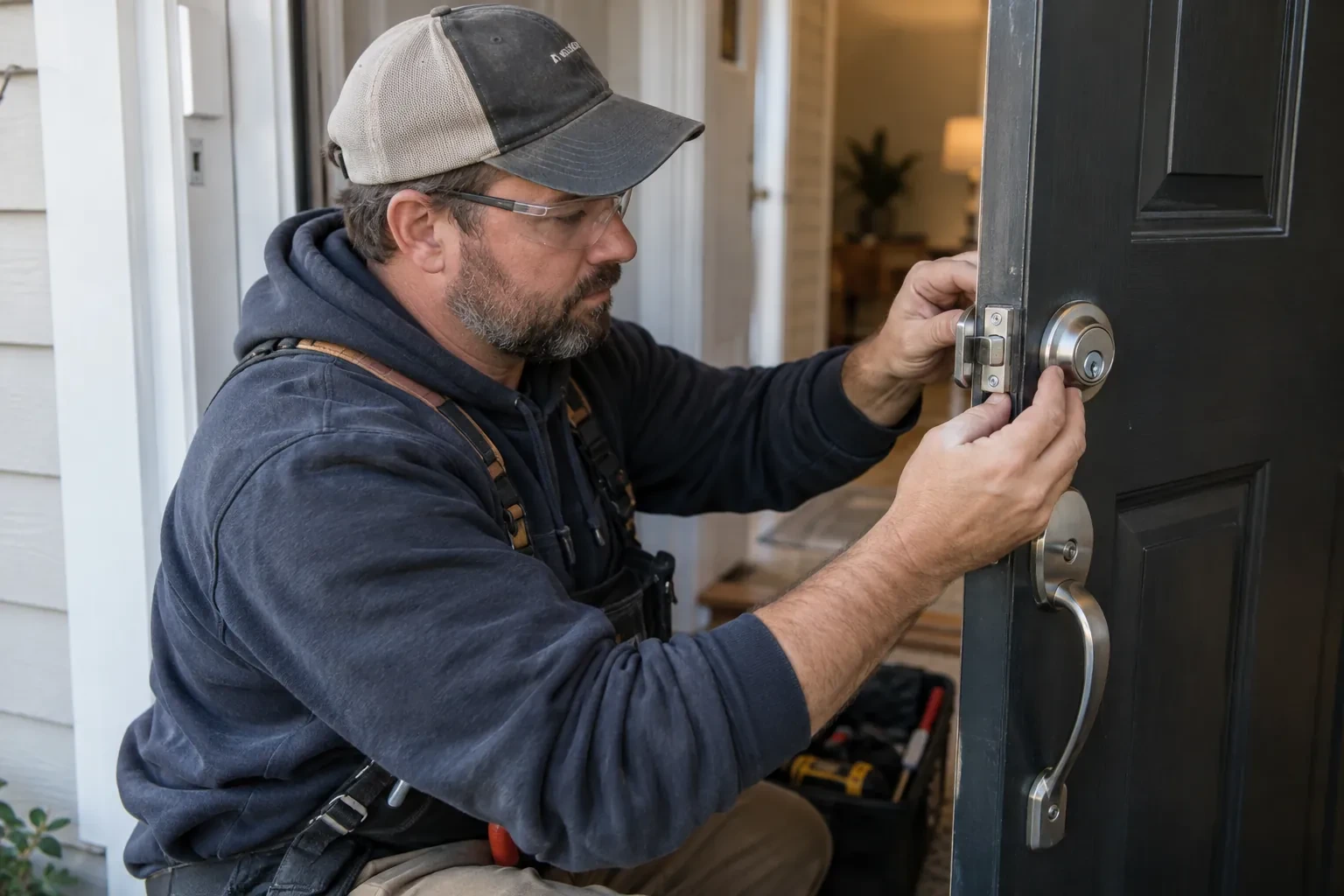
Broken Key Extraction
What affects the quote
Where the key broke
A house deadbolt, a knob, an older mortise case, a padlock, a car door and a vehicle ignition each call for different access and different care, and the quote follows the hardware.
When you call
Whatever hour you call about a broken key extraction — morning, evening, a weekend or a holiday — the amount is the same. Locksmiths are reachable at any time, and the exact figure is confirmed on site once the technician has seen how deep the fragment sits.
Locked or unlocked door
If the door is locked, the extraction is followed by opening it, which is quoted as its own part of the visit. If the door is open, the work is extraction and securing.
What to have ready
- Do you still have the other half of the key?
- Has anything been put into the keyway since, such as tweezers, glue or another key?
- Is any part of the key still visible above the face of the lock?
Broken Key Extraction: questions
QuestionsWhy do keys break more in winter?
A daytime thaw sends meltwater into the keyway, and overnight it freezes with the plug held solid. The key goes in, meets resistance, and the natural reaction is to turn harder. Brass gives before ice does, especially at a deep cut that has thinned over years. Cold also stiffens old grease in the cylinder. De-icer, gentle warmth and a dry lubricant break the pattern.
My key has a chip in it. Does that survive the break?
Usually yes. The transponder chip and the remote electronics live in the plastic head, and the head is the part that stays in your hand when the blade snaps. Once the blade is extracted, a new blade of the right profile is cut and fitted to the old head, so the vehicle continues to recognize the chip without reprogramming. Only a cracked or soaked head needs the electronics moved to a new shell.
How do I stop keys breaking in future?
Look after the lock and the key ages slowly. Keep the cylinder lubricated with the product its maker specifies and free of grit, and have a binding door adjusted, since resistance raises the risk, though a worn, bent or fatigued key can still fail under normal use. Retire copies that have gone thin or kinked instead of straightening them. Cut spares from code, and rotate them so one key is not doing all the work. Take the ring weight off a car key. Small habits, but they add years.
Related services
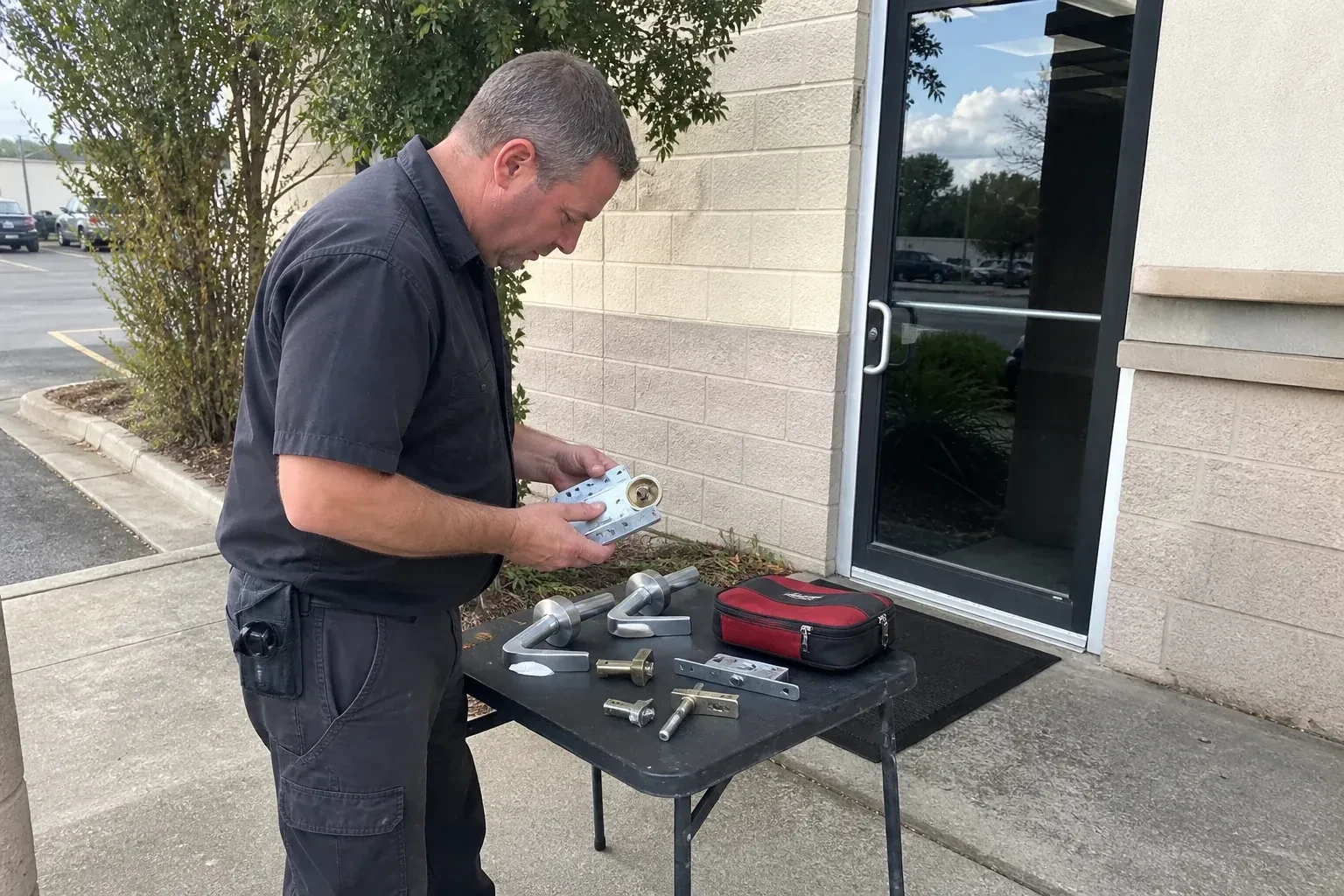
- Business Lockout ServiceThe key went in stiffly, turned a quarter of the way, and came out in two pieces.
- Break-In Damage Lock RepairThe patio slider is sitting crooked on its track.
- Seized & Jammed Lock OpeningThe shop's lever handle goes down as usual, but the latch inside the mortise case never pulls back.