Car keys · Mapleton
Vehicle Lock Repair in Mapleton
The car came with a second key that grinds and catches in the rear door, unlike the smooth key you use every day on the front two.
In plain words
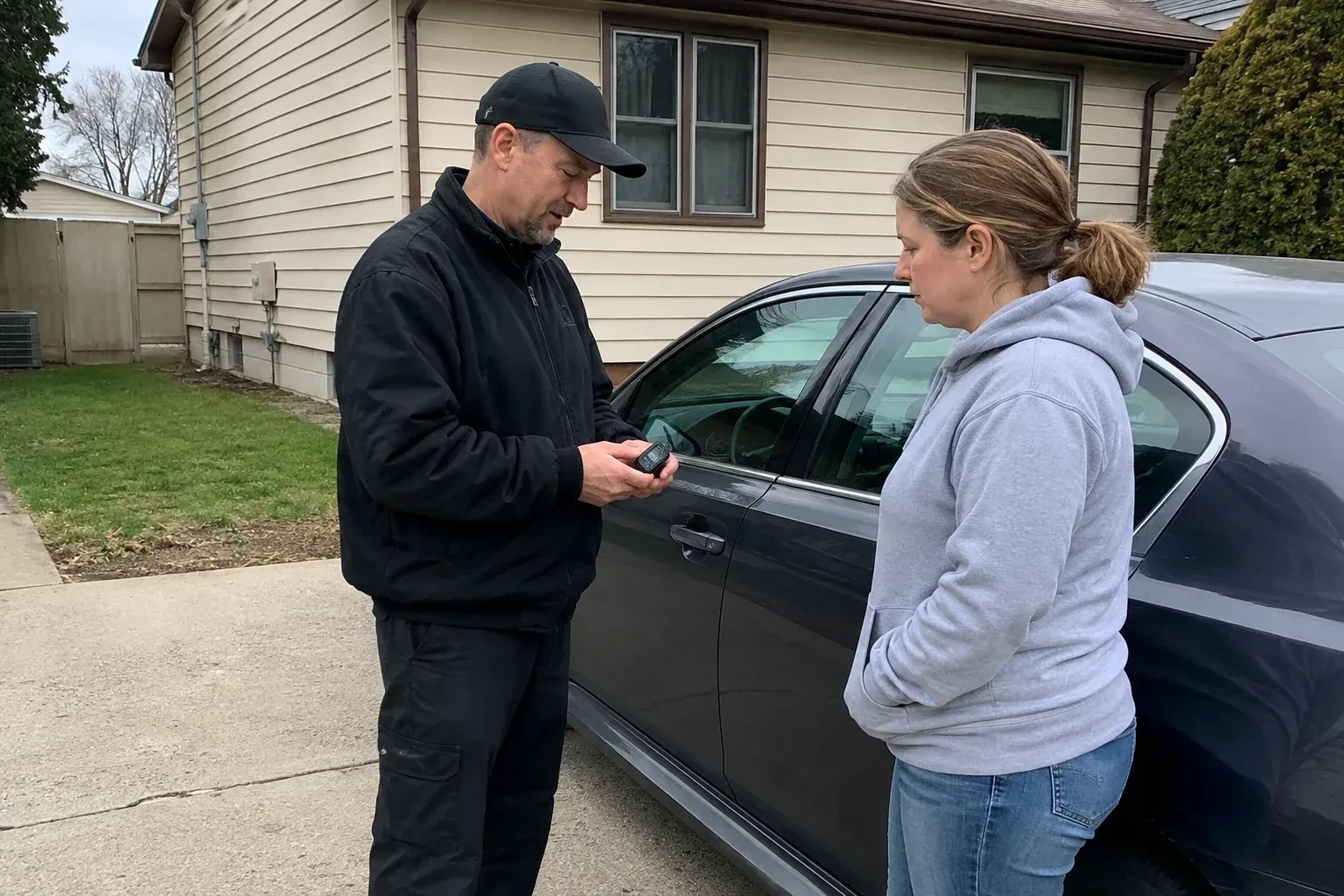
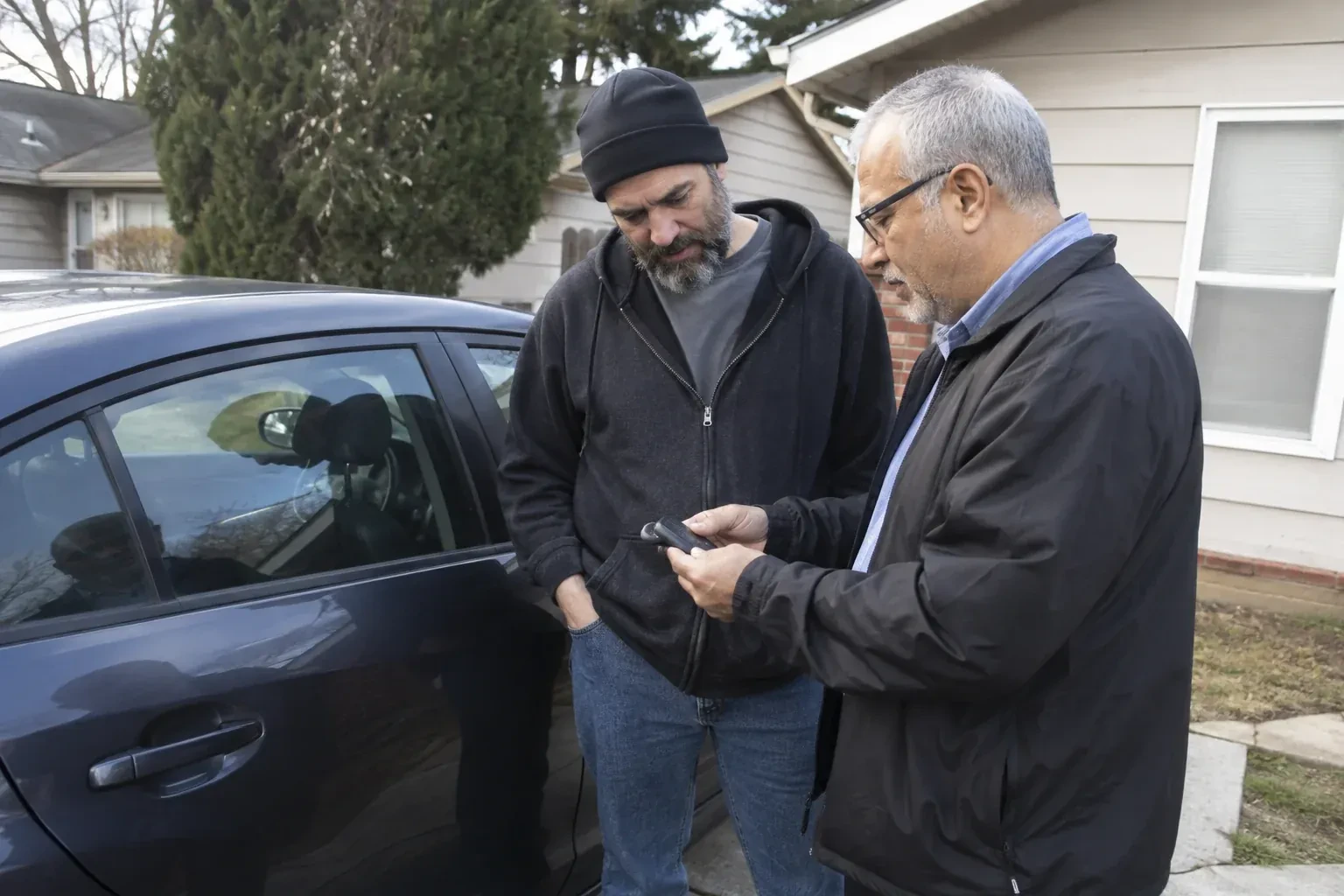
The visit follows a steady order regardless of which lock is affected. On the phone, the vehicle's details and the symptom are noted; on arrival, the customer's connection to the vehicle is confirmed against the registration; then the affected panel is opened, the cylinder, linkage and actuator are tested in turn, and the specific failed part is identified. Repair or replacement follows, new keys or a fob are cut or matched as needed, and every point is cycled by whichever controls it actually has, key, switch or remote, before the visit closes.
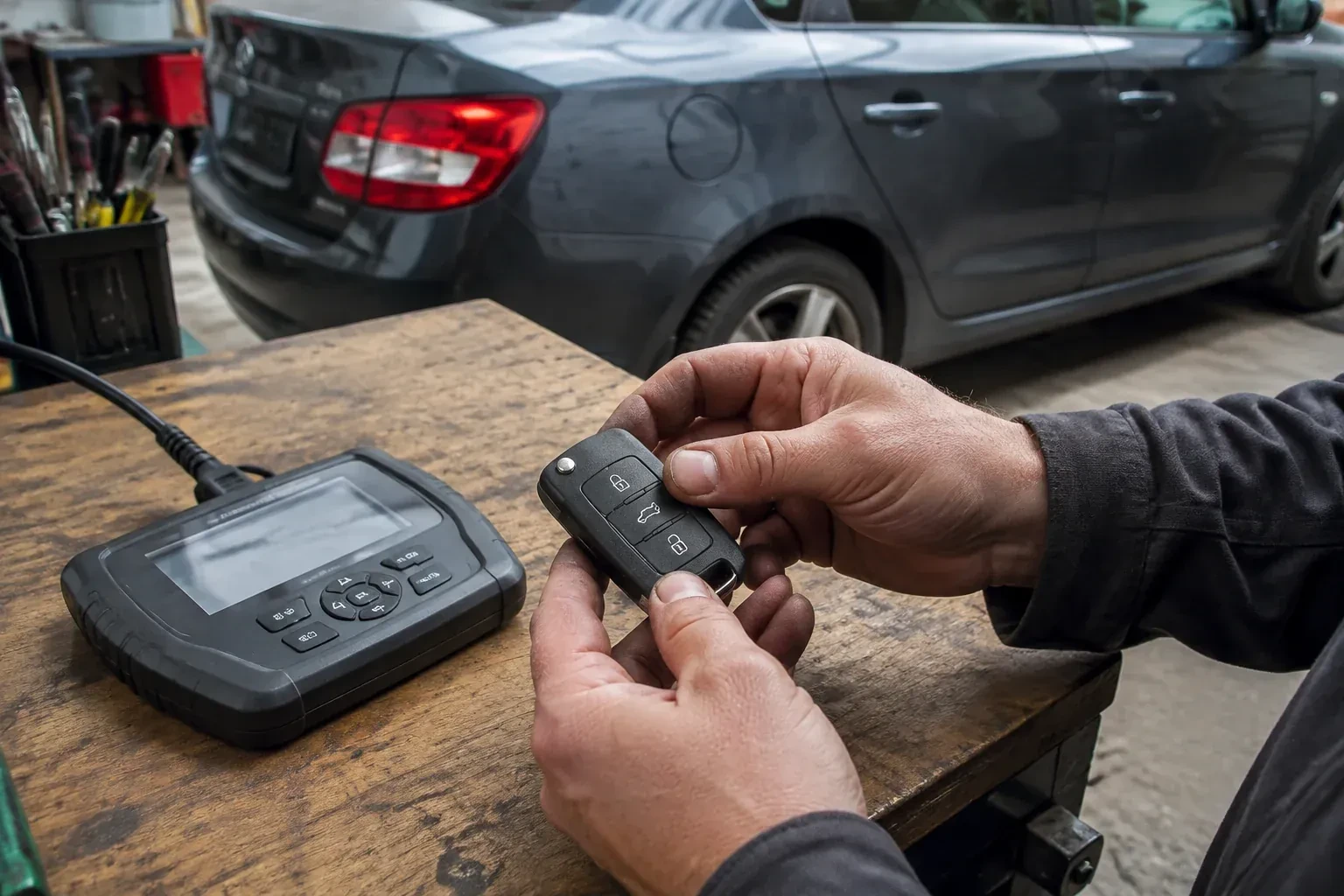
How the visit goesThe button on your key fob does nothing now: no beep, no flash of the lights, no click from the doors. The metal blade folded inside the fob still turns the door by hand, so you are getting in and out, just without the remote.
Vehicle Lock Repair
How the visit goes


Reading the cylinder and the key together
The key itself is part of the diagnosis. A blade that has thinned from years of use, or one cut for a different vehicle years ago and never quite matched, can feel identical to a worn cylinder from the driver's seat. The locksmith checks the key's condition and origin alongside the cylinder's own resistance, since a fresh key cut to the vehicle's code sometimes resolves what first looked like a hardware fault.
Replacing a power lock actuator
A door that answers the key but ignores the remote is checked before any part is named: partial manual-lock position, door fit, cable routing, connectors and harness continuity can restore it without a new part, and only once those are clear does a worn power lock actuator, the small motor that pulls the linkage, become the answer. The locksmith removes the failed unit, connects the replacement to the existing wiring and linkage, and tests it through several full cycles before the panel is closed up, confirming both the switch inside the car and the remote outside it move the lock the same way.
Keeping a spare key or fob somewhere useful
A repaired lock is a good moment to think about backup. A spare key kept somewhere other than inside the vehicle, or a second fob programmed for another driver in the household, means a future battery failure or a lost primary key is an inconvenience rather than a repeat of today's visit. The locksmith can cut or pair that spare while the vehicle's details are already on hand.
Vehicle Lock Repair
In the van
Key fob shells and batteries
Key blanks cut to code
Power door lock actuator
Transponder chips
Dry lock lubricant

Vehicle Lock Repair
What affects the quote
Weatherstripping or seal replacement
When a perished seal is contributing to the lock fault, replacing or resealing that section of weatherstripping is quoted as its own item alongside the lock repair itself.
Corrosion from weather and road salt
A cylinder or actuator that has taken on winter brine or years of moisture through worn weatherstripping often needs more cleaning, drying or part replacement than one that has stayed dry, and the quote reflects that condition.
Whether a key or fob needs cutting
Repairing the lock is one task; cutting a new key or programming a fob to match is another, priced separately since it involves its own blanks, transponder chips and testing across every door.
What to have ready
- Does the key turn without effect, resist turning, or not go in at all?
- Is the vehicle reachable and stationary right now, wherever it is parked?
- Has the lock been getting stiffer gradually, or did it stop suddenly?
Vehicle Lock Repair: questions
QuestionsWhat is the difference between an actuator problem and a wiring problem?
An actuator problem usually means the small motor that moves the lock has worn out, though a switch or control signal in the same assembly can fail too. A wiring problem usually means the motor is fine but current is not reaching it, often traced to a cracked wiring boot at the door hinge or a corroded connector, though the locksmith checks the whole path rather than assuming which it is.
What causes a car door lock to seize up in winter?
Meltwater from a thaw can run into the keyway during the day and refreeze overnight, and road salt and brine thickens grease inside an older cylinder. Both make the key resist turning or stop partway, and both respond well to gentle warming or a lock de-icer rather than force.
The remote does not work on one door, but the key still does. What is going on?
This pattern usually points to the power lock actuator on that specific door rather than the mechanical lock, since the key path and the remote path use different components once they reach the door. The actuator, its wiring, or the connector near the hinge are the likely places to look.
Related services
- Car Key ReplacementThe key snapped at the head while you were turning it in a stiff, frosty door lock.
- Spare Car Key DuplicationThe proximity fob has ridden in a pocket for years, the range feels shorter than it used to, and a dashboard warning mentioned a battery a while back.
- Key Fob ProgrammingA cracked case or a spin through the wash left the fob unresponsive, and opening it up reveals a slightly corroded board where the buttons used to sit.