Commercial · Kenilworth
Commercial Rekeying in Kenilworth
The renovation is finished and the contractors have gone, along with the loaner keys they used for six weeks.
In plain words
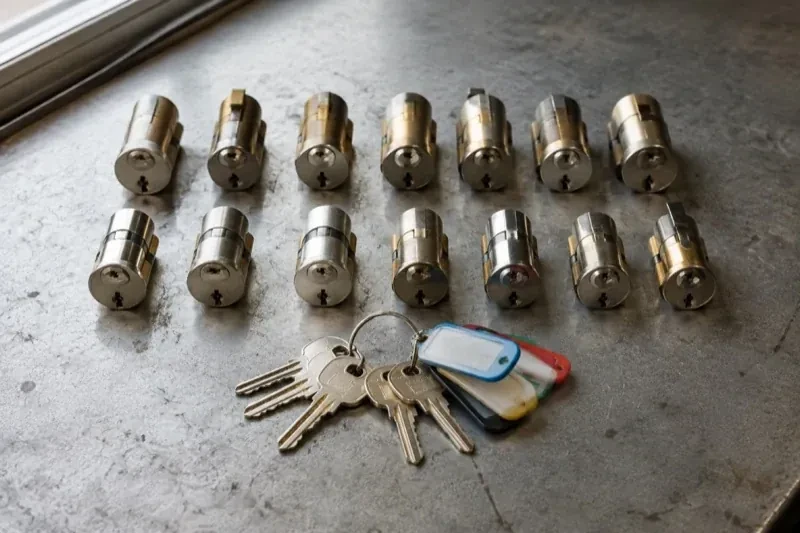
Changing the locks answers today's question; key control keeps it answered. During a commercial rekey the new keys are stamped with a serial code rather than the business name or address, so a dropped key tells its finder nothing. Each key is logged against the person who receives it, and the old keys are collected and cut up on the spot. For premises that want copies kept out of hardware stores, the cylinders can be set up on a restricted keyway, with blanks released only against a signed authorization. What you end up with is a set of locks whose keys you can account for years later.
How the visit goesThe drawer behind the counter holds a tangle of keys with tape labels: front old, side, Dave. Some open things, some open nothing, and the hardware-store copies mean the true count drifted long ago past anything written down.
Commercial Rekeying
How the visit goes


A walk of every door and lock
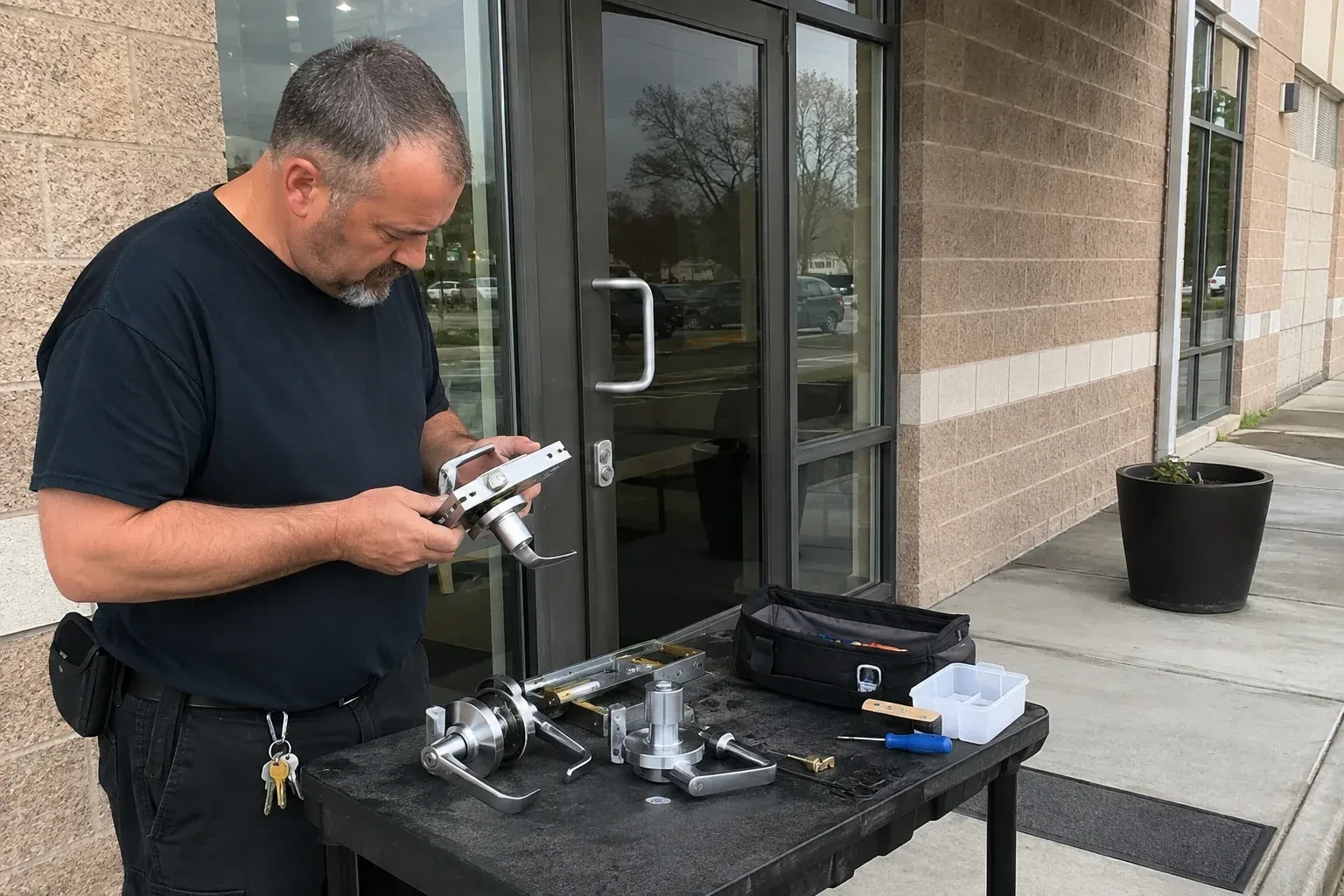
The locksmith walks the premises with you and lists every opening that should be in the plan: the customer entrance, the receiving door, offices, stockroom, cash room, server closet, the mailbox, cabinets, and any padlocks on gates, compounds or roll shutters. Each lock is identified by type, since a mortise cylinder in an aluminum storefront door, a key-in-lever set on an office, a rim cylinder on a back door and an interchangeable core in a stockroom each come out and go back in differently. The keyway and the maker's mark are noted, and the condition of each cylinder is checked, so the list from the walk is what the quote and the work are built on.
Door by door, never a gap
The sequence agreed at the assessment is followed on the day. The locksmith finishes one opening entirely before beginning the next: cylinder out, repinned, refitted, tested with both the new key and the old, and locked again. Only then does the next door come apart. The main entrance is usually left for last and done while someone from the business is present, so there is never a moment when the premises has a door that will not lock. Staff who are working during the visit are handed their new key before the door they use is changed, and a short note goes to anyone off shift about where to collect theirs.
A keying chart in plain language
You leave the visit with a one-page chart that lists every opening by name, the key group it belongs to, the code stamped on that group's keys and how many were cut. It is written for the manager, not the locksmith: the stockroom is called the stockroom, and a glance shows that key group B opens the office and the cash room and nothing else. The bitting details that a locksmith needs to add a cylinder later are kept separately and securely. Pin the chart inside the manager's cupboard, keep a copy off site, and it becomes the reference every future key question is answered from.
Commercial Rekeying
In the van
Plug follower
Interchangeable cores and control key
Rekeyable padlocks
Dry graphite or PTFE lubricant
Master pins

Commercial Rekeying
What affects the quote
Doors out of alignment
A door whose cam, strike or closer needs adjusting so the freshly rekeyed cylinder throws the bolt fully is corrected during the visit, and that adjustment is a separate item.
Distance to the premises
Travel to the site is part of the call-out, and a unit in a downtown plaza and one at the end of a rural industrial road are different trips.
Documentation and register
A keying chart, a key register and stamped codes on every key are part of a proper commercial rekey, and the quote names the paperwork so it is never skipped.
What to have ready
- Which doors, if any, belong to the landlord or a shared corridor?
- Are any of the locks interchangeable cores, and where is the control key?
- Can you gather every existing key so they can be read on site?
Commercial Rekeying: questions
QuestionsWhat information should I have ready before the locksmith arrives?
A list of the doors and other locks you want included, a copy of the lease or the property manager's contact, every existing key you can find, and a rough idea of who needs to open what. Note which doors, if any, are interchangeable cores and where the control key is. Knowing your quiet hours and who opens up in the morning helps the locksmith plan the order of work and the key handover.
How often should a business change its keys as a matter of routine?
There is no fixed interval. Rekey on events rather than on a calendar: a key not returned, a lease change, a break-in, a renovation crew finished, or a key count that no longer matches the register. Businesses with a good register and a restricted keyway often go years between rekeys because nothing prompts one. A yearly check of the register against the keys on the hook is the habit that tells you when the time has come.
Can padlocks, cabinets and the mailbox go on the plan too?
Yes. Gate, cage and shutter padlocks that accept repinning can share the back-door key, and the locks on filing cabinets, drawers and display cases can be grouped so the people who work at them carry a single key while the manager holds a separate one. Mailbox cylinders are small and are usually swapped for new rather than repinned. Everything is entered on the chart, so one document covers the whole premises.
Related services
- Access Control InstallationSomething went missing from the storeroom over a weekend, and when you ask who was in the building, the honest answer is anyone with a key.
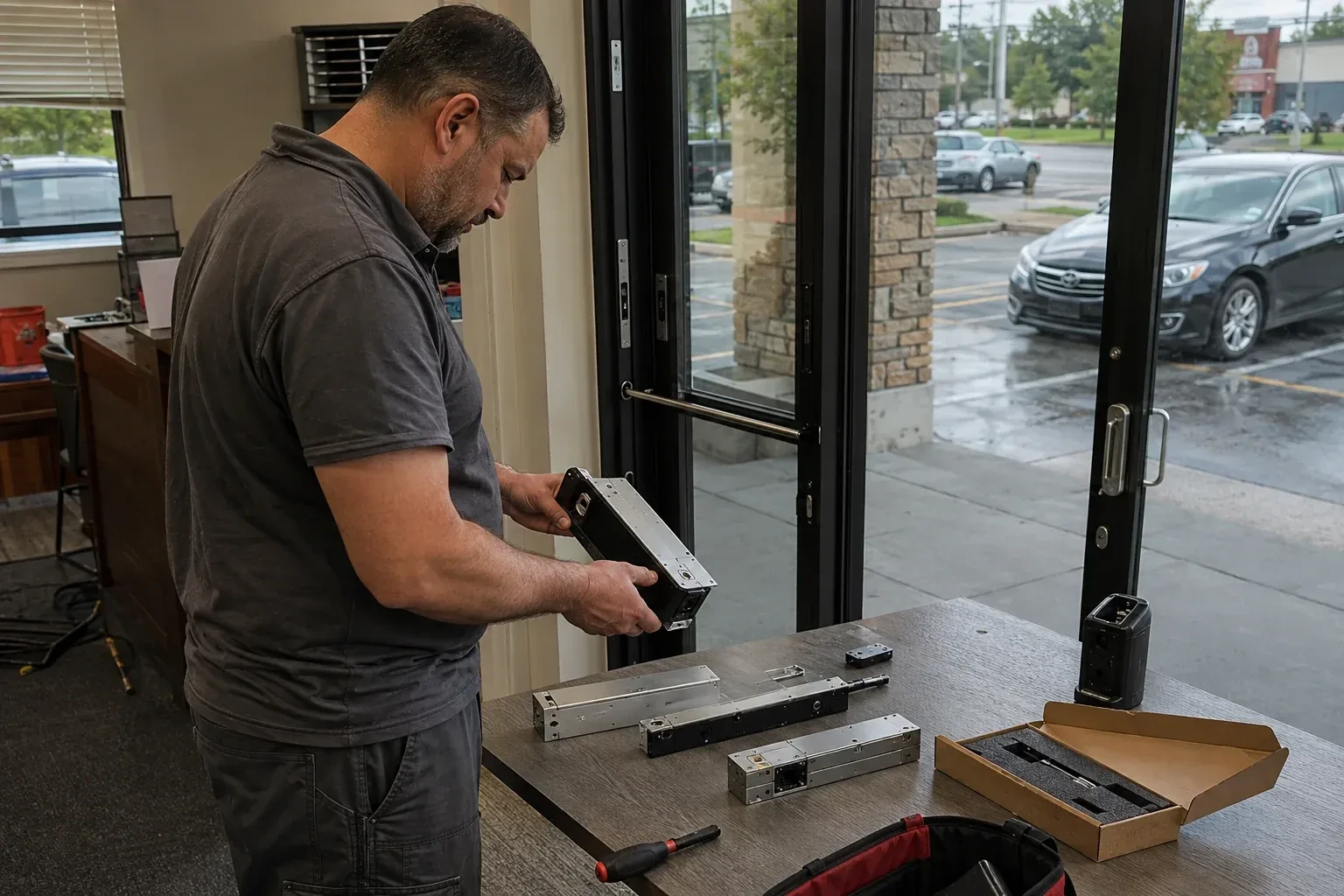
- Panic & Exit HardwareTwo doors used to swing as a pair at the community hall entrance, but one leaf has started closing before the other, catching the astragal and leaving a gap wide enough to worry the caretaker.
- Commercial-Grade Lock ReplacementA new tenant moved into the unit next door, and the property manager just found three different cylinders on three doors, none of them cut to the same key.