High security · Kenilworth
Safe Installation & Servicing in Kenilworth
A community group counts the weekend's raffle and bake-sale cash on a kitchen table, then carries it home in a tote bag until the bank opens Monday, because there has never been anywhere safer to leave it.
In plain words
Relocating an existing safe is closer to a small structural project than a simple carry. The unit is unbolted, moved on proper equipment rather than dragged, and protected through doorways and stairwells that were never designed with several hundred pounds of steel in mind. At the new address the floor or wall construction is checked again from scratch, because a slab that held the safe at the old office may be entirely different from the one at the new address, and anchoring hardware is chosen to match rather than reused automatically.
How the visit goesBehind the filing cabinets sits a heavy floor safe nobody ever bolted down, left exactly as the last owner set it. It opens fine, but a determined pair of hands could simply tip it into a van.
Safe Installation & Servicing
How the visit goes


Getting a heavy unit to its final spot
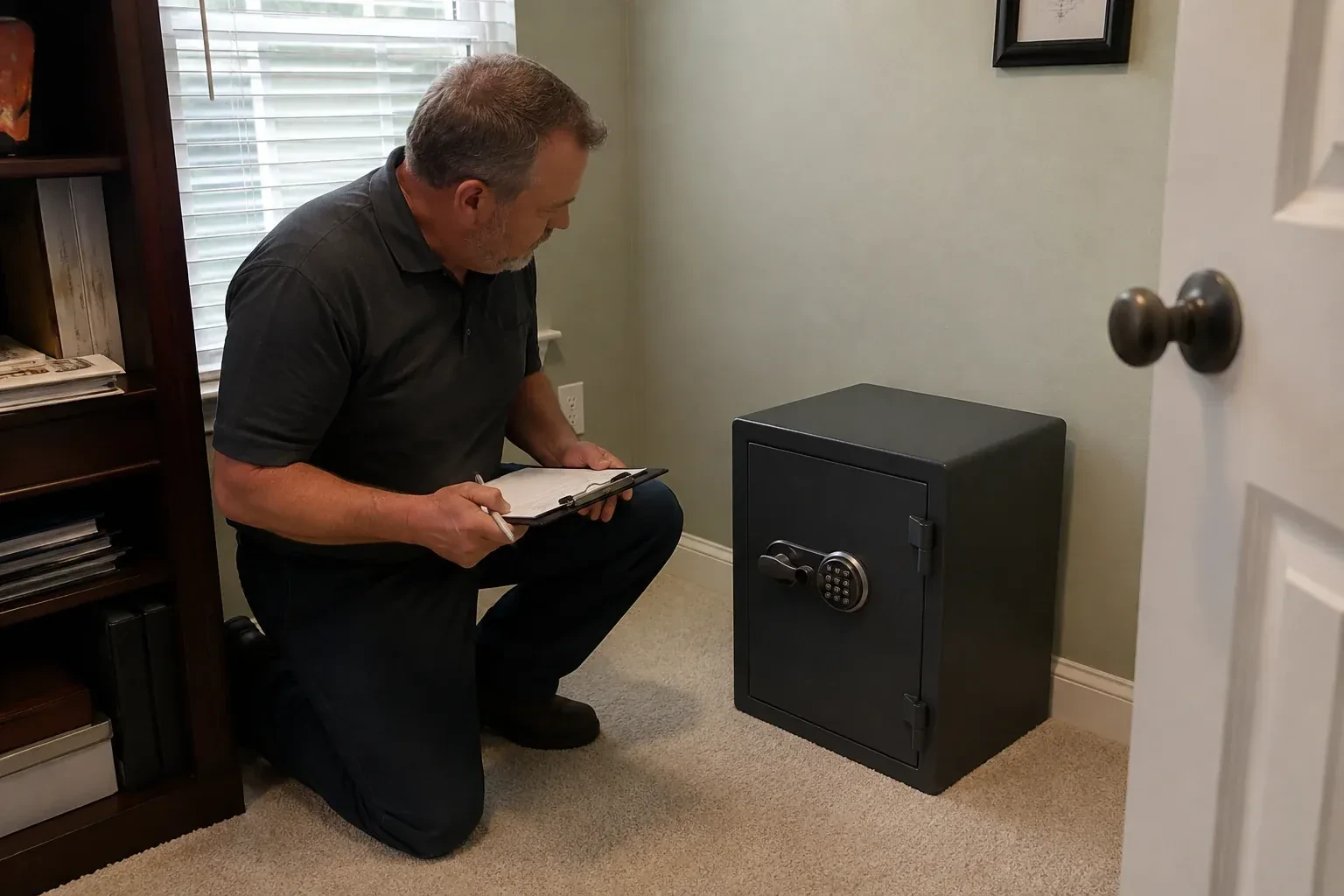
A commercial safe can weigh several hundred pounds before anything is inside it, so the route from the door to the final position matters as much as the safe itself. The locksmith measures doorways, hallway turns, stairs, and any tight corner along the path, and checks whether an elevator, loading dock, or ramp is involved. A safe that cannot clear a doorway in one piece, or a floor that struggles to bear that weight partway up a building, changes the plan before delivery day rather than becoming a problem on site.
Anchoring into a wood subfloor
A wood subfloor calls for a different approach, since a bolt into surface plywood alone pulls out under real weight. The locksmith locates the floor joists beneath the finished surface, drills pilot holes through the subfloor into solid framing, and drives long lag bolts or structural screws with washers that spread the load across the wood. Carpet, vinyl, or laminate over the subfloor is worked around rather than through wherever possible, so the finished floor is left as close to undisturbed as the anchoring allows.
What changes if the household or business grows
A safe sized for today's cash float or paper files can be outgrown well before it wears out, and it is worth thinking about that possibility rather than assuming the same unit fits forever. A second smaller safe for a different purpose, an upgraded rating as a business takes on more overnight cash, or an additional user code as staff changes are all changes that build on the existing installation rather than replacing it outright.
Safe Installation & Servicing
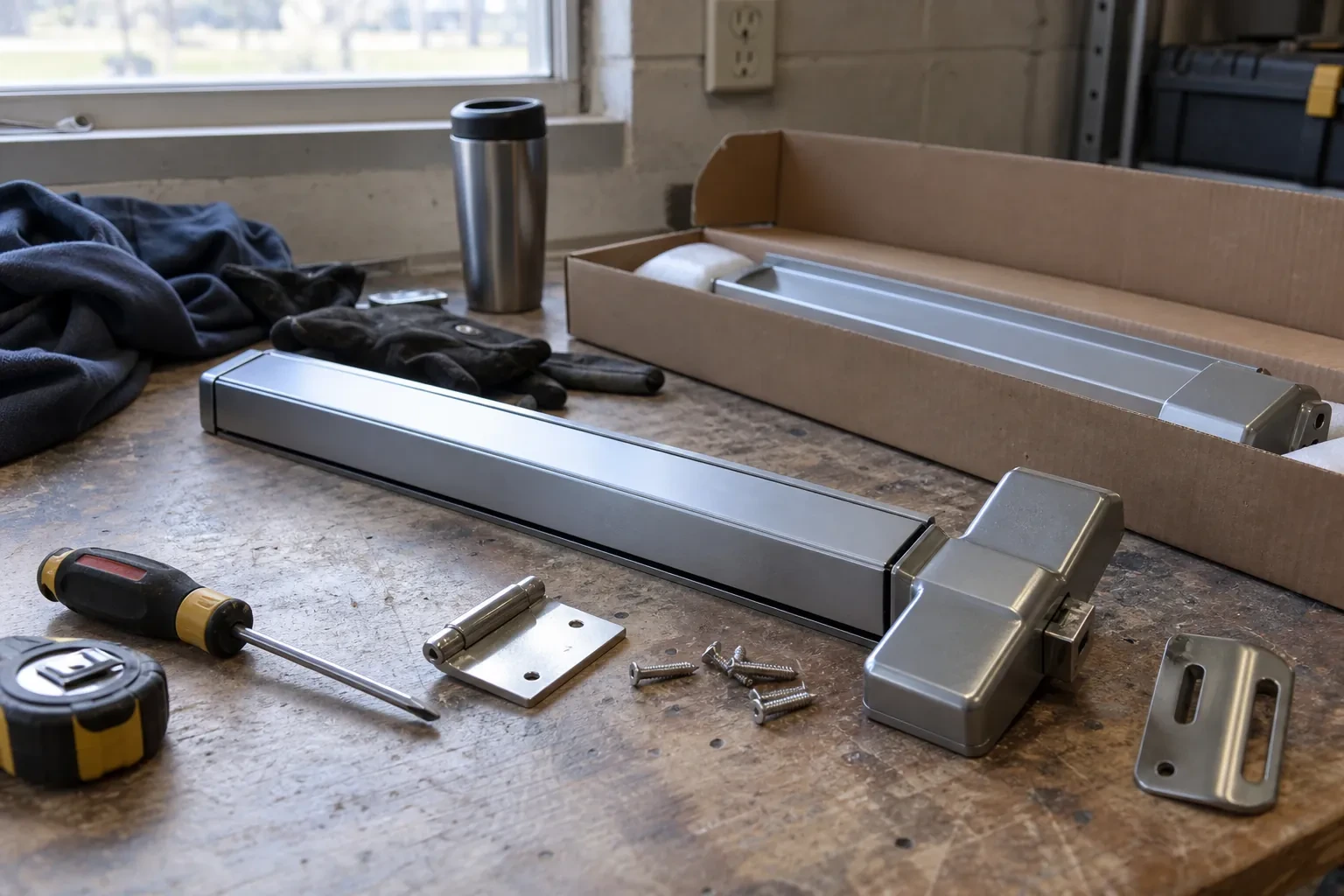
In the van
Concrete anchor bolts
Hammer drill and masonry bits
Rated safe (burglary and fire)
Moving dolly and floor protection
Mounting plate

Safe Installation & Servicing
What affects the quote
Access route to the final position
Stairs, narrow doorways, tight corners, and whether an elevator or loading dock is involved all affect how the safe gets to its spot and how much handling that route requires.
Requests for concealment
Fitting a safe into a closet floor, a recessed wall cavity, or behind a built-in panel takes more planning than a straightforward open placement, and can limit which units will actually fit.
Documentation requested
Some customers want photographs of the anchoring, a written note of the model and ratings, or both, usually to satisfy an insurer, and preparing that paperwork adds a little time to the visit.
What to have ready
- Is that floor concrete, wood subfloor, or tile?
- Has the safe ever been anchored to the floor or wall before?
- Does an insurer or head office require a specific rating?
Safe Installation & Servicing: questions
QuestionsHow do I prepare the room before a servicing visit?
Clearing a working space in front of the safe, moving anything stacked against or on top of it, and having a rough idea of when it was last serviced all help the visit start smoothly. If the combination or code is still known, having it on hand avoids needing to open the unit by other means first. Nothing more elaborate than that is generally needed beforehand.
What is involved in servicing an older safe instead of replacing it?
Servicing works through the same checks as a new installation in reverse: the bolt-work is opened, cleaned, and lubricated, the lock is tested and adjusted if it binds, the anchoring underneath is confirmed or added if it was never done, and batteries are replaced if the lock is electronic. Many older safes have solid steel bodies that outlast the mechanism inside them, which makes servicing a practical route rather than starting over.
How much weight does a filled safe put on the floor?
It depends entirely on the unit's size and construction, since the steel body itself usually weighs far more than whatever ends up inside it. A small document safe and a large commercial unit sit at very different points on that scale. Confirming the safe's own weight before delivery, and checking it against the floor it will sit on, is part of the assessment rather than something guessed at on arrival.